
Short answer: choose a necklace chain by link structure, target width and weight, pendant or bail fit, clasp and connector compatibility, finish direction, and the complete assembled sample—not by the chain name alone. Cable, curb, rope, box, Figaro, snake, bead, and wheat chains can all work for custom necklaces, but each creates a different visual weight, movement, surface, and connection requirement.
For a brand or sourcing team, the useful question is not simply “Which necklace chain type looks best?” It is “Which chain structure supports this pendant, target profile, finish, and wearing experience, and what must be confirmed before production?” The comparison below keeps the eight chain styles already covered on this page and turns them into a practical specification and sample-review path.
Necklace Chain Types Comparison for Custom Projects
| Chain type | Link pattern and visual role | Width and weight decision | Pendant or bail fit | What to check in the sample |
|---|---|---|---|---|
| Cable | Simple repeating round or oval links; clean and adaptable | Specify wire and finished width rather than relying on a style name | Often practical for pendants when the bail opening and connector are matched | Link consistency, connector closure, pendant movement, and finish coverage |
| Curb | Flattened interlocking links; stronger visual surface | Wider profiles can make the necklace feel visually heavier | Check whether the pendant and bail suit the flatter link profile | Link lay, twist, edge feel, surface reflection, and clasp alignment |
| Rope | Twisted multi-link appearance; textured and decorative | Texture can add perceived volume, so approve the real diameter | May work as a standalone chain or with a bail sized for the textured profile | Twist consistency, flexibility, snag points, end connection, and finish tone |
| Box | Square-linked geometric structure; defined and orderly | Small width changes can noticeably change the profile | Confirm the bail opening and end fitting against the actual box dimensions | Link alignment, articulation, kinks, end termination, and pendant balance |
| Figaro | Repeating short-and-long link pattern; rhythmic and visible | Specify the pattern ratio and finished width together | Review where a pendant or connector sits within the repeating pattern | Pattern repeat, link orientation, closure position, and pair of end fittings |
| Snake | Close, smooth-looking surface; fluid visual line | Approve diameter, flexibility, and minimum practical curve in the sample | The bail must clear the chain and end fitting without forcing the surface | Kinking, surface marks, end-cap transition, drape, and clasp operation |
| Bead | Connected spherical elements; technical or playful appearance | Bead diameter controls both visual scale and connector choice | Use a compatible connector or bail rather than assuming a standard jump ring | Bead spacing, connector engagement, cut length, finish, and pendant orientation |
| Wheat | Interwoven links with a dense textured appearance | Approve finished diameter and flexibility as an assembled sample | Check bail clearance and whether the pendant proportions suit the fuller profile | Weave consistency, flexibility, end fitting, finish coverage, and movement |
This matrix is a starting point for specification. It does not establish a universal strength ranking. Material, link dimensions, forming, joining, end fittings, clasp selection, pendant weight, and the agreed test scope all affect the finished result.
Eight Common Necklace Chain Types
Cable Chain
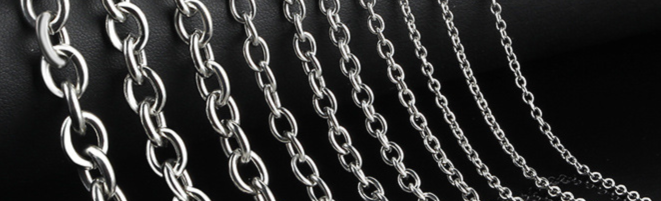
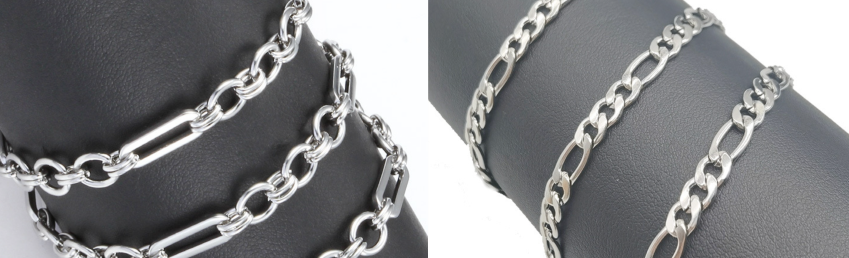
Cable chain uses a repeating sequence of round or oval links. Its simple structure makes it a useful reference point for many pendant necklaces, but the buyer still needs to define link shape, wire profile, finished width, cut length, and end connection. A pendant that moves well on one cable-chain sample may sit differently when the chain or bail dimensions change.
Curb Chain
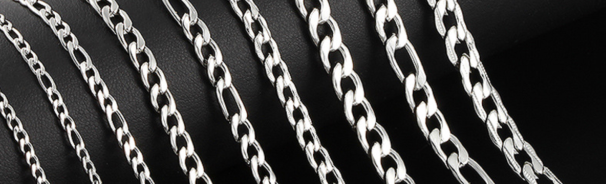
Curb chain uses interlocking links that are shaped to lie in a flatter plane. The broad visible surfaces can create a more pronounced metal and finish effect than a simple round-link chain. During sampling, check that the links lie consistently, the chain does not show unwanted twist, and the clasp and end fittings align with the flatter profile.
Rope Chain
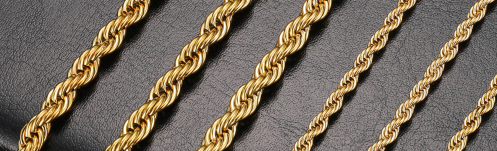
Rope chain builds a twisted, textured appearance from multiple connected links. That texture can make a relatively compact chain look fuller, so a photograph is not enough to approve scale. Confirm the actual diameter, flexibility, end connection, and whether the surface catches on the intended garment or packaging before approving production.
Box Chain
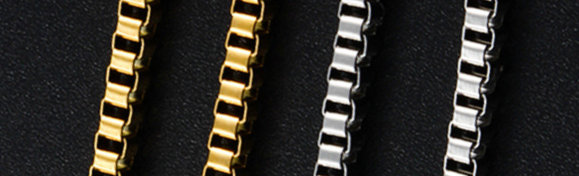
Box chain is formed from square-looking links that create a clean geometric line. Its defined profile can pair well with modern pendants, but the real chain width and end fitting must pass through the intended bail. Review articulation and kinking in the complete necklace instead of judging only a short loose chain sample.
Figaro Chain
Figaro chain combines short links with a longer link in a repeating sequence. The pattern itself becomes part of the design, which means pattern ratio, chain width, pendant position, and clasp location should be reviewed together. Confirm that cutting the chain to the target length does not leave an awkward repeat near the closure or pendant.
Snake Chain
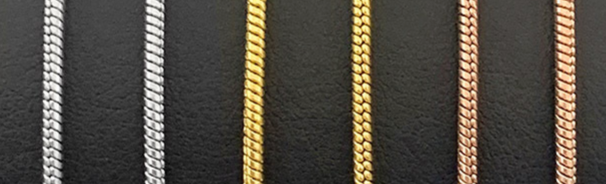
Snake chain creates a close, smooth-looking surface rather than an open-link appearance. The surface and drape are central to its appeal, so inspect the full sample for kinks, sharp bends, marks, and the transition into end caps. The pendant bail must clear both the chain diameter and its end fitting without forcing or scratching the chain.
Bead Chain
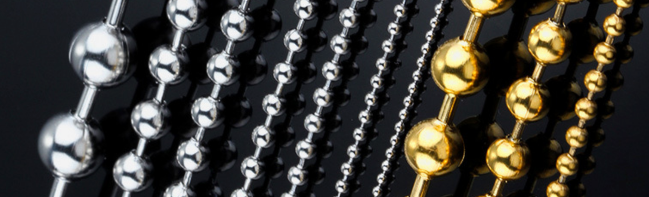
Bead chain uses connected spherical elements and normally needs a connector designed for that structure. Specify bead diameter, spacing, chain length, connector type, and pendant orientation as one system. During sample review, operate the connector several times and check that the cut end and connection remain clean.
Wheat Chain
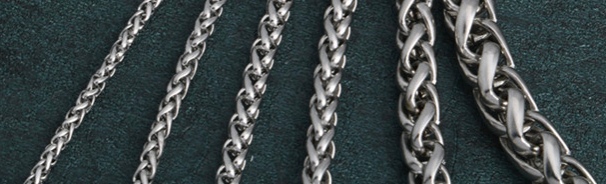
Wheat chain uses interwoven links to form a dense textured profile. Because the structure appears fuller than a basic open-link chain, approve the actual diameter and flexibility with the intended pendant and clasp. Inspect the weave, end termination, finish coverage, and movement around the full necklace rather than relying on a close-up image.
How to Choose Necklace Chain Width and Weight
Chain style names do not define one fixed width or weight. Put the target finished width, wire or link profile, total length, material direction, pendant dimensions, and preferred visual balance into the project specification. If the chain should feel delicate, substantial, or visually dominant, describe that goal and confirm it against a physical sample.
- Width: approve the measured finished profile, not a product photo alone.
- Weight direction: review the complete necklace with pendant, clasp, extender, and tag attached.
- Length: include the clasp and any extension chain in the total-length definition.
- Movement: check drape, twist, articulation, and how the chain settles after handling.
- Comfort and edges: inspect link edges, connector ends, clasp contact points, and areas likely to touch skin or catch fabric.
Match the Chain to the Pendant and Bail
A pendant and chain should be approved as an assembled product. Compare the chain’s widest effective point—including the end fitting—with the bail opening. Then check pendant orientation, movement, visual balance, and whether the pendant can travel into a position that scratches or jams against the clasp or connector.
For a custom pendant, review bail geometry with the real pendant shape rather than choosing the bail as an isolated standard part. Baique’s custom pendant sample checklist covers bail fit, chain movement, finish, detail, and packaging as one approval sequence.
Choose the Clasp, Connectors, and Findings as One System
The clasp should suit the chain profile, product use, and intended handling. Confirm how the clasp joins to the chain, whether a jump ring or end cap is required, how an extension chain is attached, and whether the connected parts share the intended finish direction. The necklace clasp types guide compares closure choices, while the custom jewelry findings guide explains how to review clasps, jump rings, bails, and connectors before production.
Set the Material and Finish Direction Before Sampling
Material and finish decisions affect more than color. They can change link forming, surface appearance, perceived weight, flexibility, edge feel, and how the chain matches the pendant, clasp, and other findings. Provide a finish reference and identify which components must match. Approve the assembled sample under consistent lighting rather than comparing isolated parts from different reference sets.
Do not treat one sample as proof of a universal wear or strength result. If the project has defined performance concerns, agree on the relevant material, dimensions, assembly details, and test scope before production.
Assembled Necklace Sample Checklist
- Confirm the chain type, link pattern, finished width, total length, and material direction against the specification.
- Measure the pendant bail opening and verify that the chain and end fitting pass through as intended.
- Check how the pendant hangs, turns, and returns to position during normal handling.
- Operate the clasp and extension system; review connector closure, alignment, and edge finish.
- Inspect chain movement for twist, kinks, inconsistent links, rough points, or unwanted stiffness.
- Compare finish color and surface appearance across the chain, clasp, connectors, bail, and pendant.
- Check logo or decorative detail at real product scale and confirm that nearby hardware does not obstruct it.
- Review the complete necklace in its planned card, pouch, bag, or box so contact points and movement during packing are visible.
- Record approved measurements, finish reference, hardware choice, packaging direction, and sample photos as the production reference.
Prepare a Custom Necklace Inquiry
To review a custom necklace project, send the chain style or reference, target width and length, material and finish direction, pendant artwork and dimensions, bail opening, clasp preference, quantity, packaging expectation, and the sample checks that matter to your brand. Baique’s Custom Necklaces Service can review the necklace-specific route, while the Fashion Jewelry manufacturing page explains the broader custom development path.


Andy is a renowned expert in fashion jewelry manufacturing with deep industry insights. He provides OEM/ODM services to fashion brands and jewelers, turning ideas into tangible products. In addition to quality, Andy provides strategic advice on market trends and manufacturing innovations to help clients stand out in a competitive marketplace.