A good custom accessories order starts before the first sample is made. If the buyer can explain the product type, artwork, size, material, finish, quantity target, and sample goal clearly, the manufacturer can review the project faster and give more useful feedback.
A complete starting pack also helps reduce avoidable sampling delays by keeping artwork, material, finish, quantity, and approval goals aligned from the first review.
This does not mean every buyer needs a perfect CAD file before contacting Baique. Many projects begin with a sketch, reference photo, logo file, or rough idea. The important part is to provide enough information for the manufacturer to understand what the accessory should look like, how it will be used, and what details must be checked before production.
Use this checklist before requesting a quote or sample for custom belt buckles, keychains, rings, bracelets, necklaces, pins, charms, bag hardware, or other custom metal accessories.
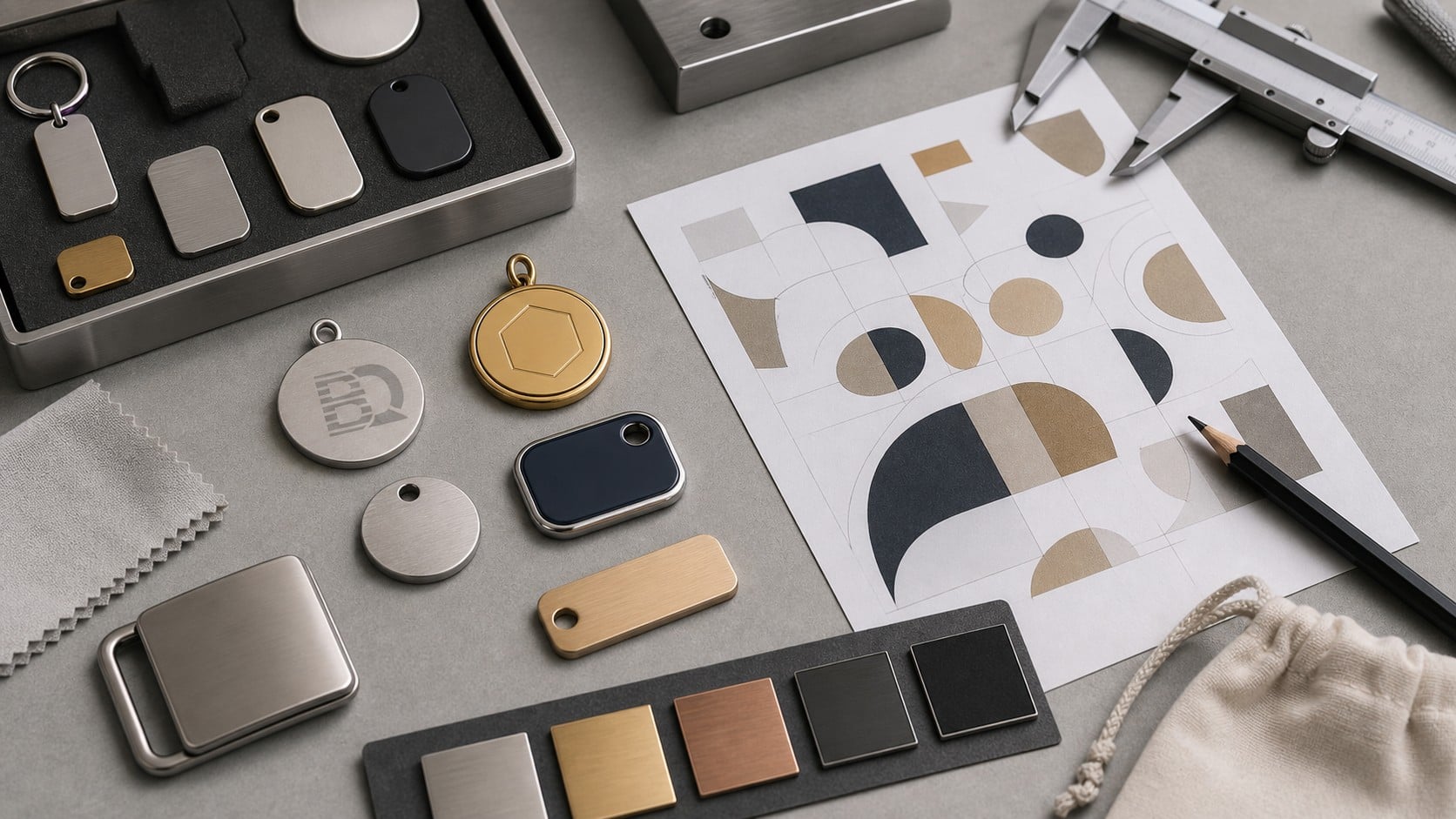
Quick Checklist: What to Send First
| Detail to prepare | Examples | Why it matters | If it is missing |
|---|---|---|---|
| Product type | Belt buckle, keychain, ring, bracelet, pin, charm, bag hardware | Different products use different structures, materials, and quality checks | The project may be routed to the wrong production method |
| Intended use | Retail jewelry, promotional gift, fashion accessory, event merch, bag part | Usage affects durability, finish, packaging, and sample expectations | The sample may look good but fail in real handling |
| Artwork or logo | Vector file, PNG, PDF, sketch, reference image | Logo method depends on detail, line thickness, color, and surface | Quotation may be delayed or based on assumptions |
| Size and thickness | Overall length, width, thickness, belt width, ring size, pendant size | Size affects weight, material choice, tooling, and finish | The sample may feel too heavy, too thin, or out of proportion |
| Material preference | Zinc alloy, brass, stainless steel, acrylic, leather, resin, mixed materials | Finish, strength, cost band, and shape detail depend on material | The manufacturer must guess the best route |
| Finish target | PVD, electroplating, enamel, epoxy/resin, brushed, polished, antique | Finish affects color, surface feel, durability expectation, and logo visibility | The sample may not match the brand's visual direction |
| Hardware or connector | Split ring, jump ring, clasp, chain, pin back, buckle prong, snap, hook | Small hardware can decide whether the accessory works well | The product may look correct but function poorly |
| Quantity or MOQ target | Test order, launch quantity, repeat program, per design/SKU split | Quantity affects production planning and sampling strategy | The manufacturer cannot judge whether the plan is realistic |
| Sample goal | Check shape, finish, logo, connector, packaging, or all details | A sample should answer specific questions | The buyer may approve the wrong thing |
| Packaging and shipping | Polybag, card, pouch, box, export carton, retail packaging | Packaging can protect or damage the finish and changes presentation | Finish rub, bending, or mixed-item confusion may appear late |
| Timeline | Launch date, event date, sample deadline, bulk target | Helps decide whether the project needs a simpler route | The project may be planned around an unrealistic schedule |
1. Confirm the Product Type and Use Case
Start with the product category. A custom belt buckle, enamel pin, metal keychain, necklace pendant, ring, bracelet charm, and bag hardware part may all be small metal accessories, but they do not share the same structure.
Tell Baique what the item is and how it will be used:
- Is it worn on the body?
- Is it attached to keys, bags, belts, or packaging?
- Is it a retail product or promotional giveaway?
- Will it be handled daily or used mainly for display?
- Does it need to carry weight, open and close, rotate, clip, or connect to another part?
This context affects material, finish, thickness, connector choice, and sample checks. For example, a decorative charm may prioritize logo detail and finish color, while a keychain must also consider connector movement and rubbing. A belt buckle must consider belt width, prong or clamp structure, and surface durability in use.
2. Prepare Artwork and Logo Files
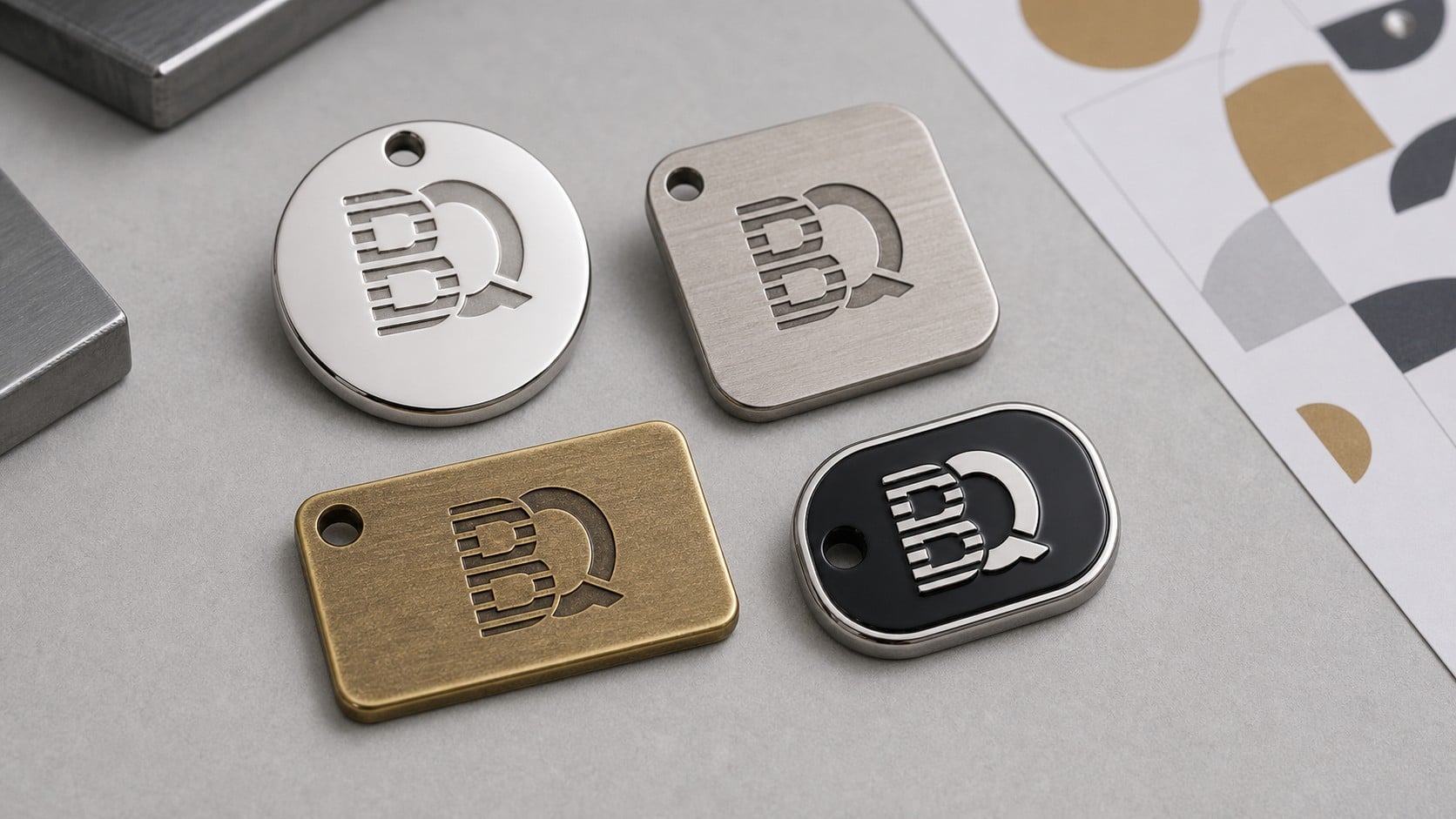
For most custom accessories, artwork is the first practical input. A vector file is helpful, but it is not always the only possible starting point. Baique can often review a logo image, sketch, reference photo, or rough layout first, then advise what needs to be cleaned up before sampling.
Useful artwork inputs include:
- vector logo file such as AI, EPS, SVG, or PDF
- high-resolution PNG or JPG if vector is not available
- sketch with key dimensions
- reference product photo
- color reference
- notes about which details must stay visible
The logo method should match the design. A simple bold logo may work well as raised metal, recessed metal, laser engraving, stamping, or enamel fill. A detailed gradient logo may need printing, simplified artwork, or a different surface approach.
Before sampling, confirm:
- whether the logo should be raised, recessed, engraved, printed, filled, or laser marked
- whether small text is required
- whether colors are solid, metallic, transparent, or gradient
- whether the same logo must work on several products
- whether the logo is decorative or must be highly legible
3. Define Size, Thickness, Weight, and Structure
Dimensions are not just technical details. They affect how the accessory feels and whether the design can be produced cleanly.
For custom accessories, try to provide:
- overall length and width
- thickness target
- hole size or connector location
- belt width if it is a buckle
- ring size if it is a ring
- chain length if it is a necklace or bracelet
- charm weight target if it will hang from a connector
- front and back design if both sides matter
If you do not know the exact thickness yet, explain the desired feel: lightweight promotional, premium retail, sturdy outdoor, delicate jewelry, or heavy statement piece. Baique can then review whether the design should be thinner, thicker, hollow, solid, cast, stamped, cut, or assembled from multiple parts.
4. Choose Materials as a Range, Not a Guess
Buyers often ask for a material before the design is fully defined. That is understandable, but material should be chosen together with shape, finish, weight, and use.
Common custom accessory materials include:
- zinc alloy for complex shapes, 3D detail, many buckles, charms, and decorative metal accessories
- brass for a premium metal feel, polishing, plating, and certain jewelry or buckle projects
- stainless steel for strength, corrosion resistance, clean modern forms, PVD, polishing, and laser marking
- acrylic, leather, soft PVC, resin, or mixed materials for keychains and promotional accessories
You do not need to decide everything alone. A useful first request can say:
"We are considering zinc alloy or stainless steel. The product is a metal keychain with a raised logo, gold-tone finish, and a premium retail feel. Please advise which material is more practical before sampling."
That gives the manufacturer enough context to review tradeoffs instead of simply quoting a material name.
5. Define the Finish Target
Finish is one of the most common sources of misunderstanding in custom accessories. Words like gold, silver, matte, antique, premium, or glossy are not precise enough by themselves.
Send a finish reference whenever possible:
- photo of a similar finish
- Pantone or color target for non-metal color areas
- polished, brushed, matte, antique, or sandblasted preference
- plating or PVD target if known
- enamel or epoxy/resin fill requirement
- sample from a previous product if available
For metal accessories, the finish should be reviewed together with material and logo method. A finish that looks strong on a flat stainless steel tag may not look the same on a complex zinc alloy buckle or a small engraved charm.
6. Confirm Hardware, Connectors, and Moving Parts
Many accessory problems come from small hardware rather than the main body. Key rings, jump rings, chains, clasps, pin backs, buckle prongs, snaps, hooks, and hinges should be specified before sampling.
For keychains, confirm:
- split ring, jump ring, chain, clasp, swivel hook, or carabiner
- connector wire thickness or size target when relevant
- hole size and distance from edge
- whether the charm is heavy or lightweight
For pins and brooches, confirm:
- pin back type
- clutch or safety closure
- orientation and balance
- whether the item must sit flat on fabric
For belt buckles, confirm:
- belt width
- prong, clamp, snap, plate, or other attachment structure
- whether the back side needs branding or finishing
- expected use: fashion, promotional, rodeo-style, uniform, or retail belt
If hardware is not specified, the sample may look acceptable in photos but fail the actual use case.
7. Give a Quantity or MOQ Target
MOQ is not always one simple number. It can change by product type, material, finish, mold/tooling requirement, color version, size split, packaging, and production setup.
Review why custom accessory MOQ changes before setting the order plan, especially when designs, finishes, sizes, or packaging are split across SKUs.
Instead of asking only "What is your MOQ?", give context:
- target total quantity
- number of designs
- number of colors or finishes
- sizes or SKU split
- whether this is a test order or repeat program
- packaging needs
Example:
"We are planning 1,000 metal keychains across two finishes, with the same logo and one packaging style. We want to sample one finish first, then decide whether to split the bulk order."
That is easier to review than a vague request for "custom keychains with logo."
8. Define the Sample Goal
A sample is not only a small order. It is a development step. Before requesting a sample, decide what the sample must prove.
Common sample goals:
- confirm shape and size
- check logo clarity
- compare material feel
- approve finish color
- test connector fit
- review edge smoothness
- confirm packaging fit
- check weight and handling
If the sample is mainly for finish approval, focus on color, gloss, surface texture, and edge coverage. If the sample is for structure approval, focus on size, weight, connector, opening/closing action, and how the item will be used.
9. Sample Approval Checklist
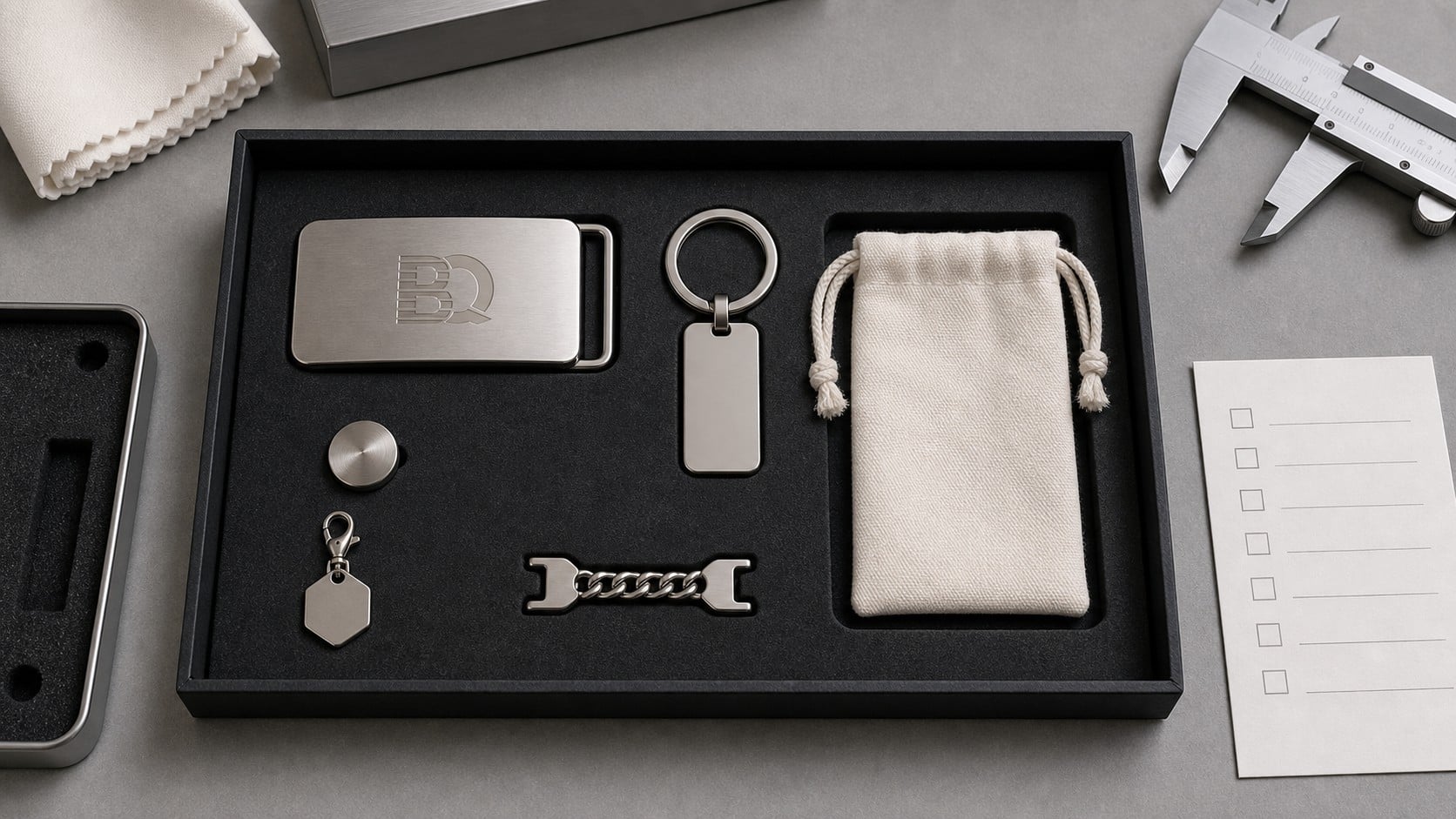
Before moving from sample to production, check:
| Checkpoint | What to review |
|---|---|
| Size and weight | Does it match the intended use and feel? |
| Logo clarity | Are small details readable enough? |
| Material and finish | Does the sample match the approved direction? |
| Edge feel | Are there sharp edges, burrs, or uncomfortable areas? |
| Connector function | Does the ring, clasp, pin, prong, or hook work as intended? |
| Color consistency | Does the finish match the reference under normal lighting? |
| Surface defects | Check scratches, pits, uneven polishing, bubbles, or missing fill. |
| Back side | Is the back finish acceptable if it will be visible or handled? |
| Packaging fit | Does packaging protect the item without rubbing visible areas? |
| Approval record | Keep photos, videos, notes, and final confirmed specifications together. |
Do not approve a sample only because the front view looks good. For many accessories, the back, edge, connector, thickness, and packaging matter just as much.
10. Packaging and Shipping Readiness
Packaging should be considered before production, not after the finished accessories are ready.
Confirm:
- whether each item needs an individual bag, card, pouch, or box
- whether metal parts can rub against each other
- whether the finish is exposed during shipping
- whether retail packaging needs logo or barcode space
- whether sets or mixed SKUs need clear separation
- whether the buyer needs carton marks or packing lists
Packaging does not only affect presentation. It can also protect the finish, prevent tangling, reduce scratches, and make final inspection easier.
11. Which Baique Service Page Should You Visit Next?
| Product type | Best next page | Extra details to send |
|---|---|---|
| Belt buckles | /custom-belt-buckles-service/ |
Belt width, buckle structure, logo depth, finish, back-side requirement |
| Keychains | /custom-keychains-service/ |
Material, charm size, connector type, finish, packaging |
| Rings | /custom-rings-service/ |
Ring size range, material, finish, logo or stone/detail requirement |
| Bracelets | /custom-bracelets-service/ |
Chain/cord/hardware type, charm size, clasp, finish |
| Necklaces | /custom-necklaces-service/ |
Pendant size, chain type, logo method, finish, packaging |
| Pins | /custom-pins-service/ |
Pin type, enamel/printing needs, plating, back attachment |
If your project crosses categories, start with the closest service page and include notes about the full accessory set.
FAQ
Do I need CAD before contacting a custom accessories manufacturer?
Not always. CAD is useful for complex 3D shapes, jewelry, precise structures, and production-ready development, but many projects can begin with a logo file, sketch, reference photo, or product idea. The clearer your dimensions and design goals are, the easier it is to decide whether CAD is needed.
What artwork file should I send for a custom logo accessory?
Vector files such as AI, EPS, SVG, or PDF are best when available. If you do not have vector artwork, send the highest-resolution image you have, plus notes about logo size, color, and which details must stay visible.
Why can MOQ change by design or finish?
MOQ can depend on tooling, material, production setup, finish process, color split, size split, and packaging. A simple one-color metal charm may be easier to plan than a multi-size, multi-finish accessory set with custom packaging.
What should I check before approving a sample?
Check size, weight, logo clarity, material, finish, edge feel, connector function, surface defects, packaging fit, and whether the sample matches the intended use. Keep the approval notes and images together so bulk production has a clear reference.
Can Baique help choose material and finish if I only have a reference image?
Yes. A reference image can be a useful starting point. Send the image with your product category, target size, intended use, quantity target, and preferred feel. Baique can review whether the look is better matched by zinc alloy, brass, stainless steel, enamel, PVD, electroplating, printing, epoxy/resin, or another route.
CTA
Preparing a custom accessories project? Send Baique your artwork, product category, target size, material or finish idea, quantity target, reference photos, and intended use. We can help turn those details into a practical sampling plan before production.


Andy is a renowned expert in fashion jewelry manufacturing with deep industry insights. He provides OEM/ODM services to fashion brands and jewelers, turning ideas into tangible products. In addition to quality, Andy provides strategic advice on market trends and manufacturing innovations to help clients stand out in a competitive marketplace.