MOQ for custom accessories is not one fixed number. It can change by product type, material, mold or tooling route, finish, color split, SKU plan, packaging requirement, and how the sample will be approved before bulk production.
For a buyer, the useful question is not only "What is your MOQ?" A better question is: "What design and production choices affect the minimum quantity for this project?" That gives the manufacturer enough context to review whether the order can be planned as one design, several SKUs, several finishes, or a more complex development job.
Short Answer
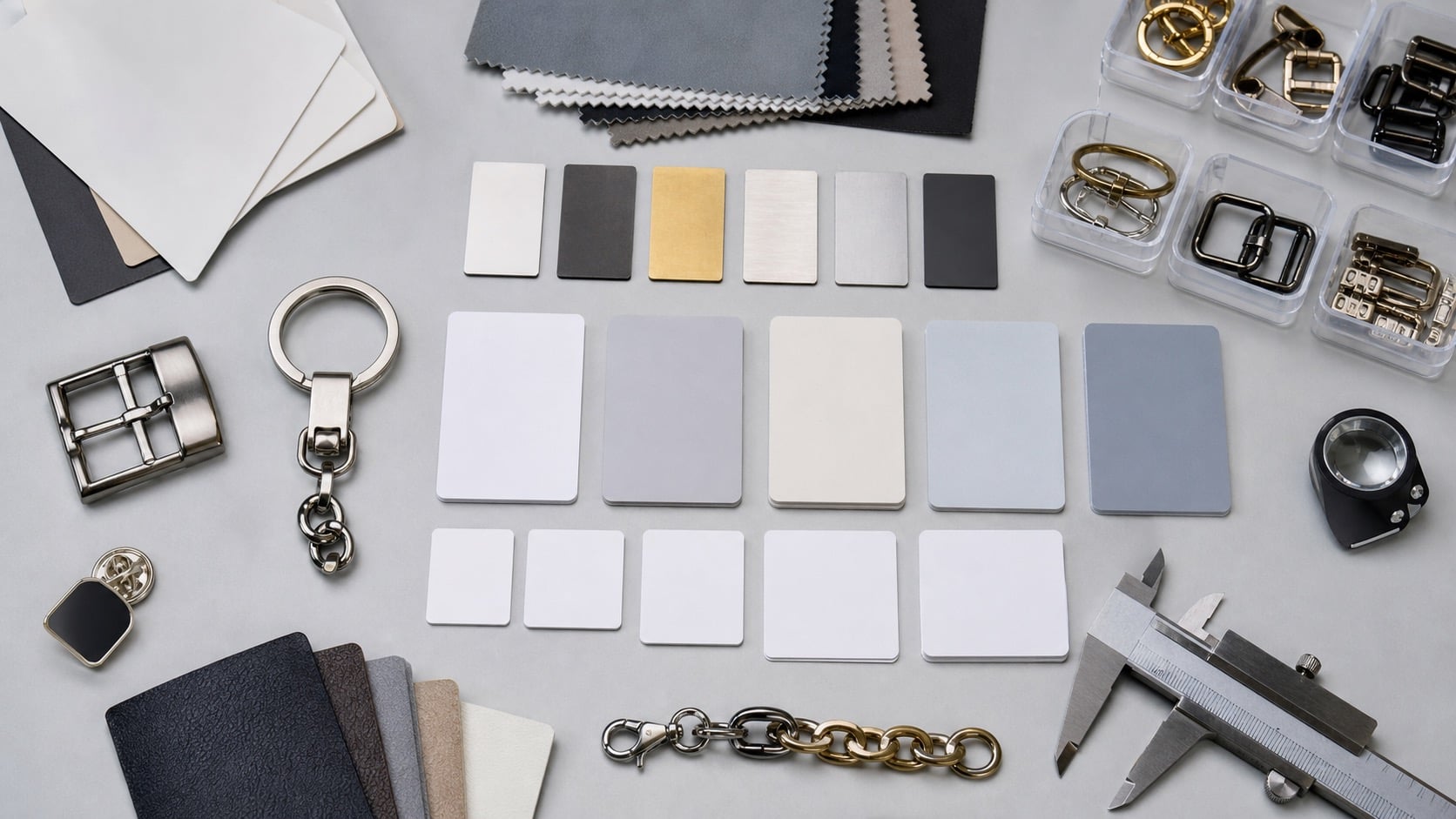
Custom accessories MOQ changes because each order has a different production setup. A simple metal keychain in one finish may be easier to plan than the same keychain split across several colors, packaging styles, and hardware options. A belt buckle, pin, ring, necklace, bracelet, charm, or bag hardware part can also require different material routes and sample checks.
Before asking for MOQ, prepare these details:
- Product type.
- Approximate size and thickness.
- Material preference or material question.
- Finish target.
- Number of designs.
- Number of colors or SKUs.
- Hardware, backing, connector, or assembly requirement.
- Packaging target.
- Sample goal.
- Launch or reorder plan.
You do not need every answer before contacting Baique, but you should explain what is fixed and what can still change.
MOQ Is Not Always One Number
MOQ can be counted in different ways depending on the project:
- Total quantity for one order.
- Quantity per design.
- Quantity per size.
- Quantity per plating or finish color.
- Quantity per enamel or print colorway.
- Quantity per packaging style.
- Quantity per assembled set.
This is why two buyers can ask for "500 pieces" and receive different planning feedback. One buyer may have one simple accessory in one finish. Another may have five designs, two sizes, three colorways, custom cards, and a new connector. The total piece count is only part of the production picture.
What Changes MOQ?
| MOQ variable | Why it matters | What can change | What the buyer should prepare |
|---|---|---|---|
| Product category | Belt buckles, keychains, pins, rings, bracelets, necklaces, charms, and bag hardware use different structures | Process route, inspection points, assembly needs | Product type, use case, and reference images |
| Design count | Each design may need separate artwork review or tooling | Quantity may be reviewed per design | Number of designs and whether they share one base shape |
| SKU or size split | Sizes and colorways can divide the order | Quantity may be reviewed per SKU | SKU list, size list, color list |
| Material | Zinc alloy, brass, stainless steel, silver, acrylic, resin, PVC, or leather can require different routes | Shape detail, finish compatibility, weight, sample plan | Preferred material or open material question |
| Mold or tooling | Custom 3D shapes, stamped forms, engraved details, and cast parts need setup | Development planning may differ from stock component assembly | Artwork, dimensions, logo method, and detail priority |
| Finish | Plating, PVD, enamel, epoxy/resin fill, brushed, polished, antique, or printed effects need different checks | Color matching and finish grouping can affect planning | Finish reference, color target, surface texture notes |
| Hardware or assembly | Rings, chains, pin backs, clasps, prongs, hinges, or custom parts change handling | The accessory may be one item or an assembled product | Attachment/backing/connector preference |
| Packaging | Cards, pouches, boxes, labels, barcodes, and carton requirements add another production layer | Packaging may create its own approval path | Packaging target and label/barcode needs |
| Sample and revision plan | A sample should answer specific questions before bulk production | Extra changes can change the production setup | Sample goal and approval owner |
| Reorder plan | A repeat program may be planned differently from a one-time test | Future color/SKU expansion may affect the first setup | Launch plan and expected reorder direction |
Material Can Change The Practical Minimum
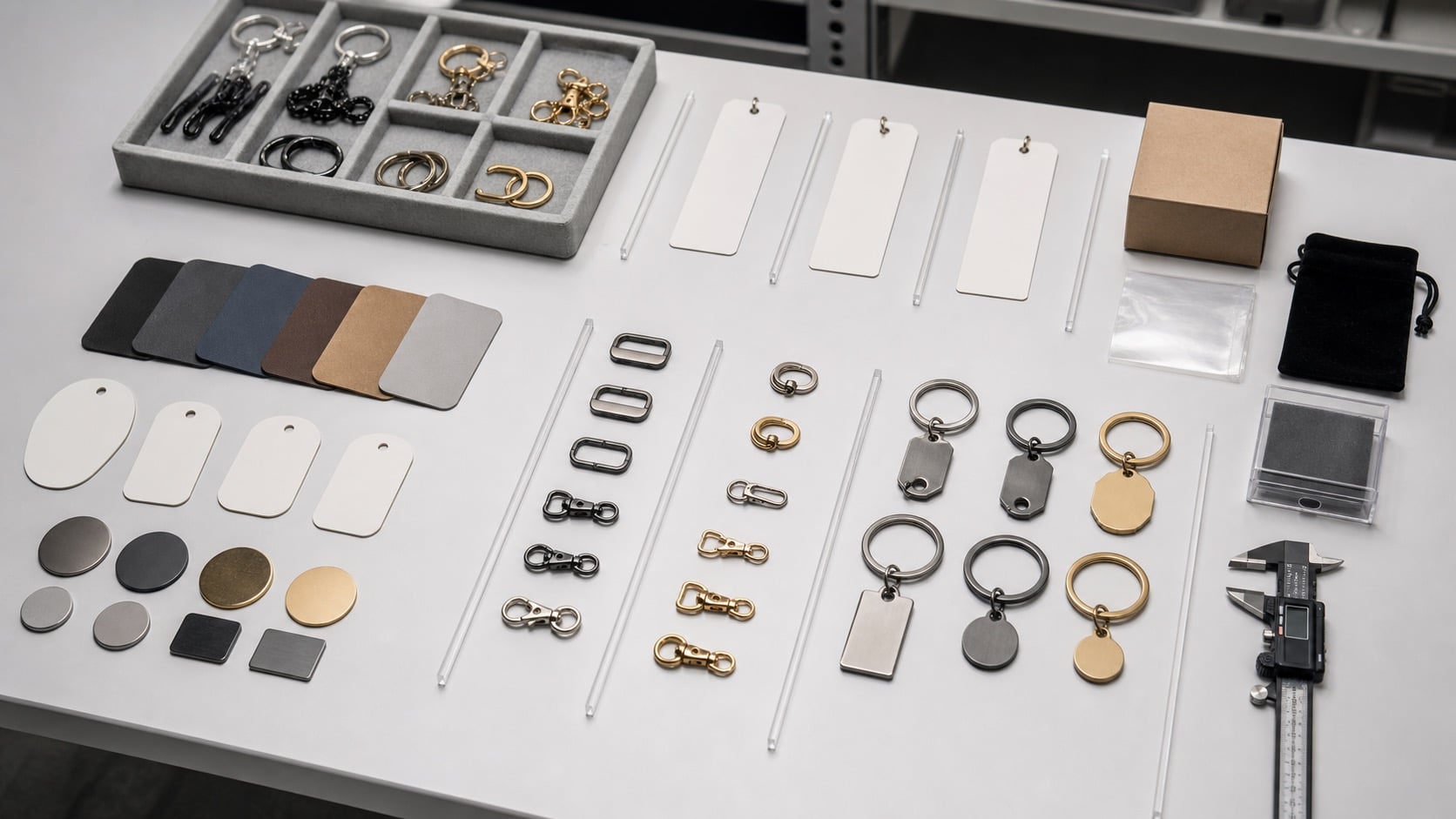
Material is one of the first decisions that can change MOQ planning. A zinc alloy buckle, a brass pendant, a stainless steel ring, a soft PVC keychain, and a resin charm are not produced in the same way.
For custom metal accessories, material affects:
- How the shape is formed.
- Whether a mold or tooling step is needed.
- Whether fine logo detail can stay sharp.
- Which finish options are practical.
- How heavy the product feels.
- What needs to be checked in the sample.
If you are not sure which material to choose, describe the product goal instead. For example:
We want a mid-weight keychain with raised logo detail, gold-tone finish, and a premium retail feel. We are open to material advice before sampling.
That is more useful than choosing a material name without explaining the desired result.
Finish And Color Split Can Change MOQ
Finish is another common reason MOQ changes. One design in one plating color is simpler than the same design in several plating colors, enamel fills, printed colorways, or packaging styles.
Custom accessories may involve:
- Electroplating.
- PVD-style finish.
- Antique finish.
- Brushed or polished finish.
- Soft enamel or hard enamel-style color fill.
- Epoxy or resin fill.
- Printing.
- Laser engraving or etching.
If the buyer needs several colorways, each colorway should be listed clearly. If the buyer only needs one final finish but is still deciding between options, say that before sampling so Baique can suggest a realistic sample path.
Design Complexity And Tooling Matter
Some accessories can be developed from a simple shape and standard hardware. Others need custom relief, custom mold work, special assembly, or multiple surfaces.
MOQ planning may change when a design includes:
- 3D raised or recessed logo detail.
- Small lettering.
- Multiple parts.
- Moving closure or hinge.
- Custom backing or connector.
- Mixed materials.
- Multiple surface treatments on one item.
- Tight shape, size, or finish expectations.
This does not mean complex designs are impossible. It means the buyer should expect a clearer pre-sampling discussion.
Packaging Can Become A Separate MOQ Question
Packaging can also affect MOQ planning when it is custom rather than simple protection.
Examples:
- Printed backing cards for pins or keychains.
- Branded pouches.
- Retail boxes.
- Barcodes or SKU labels.
- Insert cards.
- Sets packed together.
- Destination-specific carton marks.
If the accessory itself is simple but the packaging is highly customized, the package may need its own artwork and sample approval. For that reason, packaging should be discussed before bulk production, not after the accessory sample is already approved.
How Buyers Can Ask About Low MOQ Clearly
It is reasonable to ask whether a lower MOQ is possible. The best way is to separate what is fixed from what is flexible.
Send a request like:
We are planning one custom metal keychain design. Target quantity is 300-500 pieces for a first test order. The logo and size are fixed, but material and finish can be adjusted. We prefer simple packaging first. Please advise what production route is realistic.
That gives Baique room to review options. If the request says only "lowest MOQ please," the manufacturer may not know whether the buyer can simplify design, combine SKUs, reduce colorways, use standard hardware, or postpone custom packaging.
Buyer Checklist Before Asking For MOQ
Before requesting MOQ, prepare:
- Product category and use case.
- Design count.
- Size or size range.
- Material preference, or ask for material advice.
- Finish target or finish options.
- Number of colorways.
- Hardware, backing, connector, or closure requirement.
- Packaging expectation.
- Sample goal.
- Quantity target and reorder plan.
If some details are unknown, mark them as flexible. Flexibility is useful only when it is visible to the manufacturer.
FAQ
What does MOQ mean for custom accessories?
MOQ means minimum order quantity. For custom accessories, it may be reviewed by design, SKU, color, finish, material, packaging setup, or assembly requirement, not only by total piece count.
Is MOQ counted per design or total order?
It depends on the project. If several designs share the same base structure, planning may be different from several fully different products. If each design has separate artwork, tooling, finish, or packaging, MOQ may need to be reviewed separately.
Does material choice affect MOQ?
Yes, material can affect MOQ because it changes the production route, finish compatibility, tooling need, sample review, and assembly plan.
Does plating or packaging change MOQ?
It can. Multiple plating colors, enamel colorways, printed details, custom cards, pouches, boxes, or labels can split the order into smaller groups that need separate planning.
Can I ask Baique for a lower MOQ?
Yes, but give context. Share your design, size, material flexibility, finish target, quantity target, and packaging expectation. Baique can then review whether the project can be simplified or planned in stages.
What should I send before asking for MOQ?
Send product type, artwork or reference image, dimensions, material or finish target, design/SKU count, quantity target, packaging expectation, and sample goal.
CTA
If you are planning a custom belt buckle, keychain, pin, ring, bracelet, necklace, charm, or other accessory, send Baique your design idea, material and finish target, quantity range, SKU plan, packaging expectation, and sample goal. Baique can review which production route is realistic before you commit to bulk production.


Andy is a renowned expert in fashion jewelry manufacturing with deep industry insights. He provides OEM/ODM services to fashion brands and jewelers, turning ideas into tangible products. In addition to quality, Andy provides strategic advice on market trends and manufacturing innovations to help clients stand out in a competitive marketplace.