Custom accessory samples are delayed when the manufacturer has to guess. Missing artwork, unclear dimensions, undecided material, vague finish direction, late packaging requests, scattered feedback, and changing approval standards can all slow a project before bulk production.
The goal is not to rush sampling. The goal is to reduce avoidable delay. A useful sample should answer the right questions: shape, size, logo detail, material, finish, hardware function, packaging fit, and approval standard.
Short Answer
To reduce custom accessory sampling delays, lock the important decisions before the sample starts, send complete production inputs, and give clear consolidated feedback after review.
For the full input list, use the custom metal accessories checklist before sampling and production.
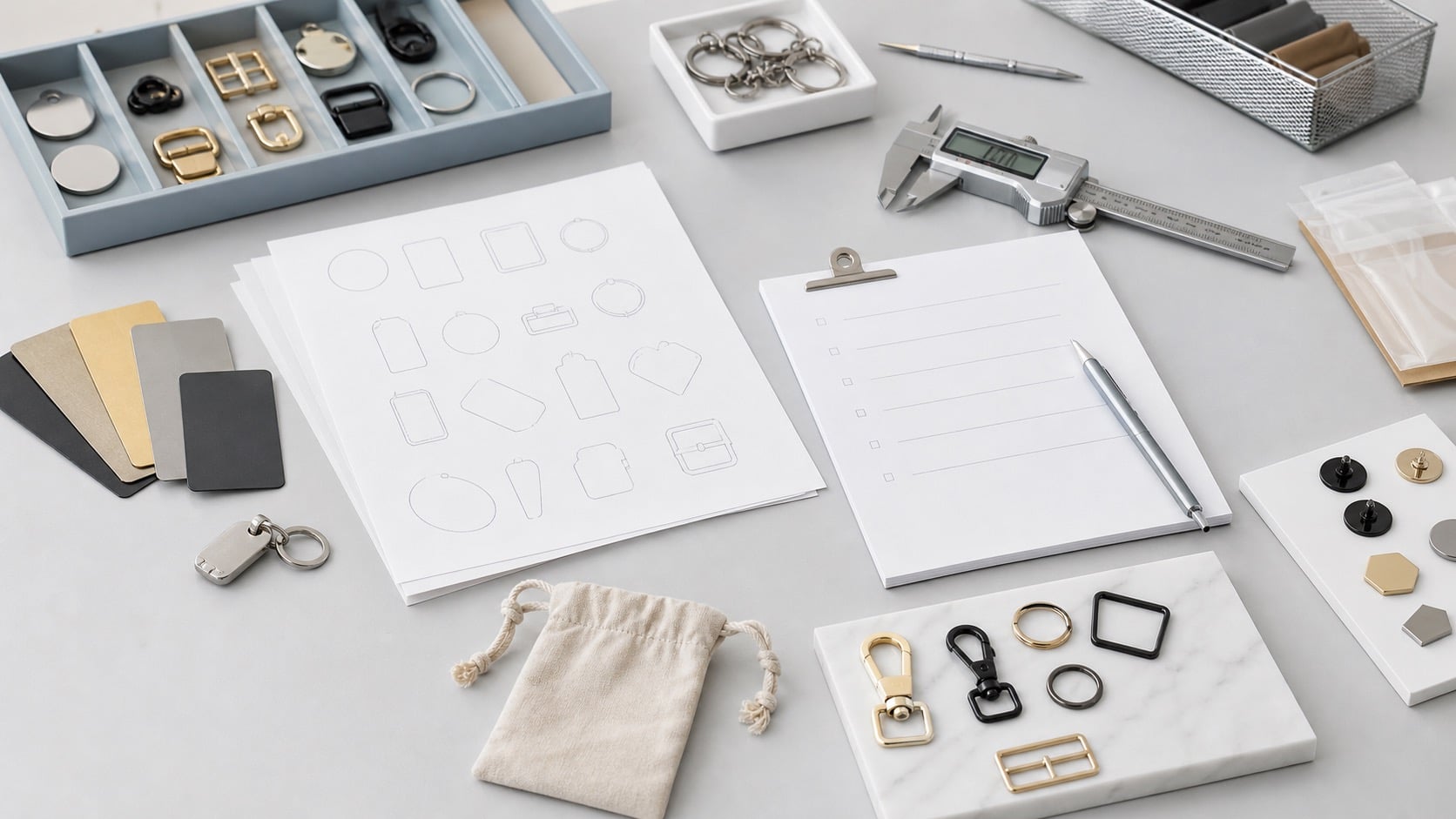
Before requesting a sample, prepare:
- Product type and use case.
- Artwork file or reference image.
- Size and thickness target.
- Material preference or material question.
- Finish or color target.
- Hardware, backing, connector, closure, or chain requirement.
- Packaging target if it affects fit or presentation.
- Quantity target.
- Sample approval owner.
- Revision priorities.
If something is still flexible, say so. If something is fixed, make that clear.
Where Sampling Delays Usually Happen
Sampling delay can happen in three stages:
1. Before sample production: the manufacturer is missing design, size, material, finish, or packaging information. 2. During sample revision: the buyer gives incomplete, conflicting, or late feedback. 3. Before bulk production: the buyer approves the visual sample but later changes finish, packaging, hardware, quantity split, or approval criteria.
| Delay source | Typical symptom | Buyer prevention action | Baique review point |
|---|---|---|---|
| Missing editable artwork | Logo detail cannot be judged clearly | Send vector file if available, plus reference image | Logo method, line detail, raised/recessed/printed/enamel route |
| Unclear dimensions | Sample looks too large, too small, too thin, or too heavy | Send length, width, thickness, and important fit dimensions | Size, weight, proportion, structure |
| Material undecided | Finish or structure advice keeps changing | Explain desired feel and use case if material is open | Material route and sample risk |
| Finish not specified | Color or surface effect does not match expectation | Send finish reference, Pantone/color target, or sample photo | Plating, PVD, enamel, epoxy/resin, polish, antique, or texture |
| Hardware undecided | Product looks correct but does not function well | Confirm backing, clasp, split ring, chain, prong, snap, or connector | Function, comfort, movement, attachment fit |
| Packaging added late | Product sample is approved but package fit fails | Discuss packaging before bulk production | Surface protection, card/pouch/box fit, label/barcode needs |
| Feedback split across messages | Revision direction becomes unclear | Send one consolidated revision list | Priority order and sample change scope |
| New design change after sample | Original sample no longer answers the project question | Decide whether to revise or restart sample logic | Tooling, material, finish, and approval impact |
| No approval owner | Different reviewers request different changes | Assign one final approval owner | Final sample reference before bulk production |
1. Send A Clear Product Brief First
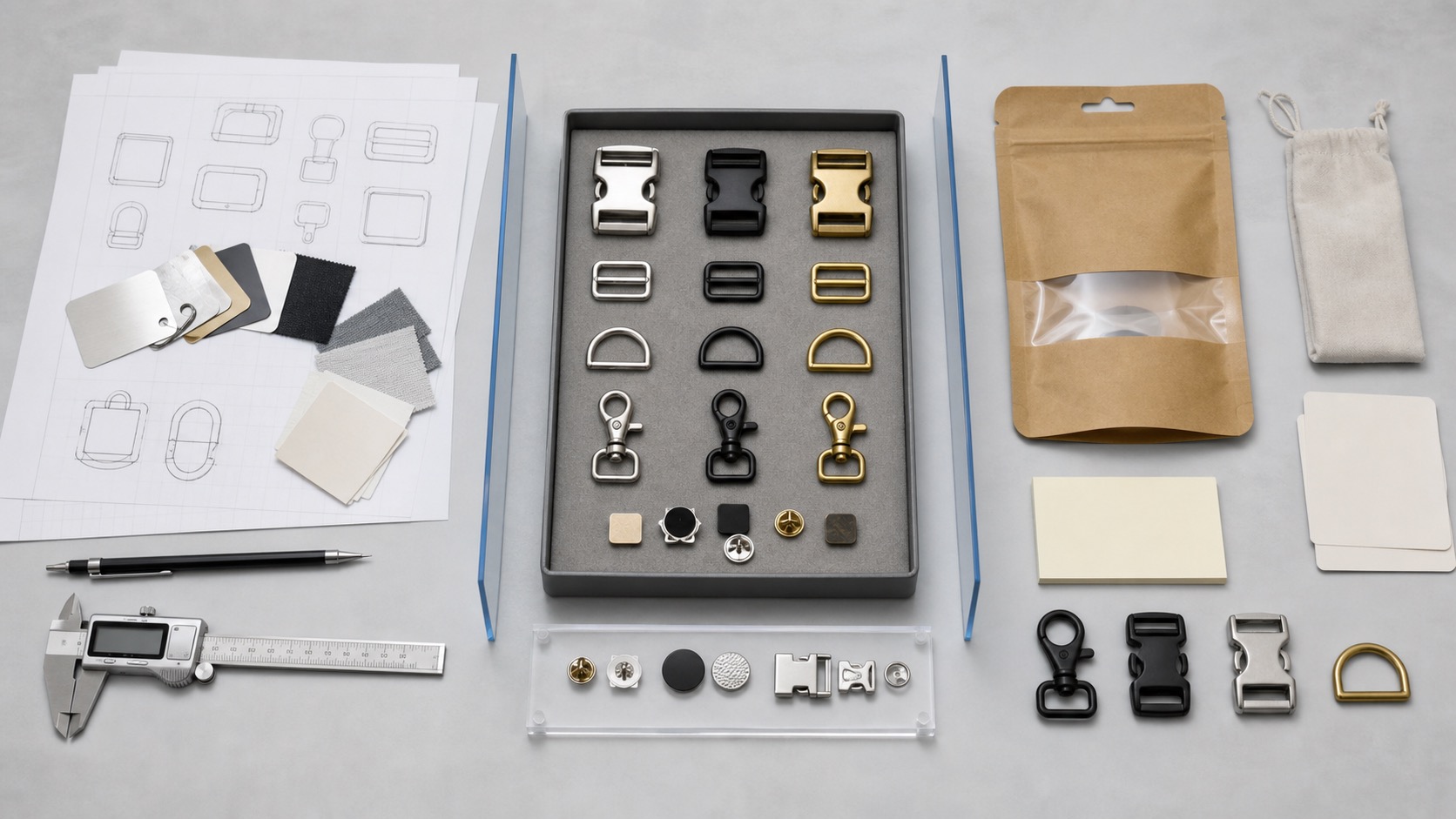
A custom accessory sample starts with the product brief. The brief does not need to be complicated, but it should answer the questions that affect production.
Useful first inputs include:
- Product category: belt buckle, keychain, pin, ring, bracelet, necklace, charm, bag hardware, or other item.
- Intended use: retail, event merch, promotional item, fashion accessory, uniform accessory, bag part, or packaging accessory.
- Artwork file or reference image.
- Size and thickness target.
- Material preference, if known.
- Finish or color target.
- Hardware or connector requirement.
- Quantity target.
- Packaging target.
- Sample goal.
A vague request may still start a conversation, but it usually creates more back-and-forth before the sample can be planned.
2. Lock What Matters Before Sampling
Some details can stay flexible. Others should be decided before sample production starts.
Try to lock:
- Overall size.
- Main logo or design.
- Key surface effect.
- Product category.
- Attachment or backing method.
- Material direction if it affects finish or function.
- Packaging direction if the package affects product fit.
If the buyer changes size, material, finish, or hardware after the first sample, the project may need a new review. That does not mean the change is wrong; it means the sample is no longer testing the same decision.
3. Use Artwork As Production Instruction
Artwork is not only a visual file. For custom metal accessories, artwork can decide whether the logo is raised, recessed, engraved, printed, enamel-filled, laser marked, stamped, or molded.
To reduce artwork-related delay, send:
- Editable vector artwork when possible.
- A clear reference image.
- Actual product dimensions.
- Logo placement.
- Color target.
- Notes about which details must remain legible.
- Back-side artwork if relevant.
If only PNG or JPG is available, say that it is a visual reference and ask whether vector cleanup is needed before sampling.
4. Specify Finish Before The Sample Is Made
Finish often changes the sample conversation. "Gold," "silver," "black," "matte," "premium," or "antique" can mean different things.
Better finish inputs include:
- Reference photo.
- Pantone or color target for non-metal color areas.
- Plating, PVD, enamel, epoxy/resin, printed, brushed, polished, or antique direction.
- Whether logo detail should stand out or remain subtle.
- Whether the item will rub against keys, fabric, chains, packaging, or other hardware.
If finish is still undecided, ask Baique to compare practical options before the sample route is chosen.
5. Confirm Hardware And Function Early
Small hardware decisions can delay sampling because they affect both function and appearance.
Examples:
- Split ring, jump ring, connector chain, swivel hook, or lobster clasp for keychains.
- Butterfly clutch, rubber clutch, locking back, magnet, or brooch-style backing for pins.
- Prong, clamp, ratchet, snap, plate, or frame structure for belt buckles.
- Chain type, clasp, pendant bail, ring size, or bracelet closure for jewelry.
If the accessory must open, close, clip, rotate, hang, or attach to fabric, that function should be discussed before sample production.
6. Give Feedback That Can Be Acted On
After the sample arrives, avoid sending scattered comments across many messages. A manufacturer needs one clear revision list.
Useful feedback includes:
- What is approved.
- What must change.
- Whether the change is visual, functional, or packaging-related.
- Whether the change affects size, material, finish, hardware, or artwork.
- Photos or marked-up images.
- Priority order if not every change is equally important.
Instead of:
Make it more premium.
Use:
Keep the shape and size. Increase logo contrast, make the finish less glossy, and check whether the clasp can rotate more smoothly. Packaging is approved.
7. Know When A Change Should Restart The Sample
Some changes are minor. Others change the product enough that the original sample can no longer be the production reference.
A sample may need deeper review if the buyer changes:
- Material.
- Overall size.
- Molded or raised logo depth.
- Plating or finish type.
- Enamel or printed color layout.
- Hardware/backing/connector.
- Packaging structure.
- Quantity or SKU split.
If a change affects how the product is made, treat it as a production decision, not only a style edit.
8. Approve The Right Reference Before Bulk Production
Before bulk production, the buyer should know what the approved sample represents.
Check:
- Shape and dimensions.
- Logo clarity.
- Material and weight feel.
- Finish and color direction.
- Edge comfort.
- Hardware function.
- Back-side details.
- Packaging fit.
- Label or barcode if relevant.
- Any photo/video approval notes.
Keep the final approval notes together. If the buyer approves only the front appearance but not the backing, connector, or packaging, the production team may not have a complete reference.
FAQ
Why do custom accessory samples get delayed?
Samples are often delayed by missing artwork, unclear size, undecided material or finish, late packaging decisions, conflicting feedback, or changes after the sample route has already been chosen.
What should I send before requesting a sample?
Send product type, use case, artwork or reference image, dimensions, material/finish target, hardware requirement, packaging expectation, quantity target, and sample approval goal.
How should I give sample revision feedback?
Send one consolidated list. Separate approved details from changes, mark up photos when helpful, and explain whether each change affects appearance, function, packaging, or production.
What is a golden sample?
A golden sample is an approved reference sample used to guide production expectations. For custom accessories, the approved reference should cover shape, logo, material, finish, hardware, packaging, and any key inspection notes.
Should packaging be approved with the product sample?
Yes, when packaging affects product fit, surface protection, retail presentation, labeling, or carton planning. Packaging added late can create avoidable revision work.
Can I change material or finish after the first sample?
Sometimes, but it should be treated as a meaningful production change. Material or finish changes can affect shape detail, color, surface feel, hardware compatibility, packaging, and sample approval.
CTA
If you are preparing a custom accessory sample, send Baique your artwork, product size, material and finish target, hardware or backing choice, packaging expectation, quantity target, and revision priorities. Baique can review the sampling path before bulk production decisions are locked.


Andy is a renowned expert in fashion jewelry manufacturing with deep industry insights. He provides OEM/ODM services to fashion brands and jewelers, turning ideas into tangible products. In addition to quality, Andy provides strategic advice on market trends and manufacturing innovations to help clients stand out in a competitive marketplace.