Quick Answer
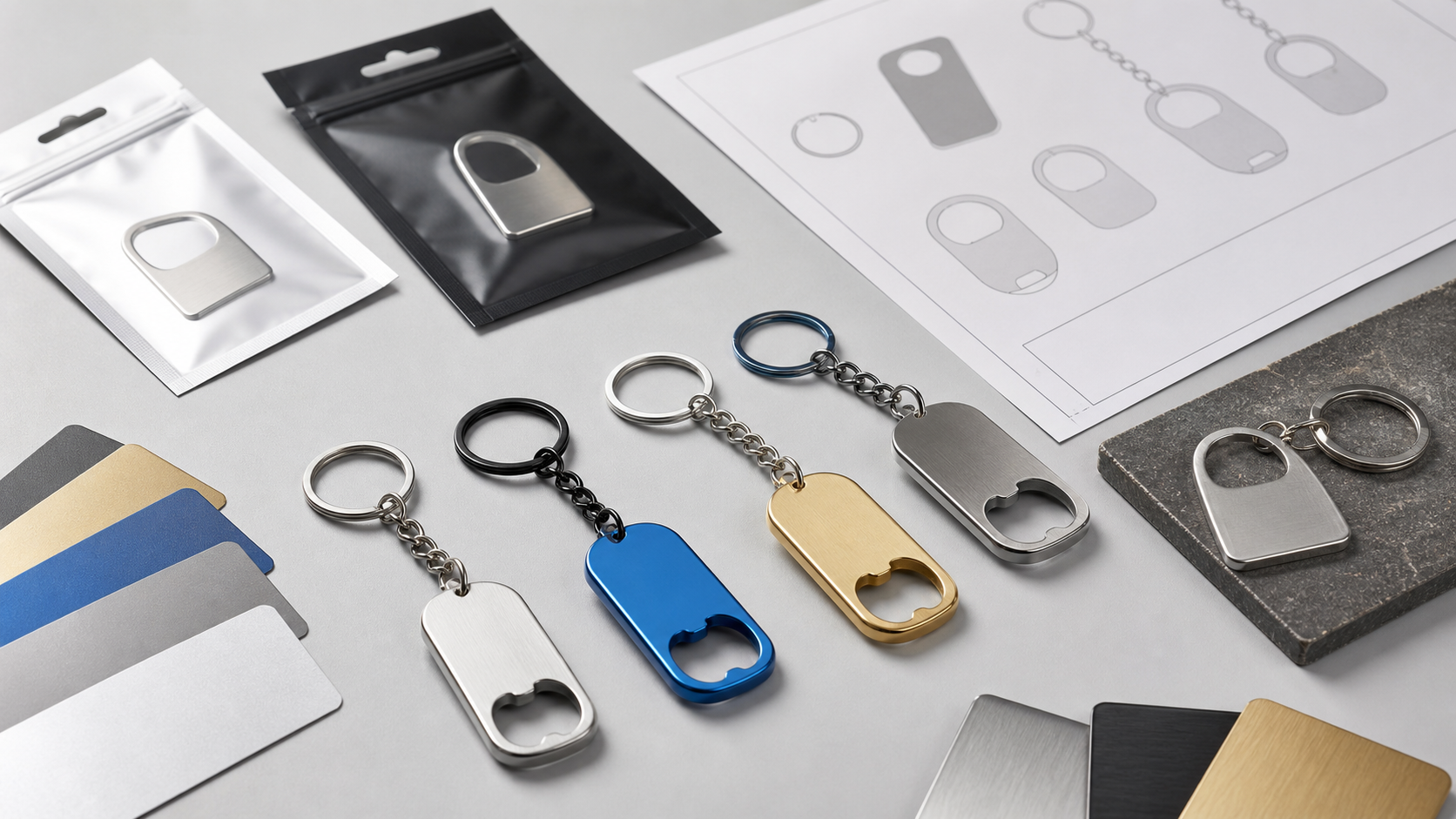
Before ordering custom bottle opener keychains, confirm the opener body, key ring, connector, logo method, finish, packaging, and sample approval points as one assembled product.
A bottle opener keychain is not only a flat metal blank with a logo. It has to open a bottle, carry keys, sit in a pocket or bag, and still look acceptable after handling and packing. For a smoother sample review, send the manufacturer:
- the intended use and buyer audience;
- target size, shape, and metal thickness;
- opener mouth shape and edge expectations;
- logo artwork and preferred logo method;
- material and finish direction;
- ring hole, chain, connector, and split ring direction;
- packaging expectation;
- sample concerns such as burrs, scratches, color match, ring gap, or logo readability.
This article focuses on B2B custom metal bottle opener keychains, especially what to confirm before sampling and before bulk production.
What Counts as a Custom Bottle Opener Keychain?
A custom bottle opener keychain combines a metal opener body with keychain hardware. It may use a split ring, short chain, connector, swivel, or other attachment so the opener can be carried with keys, clipped to a bag, or used as a promotional accessory.
The product sounds simple, but the sample includes several working parts:
| Part | What it affects | What to confirm |
|---|---|---|
| Opener body | Shape, weight, function, logo area | Size, thickness, opener mouth, edge feel |
| Logo area | Brand visibility | Engraving, raised/recessed logo, printing, color fill, or laser mark |
| Ring hole | Assembly and movement | Hole size, location, edge smoothness |
| Chain or connector | Flexibility and handling | Link size, gap, finish rubbing, movement |
| Split ring | Key attachment | Diameter, opening gap, stiffness, finish match |
| Packaging | Delivered appearance | Pouch, card, sleeve, bulk packing, scratch protection |
For sampling, the name of the item matters less than the use. A flat opener for a drawer, a bottle opener magnet, and a bottle opener keychain need different checks. A keychain version needs both opener function and everyday carrying review.
What to Specify Before Sampling
Start with the use case. Is the item a retail accessory, a promotional giveaway, a brand merchandise piece, a barware item, or part of a larger keychain collection? The answer changes the acceptable weight, finish, logo size, and packaging.
Then prepare the technical direction:
- overall size and shape;
- target thickness or weight direction;
- opener mouth position;
- ring hole location;
- split ring or chain style;
- logo artwork file;
- front and back logo placement if both sides matter;
- material preference if known;
- finish reference;
- packing method;
- quantity range if available.
If you do not know the best material or attachment method, say that. A clear use case lets the manufacturer suggest a practical sampling route instead of guessing from a product photo.
Material and Finish Choices
Common material directions for custom bottle opener keychains include stainless steel, aluminum, and zinc alloy. Each can make sense depending on shape, detail, finish, and target feel.
| Direction | Often useful when | Watch during sample review |
|---|---|---|
| Stainless steel | The buyer wants a clean metal feel and visible brushed or polished surface | Edge smoothness, opener mouth finish, logo contrast |
| Aluminum | The buyer wants a lighter keychain or colored anodized direction | Surface marks, color consistency, ring-hole wear |
| Zinc alloy | The design needs shaped detail, dimensional form, or plated finish options | Plating coverage, weight, edge control, back-side finish |
There is no universal best material. A heavy opener may feel solid but uncomfortable for some keychains. A light opener may be easier to carry but may need a different finish or thickness direction. A polished surface can look premium but may show handling marks more easily than a brushed surface.
Approve the material and finish on the actual opener sample, not only on a swatch. The opener mouth, ring hole, edges, chain, and packaging contact points can reveal issues that a flat sample card does not show. For broader keychain material choices, use Baique’s custom keychain materials guide.
Logo Methods for Small Metal Openers
Logo method affects both appearance and sampling cost. Common directions include engraving, laser marking, raised or recessed logo, printing, color fill, and simple blank logo areas prepared for later decoration.
Before sampling, confirm:
- minimum readable logo size;
- whether the logo sits on a flat or curved area;
- whether the logo is close to the opener cutout;
- whether the front, back, or both sides need branding;
- whether the finish should contrast with the logo;
- whether color fill or printing needs extra protection.
Small metal accessories can lose detail quickly if the logo is too thin or too close to a hole or edge. If the logo is important, approve it from normal viewing distance and from the angle a user will see when holding the keychain.
Attachment and Key Ring Checks
The attachment hardware is part of the product, not an afterthought. A nice opener body can still feel unfinished if the ring, chain, connector, or hole is poorly matched.
Check these points before approving a sample:
- ring hole is large enough for the connector;
- hole edge is smooth;
- chain or connector moves without scraping the finish too aggressively;
- split ring diameter matches the product size;
- ring opening gap is controlled;
- chain links are closed and aligned;
- metal colors look intentional together;
- the keychain hangs in the expected direction.
For deeper connector guidance, Baique’s article on why keychain jump rings fail is the better internal reference. This bottle opener keychain article should only cover the checks needed for this assembled product.
Sample Approval Checklist
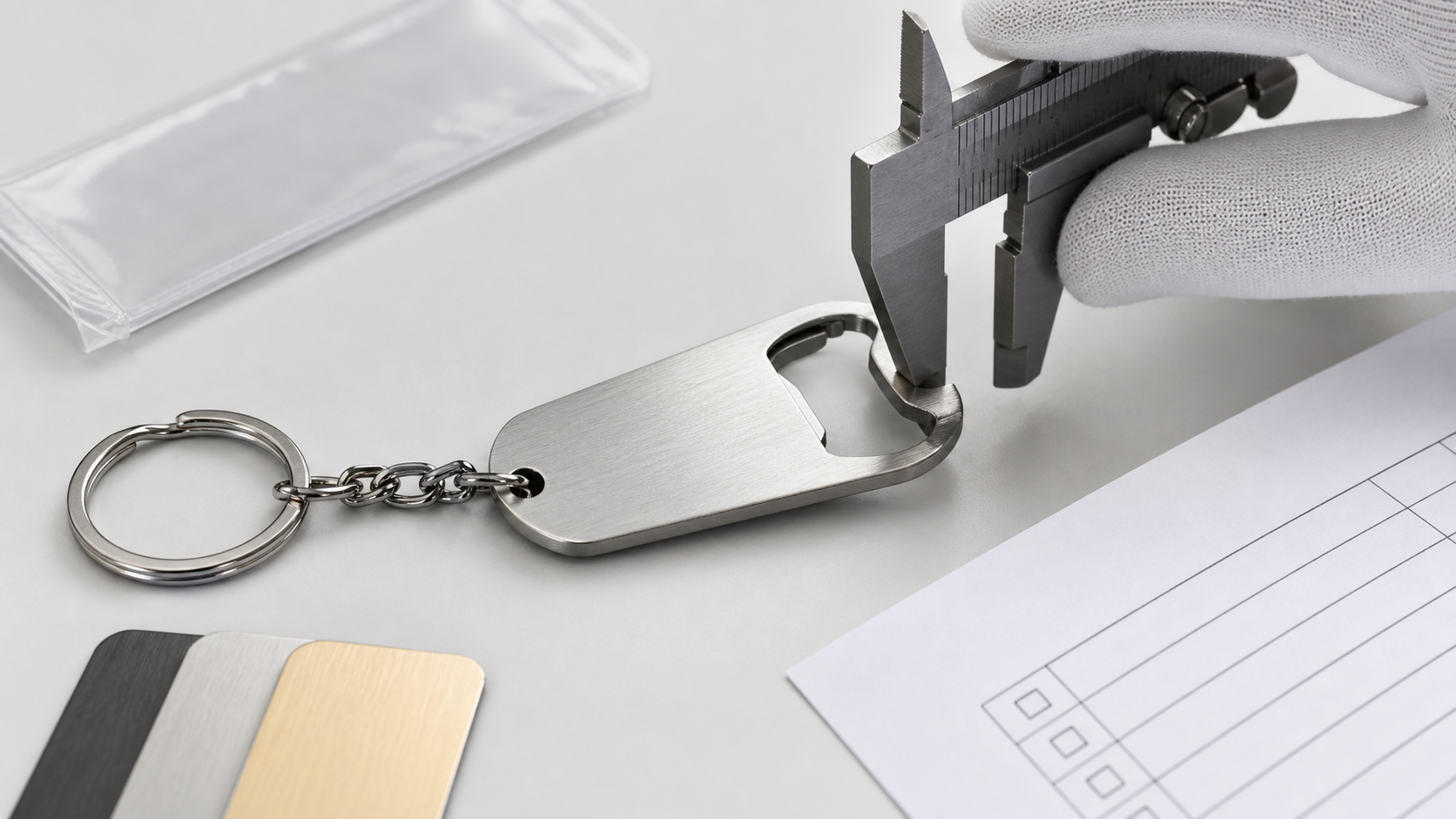
Do not approve only the front product photo. Review the physical sample as a working keychain.
| Sample area | What to check | Why it matters |
|---|---|---|
| Opener mouth | Shape, inside edge, burrs, thickness | Affects opener function and hand feel |
| Outer edge | Smoothness and corner control | Affects pocket, bag, and user contact |
| Logo | Size, position, readability, contrast | Affects brand value |
| Finish | Color, gloss, brush direction, coating coverage | Affects perceived quality and consistency |
| Ring hole | Location, smoothness, clearance | Affects assembly and movement |
| Chain/connector | Link gap, alignment, movement | Affects carrying and durability perception |
| Split ring | Diameter, opening gap, stiffness | Affects key attachment |
| Back side | Finish and marks | Affects full-product quality |
| Packaging | Scratches, pressure marks, rubbing | Affects delivered appearance |
Handle the sample in normal light. Turn it over. Move the ring and chain. Check whether the opener edge feels controlled. Open and close the packaging if a pouch, card, or sleeve is part of the final delivery.
Packaging and Rubbing Checks
Bottle opener keychains are often packed in bulk, on cards, in pouches, or as gift-ready promotional items. Packaging can protect the finish, but it can also create pressure marks or allow metal parts to rub against each other.
Review:
- whether the ring or chain touches the polished face;
- whether the opener edge presses into a pouch or card;
- whether dark, glossy, or plated finishes show marks after packing;
- whether multiple pieces need separation in bulk packing;
- whether the packed sample still looks clean when opened.
Packaging is especially important for high-contrast finishes, black coatings, gold-tone finishes, mirror-polished surfaces, and printed logos. The goal is not just to make a clean loose part. The goal is to deliver a product that still looks controlled after packing and handling.
What to Send Baique
For a faster review, send:
- product photo, sketch, or reference shape;
- logo artwork file;
- target size and thickness if known;
- preferred material or finish reference;
- expected ring, chain, or connector style;
- whether the item is for retail, promotion, barware, event use, or a larger keychain line;
- packaging expectation;
- quantity range if available;
- sample concerns, such as logo detail, scratch risk, opener edge, or ring strength perception.
If you are still choosing between stainless steel, aluminum, zinc alloy, engraving, printing, or color fill, include the target use and look. Baique can help narrow the practical direction before sampling.
FAQ
Are bottle opener keychains usually metal?
Most custom bottle opener keychains use metal for the opener body because the opener edge needs structure. The keychain can still include different finishes, colors, attachments, packaging styles, or decorative details.
Which material is best for a custom bottle opener keychain?
There is no single best material for every project. Stainless steel, aluminum, and zinc alloy can all work in different situations. Choose based on target weight, shape, finish, logo method, handling, and budget direction.
Can the logo be engraved on a bottle opener keychain?
Yes, engraving or laser marking is common for metal opener keychains. The final choice depends on material, finish, logo detail, size, and whether the logo needs color contrast.
Should I approve the opener as a loose part or as a finished keychain?
Approve both if possible. A loose opener helps you inspect the body, edge, logo, and finish. The assembled keychain shows whether the ring, chain, connector, and packaging work together.
What existing Baique resources support this topic?
Use Baique’s custom keychains service page for project inquiries, the keychain materials guide for broader material choices, and the jump-ring article when connector strength or ring failure is the main concern.
Next Step
Planning custom bottle opener keychains for a promotional product, retail accessory, barware project, or brand merchandise line? Send Baique your logo artwork, target size, material and finish direction, ring or chain preference, packaging goal, and sample concerns through Baique’s custom keychains service page. Baique can help review the practical sampling path before bulk production.


Andy is a renowned expert in fashion jewelry manufacturing with deep industry insights. He provides OEM/ODM services to fashion brands and jewelers, turning ideas into tangible products. In addition to quality, Andy provides strategic advice on market trends and manufacturing innovations to help clients stand out in a competitive marketplace.