Choosing a custom keychain is not only about the charm shape, logo, or finish. The small connector between the charm and the key ring can decide whether the finished product feels reliable in daily use.
Keychain jump rings usually fail because the connector specification does not match the product. The issue can come from ring type, wire thickness, ring diameter, material, gap closure, charm weight, attachment-hole design, plating, packaging, or how the keychain is used. For custom orders, buyers should specify the connector system before sampling and inspect the sample as a complete product.
If you are ordering promotional keychains, retail accessories, bag charms, or metal logo keychains, do not treat the ring as a default part. The charm body, connector, chain, clasp, finish, and packaging should be reviewed together.
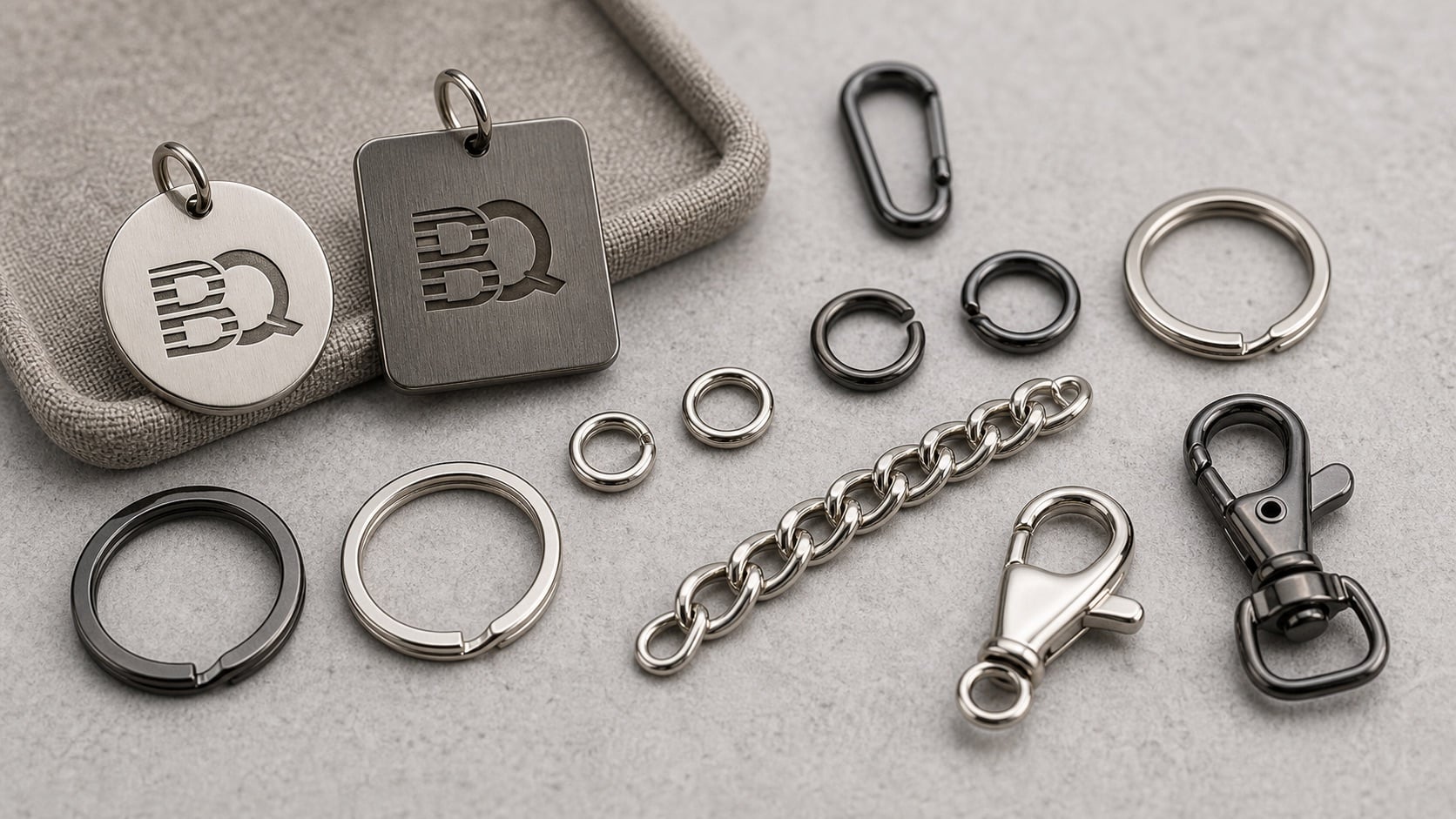
What a Jump Ring Does in a Keychain
A jump ring is a connector. In a keychain assembly, it may link the charm to a chain, split ring, clasp, swivel hook, carabiner, or main key ring.
That sounds simple, but the connector carries a real job. It has to pass through the charm hole or loop, hold the product together during handling, match the visual finish, and survive normal movement in a pocket, bag, display tray, or retail package.
When the connector is weak, the whole product feels lower quality even if the logo charm looks good. A polished metal charm with a thin, loose, or poorly matched ring can still create problems during sampling or after delivery.
Why Keychain Jump Rings Open or Fail
Jump rings do not usually fail for one single reason. The common problem is a mismatch between product use and connector specification.
The ring is too thin for the charm
A lightweight decorative charm may work with a simple open jump ring. A heavier metal keychain, thick acrylic charm, leather tag, bottle opener, or multi-part assembly may need a stronger connector.
Wire thickness matters because the ring has to resist deformation during normal handling. If the wire is too thin for the charm weight and movement, the ring can spread, twist, or lose its shape.
The ring diameter is too large for the load path
A larger ring can be useful when the attachment hole is wide or the design needs more movement. But a ring that is too large can also give the assembly more leverage. In daily use, that extra movement may make the opening easier to stress.
The right diameter depends on the charm hole, product thickness, hardware style, and how freely the keychain needs to move.
The gap is not closed cleanly
Open jump rings have a gap. If that gap is not closed cleanly, it can catch, spread, or work loose over time.
For sampling, buyers should look closely at the ring opening instead of only checking the front face of the charm. A small visible gap is often a sign that the connector choice or assembly method should be reviewed.
The attachment hole pulls the ring in the wrong direction
The charm design also matters. If the attachment hole is too close to an edge, too small, too sharp, too thick, or not aligned with the hanging direction, the ring may be pulled at an awkward angle.
This is why connector selection should happen together with charm design. The question is not only “Which ring is stronger?” but “Does this ring fit this product?”
The finish is chosen without considering wear
Keychain hardware often needs to match the charm finish. Gold, silver, black, antique, brushed, polished, or plated finishes can all look good, but the connector may rub against the charm, chain, clasp, or packaging.
During sampling, check whether the finish looks consistent across all metal parts and whether the hardware scratches or marks nearby surfaces.
The sample is checked as a charm, not as a complete keychain
Many sampling problems happen because the buyer approves the charm surface but does not handle the full assembly. For a custom keychain, the connector is part of the product.
The sample should be reviewed as it will actually be used: charm, ring, chain, clasp, finish, packaging, and hanging direction together.
Jump Ring vs Split Ring vs Closed Ring
There is no universal “best” keychain connector. The better choice depends on the charm, target market, appearance, assembly process, and expected use.
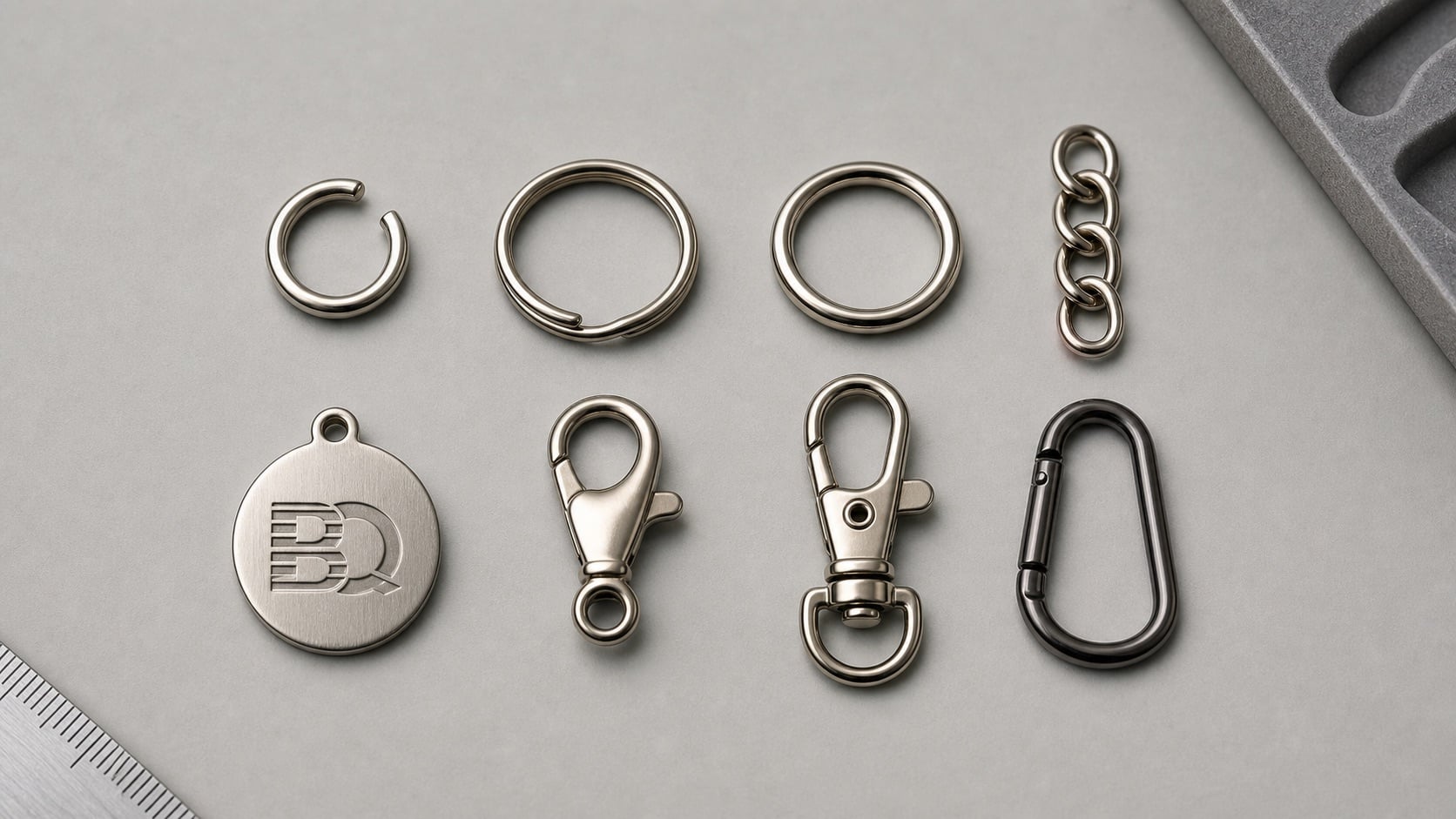
| Hardware | Best for | Main advantage | Main risk | Buyer should confirm |
|---|---|---|---|---|
| Open jump ring | Lightweight charms and simple assemblies | Easy to assemble and adjust | Can open if underspecified or poorly closed | Wire thickness, diameter, gap closure |
| Split ring | Everyday keychains and heavier charms | More secure key-ring style hold | Harder to assemble and may look more utilitarian | Size, finish, ease of use |
| Closed or soldered ring | Permanent connection points | No open gap | Less flexible after assembly | Whether it fits the production process |
| Chain plus ring | Designs needing movement or length | Better drape and handling | More connection points to inspect | Chain gauge, link strength, finish |
| Lobster clasp, swivel, or carabiner | Removable or bag-hanging designs | Better usability for some buyers | More parts and higher inspection needs | Clasp size, spring action, finish |
For many daily-use keychains, a split ring is a safer starting point than a light open jump ring. But appearance and assembly still matter. A small premium charm may need a cleaner visual solution, while a heavier promotional item may need stronger and more practical hardware.
How to Specify Stronger Keychain Connector Hardware
Before sampling, give the manufacturer enough information to choose the connector as part of the full product.
Key details to confirm:
- Product type: metal keychain, acrylic keychain, enamel keychain, PVC keychain, leather keychain, fabric keychain, bottle opener, bag charm, or multi-tool accessory.
- Intended use: giveaway, daily key holder, retail accessory, bag charm, event merchandise, or premium brand gift.
- Charm size and approximate weight class.
- Attachment-hole size, location, thickness, and edge shape.
- Preferred hardware: open jump ring, split ring, chain, lobster clasp, swivel hook, carabiner, or another attachment.
- Ring wire thickness and ring diameter.
- Material and finish for the charm and all hardware parts.
- Whether the keychain needs flexible movement, quick removal, or a fixed permanent connection.
- Packaging method, especially if the plated parts may rub during shipping.
- Sampling checks the buyer wants performed before mass production.
If you are not sure which hardware to choose, share the use case rather than asking only for a part name. A manufacturer can make a better recommendation when they know how the keychain will be handled.
What Buyers Should Check During Sampling
Sampling should answer one practical question: does the finished keychain work as a complete product?
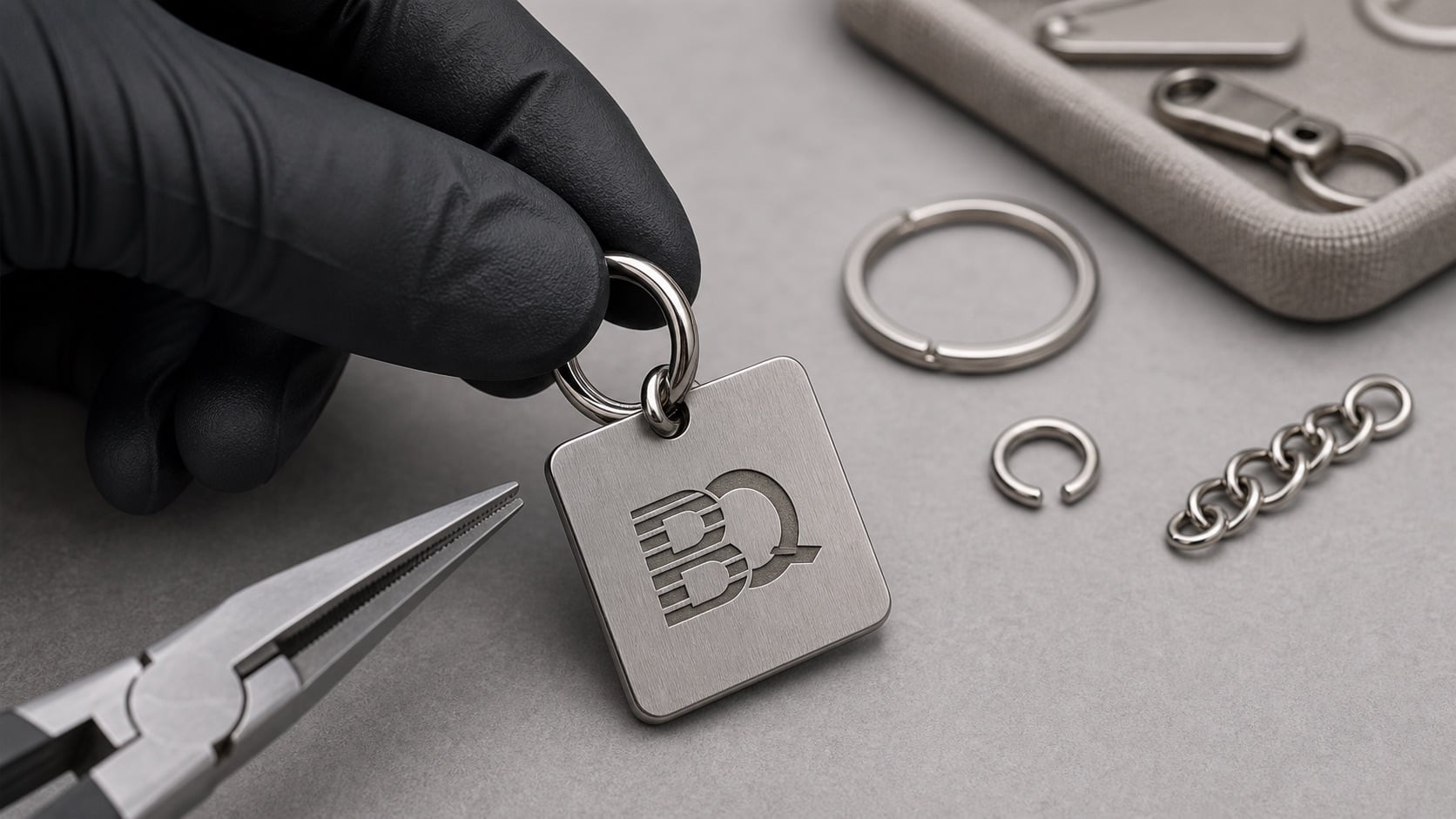
Use this checklist:
- The connector passes through the charm hole cleanly without forcing.
- The ring gap is aligned and not visibly open.
- The connector does not scratch the charm surface.
- The charm hangs naturally when attached to the ring, chain, or clasp.
- The finish color is consistent across the charm, ring, chain, and clasp.
- The connector feels appropriate for the charm weight.
- Light handling does not deform the ring or make the gap spread.
- The packaging protects the hardware from rubbing during shipping and storage.
- The assembly looks acceptable from the front, side, and back.
Do not approve the sample only from a front-facing photo. If the attachment is important to the product, ask for close-up photos or video of the connector area.
Cost and Appearance Tradeoffs
Connector choice affects cost, but not only through the price of the small part.
A stronger connector can add component cost, assembly time, or inspection steps. A split ring may be more secure for everyday use, but it can be harder to attach and may look more utilitarian than a clean open ring. A clasp, swivel, or carabiner can improve usability, but it adds more parts that must match the finish and pass inspection.
For custom keychains, the cheapest connector is not always the best saving. If the ring looks weak, scratches the charm, or fails during use, the final product can feel cheaper than intended.
The better question is: what connector gives the right balance of durability, appearance, assembly efficiency, and target price for this design?
When to Ask Baique for a Recommendation
Ask for a connector recommendation when your keychain has:
- a heavier metal or acrylic charm;
- a premium retail finish;
- multiple hardware parts;
- a chain, clasp, swivel, or carabiner;
- a plated finish that must match across components;
- a tight attachment hole or unusual charm shape;
- packaging that may rub against the hardware;
- daily-use expectations.
In these cases, the connector should be reviewed before sampling, not after a problem appears.
Planning a custom keychain order? Share your artwork, size target, material, finish, intended use, and preferred hardware style with Baique so the charm and connector hardware can be reviewed together.
Learn more about Baique’s custom keychain manufacturing service.
For a broader overview of keychain styles, see Baique’s guide to types of keychains.
FAQ
Are split rings better than jump rings for keychains?
Often, split rings are more secure for daily-use keychains because they work like small key rings. But the better choice depends on charm weight, appearance, assembly, finish, and user experience. Lightweight decorative items may use an open jump ring, while heavier or higher-movement products may need a split ring, chain, clasp, or another connector.
Why does a keychain jump ring open?
A keychain jump ring may open because it is too thin, too large, poorly closed, pulled in the wrong direction, or used on a charm that is too heavy for that hardware choice. The charm hole and hanging direction can also affect the connector.
What should I confirm before ordering custom keychains?
Confirm the charm size and weight class, attachment-hole design, ring type, wire thickness, ring diameter, hardware material, finish, packaging, and sampling checks. If the keychain will be used daily, the connector should be reviewed as carefully as the charm.
Can a jump ring be soldered closed?
Some open rings can be soldered closed, or replaced with closed or soldered rings, when a more permanent connection is needed. Whether this is suitable depends on the material, finish, assembly method, and production plan.


Andy is a renowned expert in fashion jewelry manufacturing with deep industry insights. He provides OEM/ODM services to fashion brands and jewelers, turning ideas into tangible products. In addition to quality, Andy provides strategic advice on market trends and manufacturing innovations to help clients stand out in a competitive marketplace.