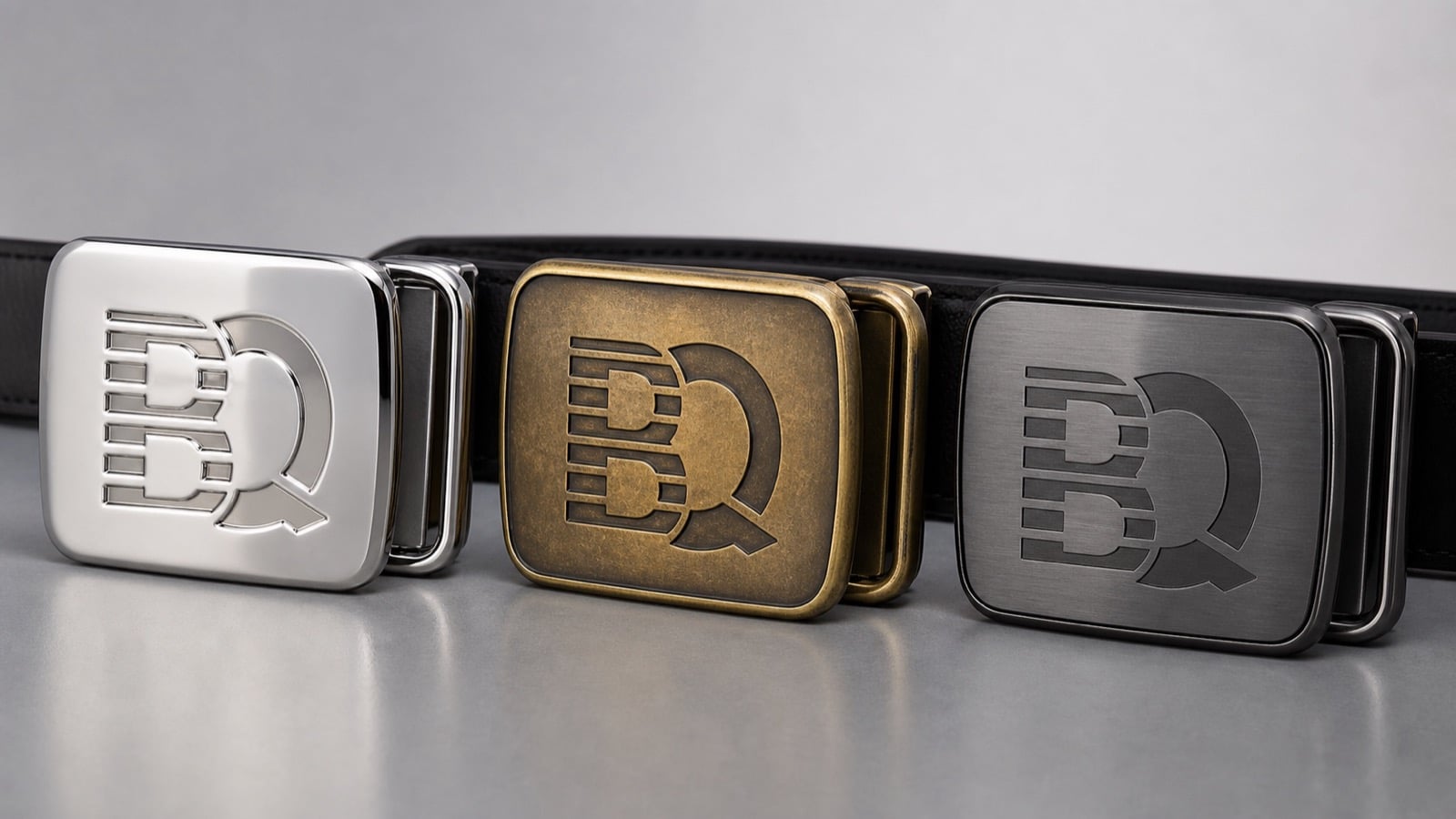
Choosing a material for a custom belt buckle is not only a style decision. It affects how much logo detail you can show, which surface finishes are realistic, how the buckle feels in hand, and what your team should check during sampling.
For most custom belt buckle projects, zinc alloy, brass, and stainless steel are the three materials buyers compare first. Each can work well, but they solve different problems. A good material choice should match the design, the belt style, the expected finish, and the way the buckle will be used.
Quick Comparison
| Material | Best for | Main advantages | Watch-outs | Common finish options |
|---|---|---|---|---|
| Zinc alloy | Complex logos, 3D shapes, fashion and promotional buckles | Flexible shaping, good detail, broad finish range | Needs clear quality checks for plating, edges, and attachment points | Plating, antique finish, enamel, paint, polishing |
| Brass | Premium or heritage-style buckles, engraved or stamped looks | Solid feel, warm color tone, strong classic appeal | Weight and finish expectations should be confirmed early | Polishing, plating, antique finish, brushed finish |
| Stainless steel | Durable buckles, clean modern designs, corrosion-resistant use cases | Strong, hard-wearing, stable surface appearance | Less flexible for very complex 3D forms; logo method matters | Polishing, brushing, PVD, laser marking, engraving |
If your design has a highly raised 3D logo, organic shaping, or a decorative front face, zinc alloy is often the easiest place to start. If your brand needs a heavier and more premium hand feel, brass is worth evaluating. If durability, corrosion resistance, and a clean technical look matter most, stainless steel may be the stronger choice.
How Material Choice Affects Cost
Cost matters in every custom belt buckle project, but material is only one part of the final budget. The same material can lead to different project costs depending on buckle size, thickness, logo complexity, finish, order quantity, packaging, inspection requirements, and how much sampling work is needed before approval.
For early planning, it is better to compare materials by relative budget impact instead of asking which one is always cheapest.
| Material | Relative cost tendency | Why it changes |
|---|---|---|
| Zinc alloy | Often budget-flexible for decorative custom buckles | It supports complex shapes and logo relief well, but larger sizes, deep 3D details, multi-step finishes, and tight quality requirements can raise the budget. |
| Brass | Often positioned higher than zinc alloy | It gives a heavier and more premium metal feel, but the material weight, polishing target, and finish expectations should be reviewed early. |
| Stainless steel | Efficient for clean designs, less flexible for complex 3D styling | Simple brushed, polished, engraved, laser-marked, or PVD-style designs can be predictable, while very detailed shapes may need a different process or material direction. |
A buyer should not choose material by low cost alone. If the material cannot support the intended logo detail, finish, or durability target, the project may spend more time in sampling and revision. In many cases, the practical choice is the material that creates the fewest compromises between appearance, function, and production control.
The most useful way to discuss cost is to send the manufacturer four things together: artwork, target size, preferred finish, and quantity plan. With those details, the material recommendation can be tied to a realistic production route instead of a generic material label.
When Zinc Alloy Is a Good Choice
Zinc alloy is widely used for custom fashion buckles because it supports flexible shapes and detailed surface design. For buyers who want a buckle with a raised logo, sculpted emblem, decorative border, or multiple finish areas, it gives the design team more room to work.
It is also practical for projects where the buckle is part of a broader fashion or promotional accessory line. Zinc alloy can usually support many visual styles, from polished and plated looks to antique effects and enamel-filled details.
Zinc alloy is often a good fit when:
- The buckle has a complex front face or 3D logo.
- The design needs a custom shape instead of a simple rectangular frame.
- The brand wants a decorative finish, antique effect, or color-filled detail.
- The project needs a balance between design flexibility and production planning.
The main thing to control is not the material name itself, but the full specification. Edge quality, plating coverage, logo sharpness, belt attachment points, and color consistency should all be checked during sampling.
When Brass Is a Better Fit
Brass is often chosen when the buyer wants a more classic, premium, or heritage-style buckle. It has a warmer base tone and a solid feel that works well for traditional belt hardware, engraved designs, and refined accessory collections.
Brass can be a strong option for brands that want a buckle to feel more substantial in hand. It can also work well with polished, antique, brushed, or plated finishes when the design direction is clear.
Brass is often worth considering when:
- The buckle should feel more premium or traditional.
- The design is cleaner and does not rely on very deep 3D sculpting.
- The brand wants a warmer metal tone or antique-style surface.
- The buckle is part of a higher-positioned leather goods or accessory line.
Before choosing brass, confirm the expected weight, surface finish, and logo method. A brass buckle can look excellent, but the design should be planned around the material rather than copied from a zinc alloy design without adjustment.
When Stainless Steel Makes Sense
Stainless steel is a good choice when strength, surface stability, and a clean modern look matter more than highly decorative shaping. It is commonly used when buyers want a buckle that feels durable and has a more technical or minimal appearance.
For stainless steel buckles, the logo method is especially important. Laser marking, engraving, cut-through shapes, or simple raised details may be more realistic than very deep and complex sculpted forms.
Stainless steel is often a good fit when:
- The buckle needs strong wear resistance.
- The design is clean, flat, minimal, or technical.
- The buyer wants polished, brushed, or PVD-style finishes.
- The buckle is expected to hold a consistent metal appearance over time.
If your design includes deep relief, soft curves, enamel areas, or a decorative front emblem, review the drawing carefully before deciding stainless steel. The material can be excellent, but it is not the most flexible option for every visual effect.
How Material Choice Affects Finish
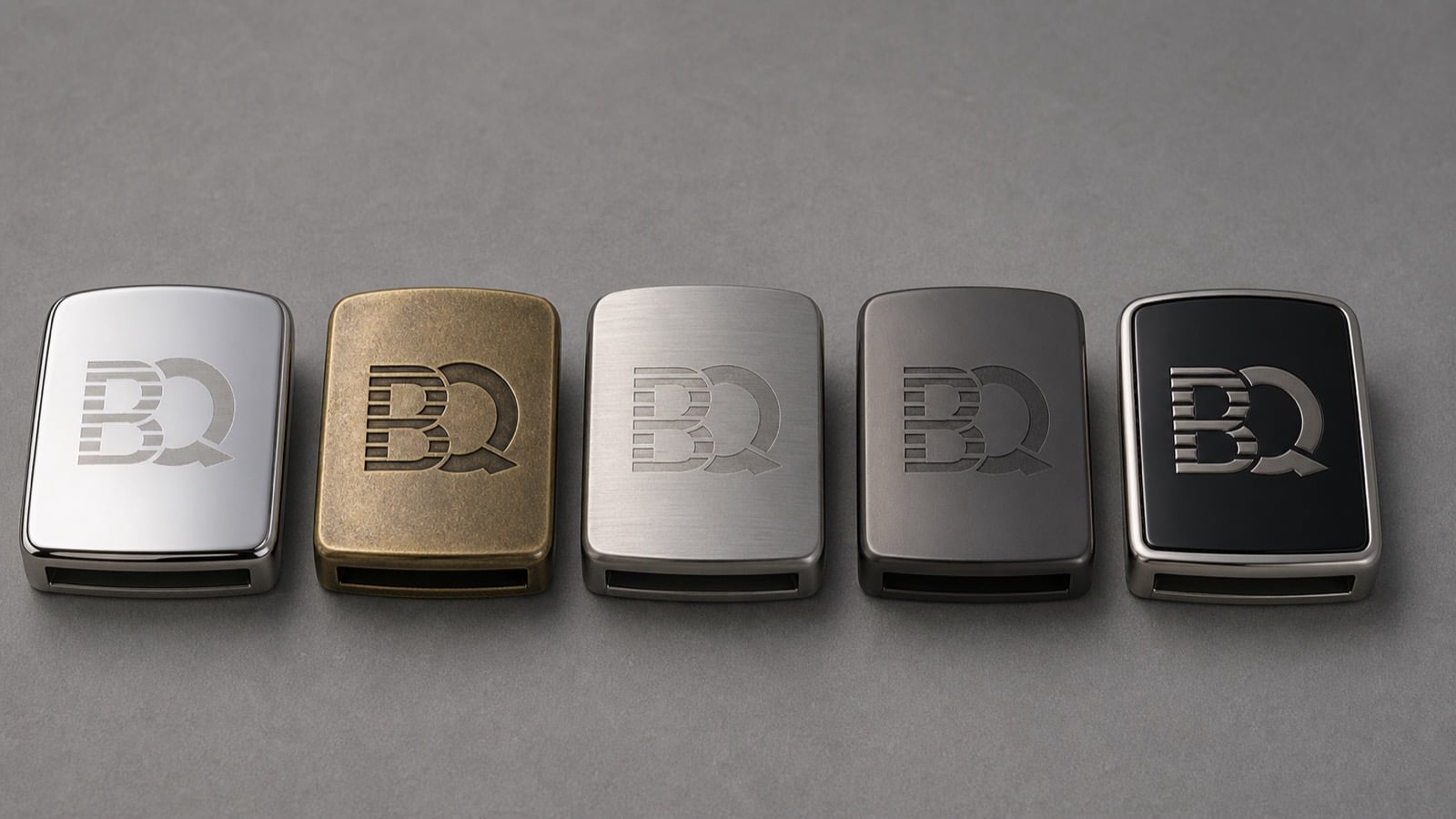
Material and finish should be discussed together. A finish that looks simple on a reference photo may require a different process depending on the base material.
Plating
Plating is common for many fashion buckle projects. It can create gold, silver, gunmetal, black, antique, or other decorative looks. Zinc alloy and brass are often used with plated finishes, but the final result depends on surface preparation, edge control, and quality inspection.
PVD
PVD-style finishes are often considered for a harder, more stable surface appearance, especially on stainless steel designs. They can create refined black, gold, or other metal tones, but the base design should be suitable for the process.
Polishing and Brushing
Polished and brushed finishes are useful when the buyer wants the material and shape to feel clean rather than heavily decorated. Stainless steel and brass are common candidates, but zinc alloy can also be finished in polished or plated ways depending on the project.
Enamel and Color-Filled Details
If the buckle includes colored logo areas or decorative inlays, zinc alloy is often easier to evaluate first because it supports shaped cavities and decorative surfaces well. The artwork should clearly show which areas are raised, recessed, colored, polished, or plated.
Questions to Confirm Before Sampling
Before asking for a sample, prepare the information that will affect the material recommendation. A short and clear brief can prevent avoidable revisions.
- What belt width will the buckle fit?
- Is the buckle mainly decorative, functional, or both?
- Is the logo 2D, 3D, engraved, cut-through, printed, or enamel-filled?
- What finish should the buyer see on the front, back, and edges?
- Should the buckle feel lightweight, balanced, or heavy?
- What attachment method does the belt need?
- Are there sharp corners, thin bridges, moving parts, or fragile details?
- What packaging and inspection expectations should be confirmed before production?
These questions are useful because the best material is not always the strongest material or the most premium-looking material. It is the material that fits the design, finish, function, and production plan together.
A Practical Decision Guide
Choose zinc alloy if your priority is decorative shaping, logo relief, fashion styling, or flexible custom design.
Choose brass if your priority is a classic metal feel, a premium hand feel, or a traditional buckle appearance.
Choose stainless steel if your priority is durability, corrosion resistance, clean geometry, or a modern technical look.
If your design includes both a complex logo and a demanding finish, do not decide from the material name alone. Share the artwork, dimensions, target finish, and reference photos with the manufacturer so the material and process can be reviewed together.
Quality Checks Buyers Should Not Skip
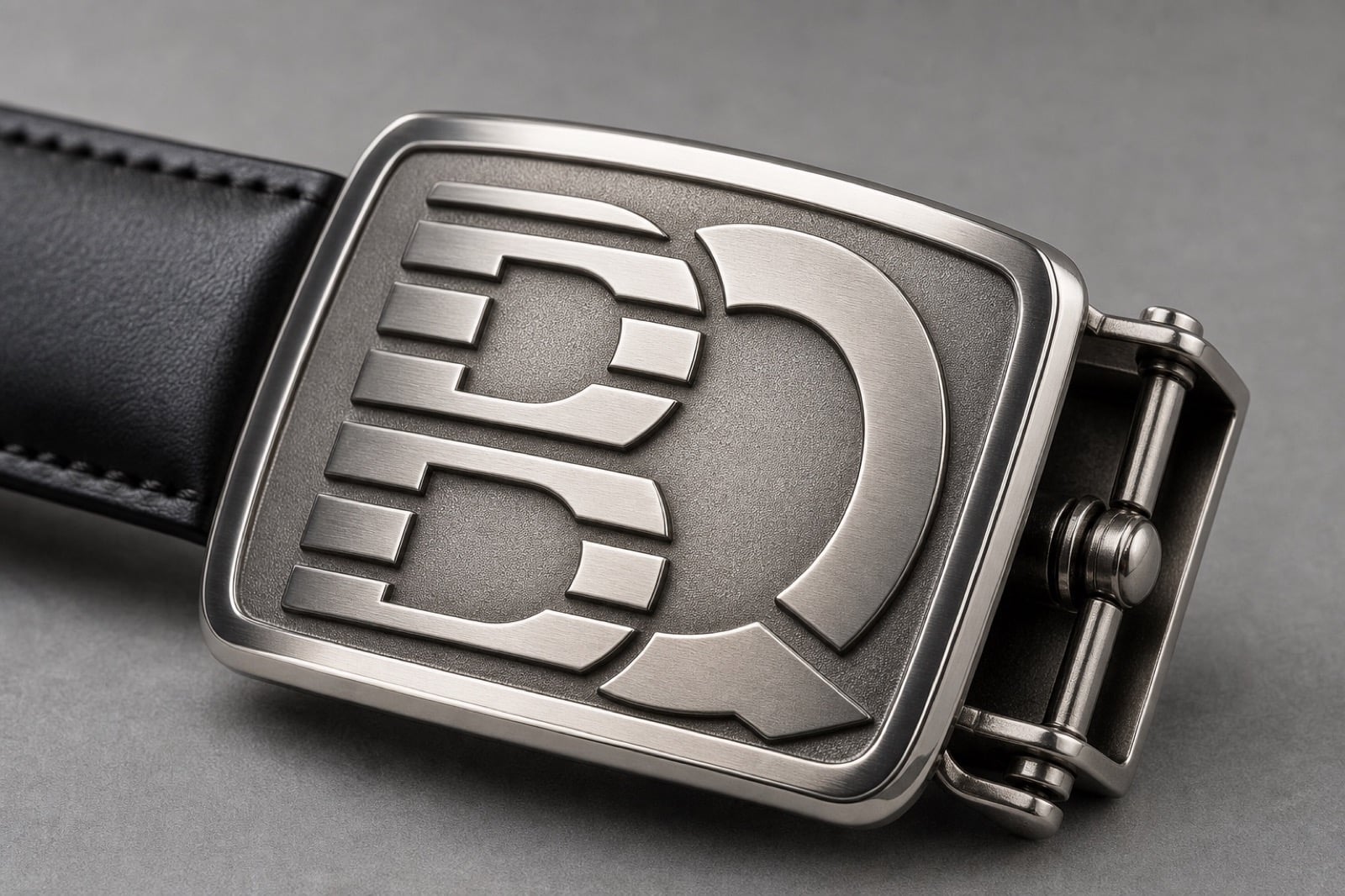
During sampling, inspect the buckle as a complete product, not just as a metal part. Key checks include:
- Logo clarity: raised, recessed, engraved, or marked details should match the approved artwork.
- Finish consistency: the front, side walls, edges, and back should be reviewed under normal light.
- Edge feel: corners should not feel unexpectedly sharp for the intended use.
- Attachment fit: prongs, clamps, snaps, plates, or other connection points should match the belt construction.
- Weight and balance: the buckle should feel appropriate for the belt width and target market.
- Packaging fit: the buckle surface should be protected from rubbing during storage and shipping.
A good sample review should answer a simple question: does this material and process combination support the final product the buyer wants to sell?
Final Recommendation
For custom belt buckles, start with the design goal instead of the material name. Zinc alloy, brass, and stainless steel can all be good choices, but each one has a different relationship with logo detail, surface finish, durability, weight, and sampling.
If you already have artwork or reference photos, the fastest next step is to send the design, target size, belt width, preferred finish, and expected use case for review. Baique can help evaluate which buckle material and process direction is more realistic for your custom order.
Learn more about Baique’s custom buckle manufacturing service.
FAQ
What is the best material for a custom belt buckle?
There is no single best material for every custom belt buckle. Zinc alloy is often strong for decorative shapes and logo detail, brass is often chosen for a premium or classic feel, and stainless steel is often chosen for durability and clean modern designs.
Is zinc alloy good for belt buckles?
Yes. Zinc alloy is commonly used for custom belt buckles, especially when the design includes a shaped logo, decorative front face, antique effect, enamel area, or plated finish. The final quality depends on the design, finish, and inspection standard.
Are brass belt buckles better than zinc alloy buckles?
Brass is not automatically better; it is better for certain design goals. It can feel more premium and traditional, while zinc alloy often gives more flexibility for complex custom shapes and decorative details.
When should I choose stainless steel for a custom buckle?
Choose stainless steel when you want a durable, corrosion-resistant, clean-looking buckle and the design does not rely on very complex 3D shaping. It is a strong option for polished, brushed, PVD, engraved, or laser-marked designs.
What should I prepare before asking for a belt buckle sample?
Prepare artwork, target size, belt width, logo method, preferred finish, reference photos, quantity plan, packaging expectations, and any functional details such as attachment method or moving parts.


Andy is a renowned expert in fashion jewelry manufacturing with deep industry insights. He provides OEM/ODM services to fashion brands and jewelers, turning ideas into tangible products. In addition to quality, Andy provides strategic advice on market trends and manufacturing innovations to help clients stand out in a competitive marketplace.