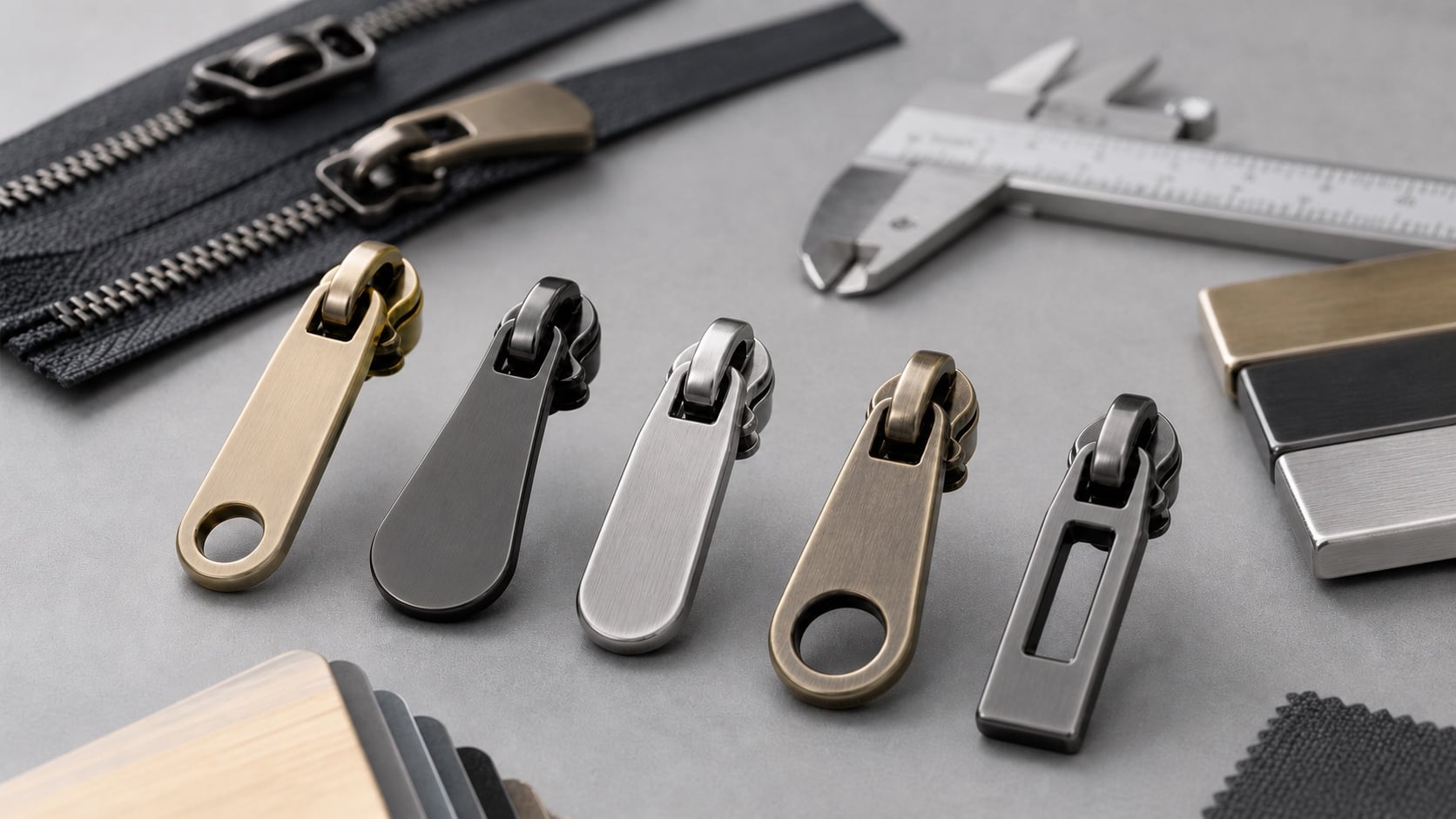
To choose a custom zipper pull, start with the product use, then decide the material, logo method, finish, attachment, and sample checks together. A zipper pull for a handbag, jacket, pouch, luggage piece, or brand accessory is not only a small logo tag. It is a moving part that the customer touches, pulls, and judges every time the product is used.
Quick Answer
Before sampling, confirm where the zipper pull will be used, the slider or zipper head size if known, target pull size, thickness, weight, material direction, logo method, finish color, surface texture, hole or loop structure, packaging needs, and sample approval standard.
If those details are missing, the sample may look good as a loose part but feel wrong on the final product.
Why a Custom Zipper Pull Is More Than a Small Logo Tag
A zipper pull sits between branding and function. It can make a bag, jacket, pouch, luggage piece, or accessory feel more finished, but it also has to move smoothly and survive handling.
For a custom metal zipper pull, buyers often focus first on the logo shape or plating color. That is understandable, but it is not enough. The same puller design may need a different material, thickness, hole size, or finish depending on whether it is used on a small pouch, a handbag, a jacket pocket, or a larger travel bag.
Treat the puller as a small hardware component. The logo, material, finish, slider fit, and daily pulling direction should be reviewed as one decision.
Choose the Material Around the Product Use
Different zipper pull materials solve different problems. The best choice depends on the product role, brand position, expected handling, and finish target.
| Material direction | Good fit | What to confirm before sampling |
|---|---|---|
| Zinc alloy | Detailed custom shapes, logo-shaped pulls, decorative bag or apparel hardware | Size, thickness, weight, plating color, logo relief, edge comfort |
| Brass or copper alloy | Premium-feeling metal pulls, heritage or warm-tone designs | Weight, finish tone, engraving or debossing clarity, tarnish or surface expectation |
| Stainless steel | Clean modern pulls, durable-feeling accessories, simple engraved or laser-marked designs | Shape complexity, edge finish, logo method, PVD or brushed finish fit |
| PVC, rubber, or silicone | Colorful, soft, flexible, promotional, outdoor, sportswear, or kids-related pulls | Color matching, flexibility, surface texture, logo relief, durability expectation |
| Leather, fabric, or woven pulls | Softer brand details, casual bags, garment trims, heritage or craft positioning | Stitching, print or deboss method, edge finish, color consistency, attachment strength |
For metal zipper pulls, weight matters. A heavier pull can feel premium on the right product, but it can also swing, pull down soft fabric, or feel oversized on a small pouch. A lightweight pull can work better when the product needs comfort or flexibility.
Match the Logo Method to the Final Size and Surface
Do not assume one logo file works for every zipper pull. A logo that prints clearly on a label may be too fine for a small embossed metal pull. A mark that looks sharp on a screen may lose detail after polishing, plating, enamel filling, or casting.
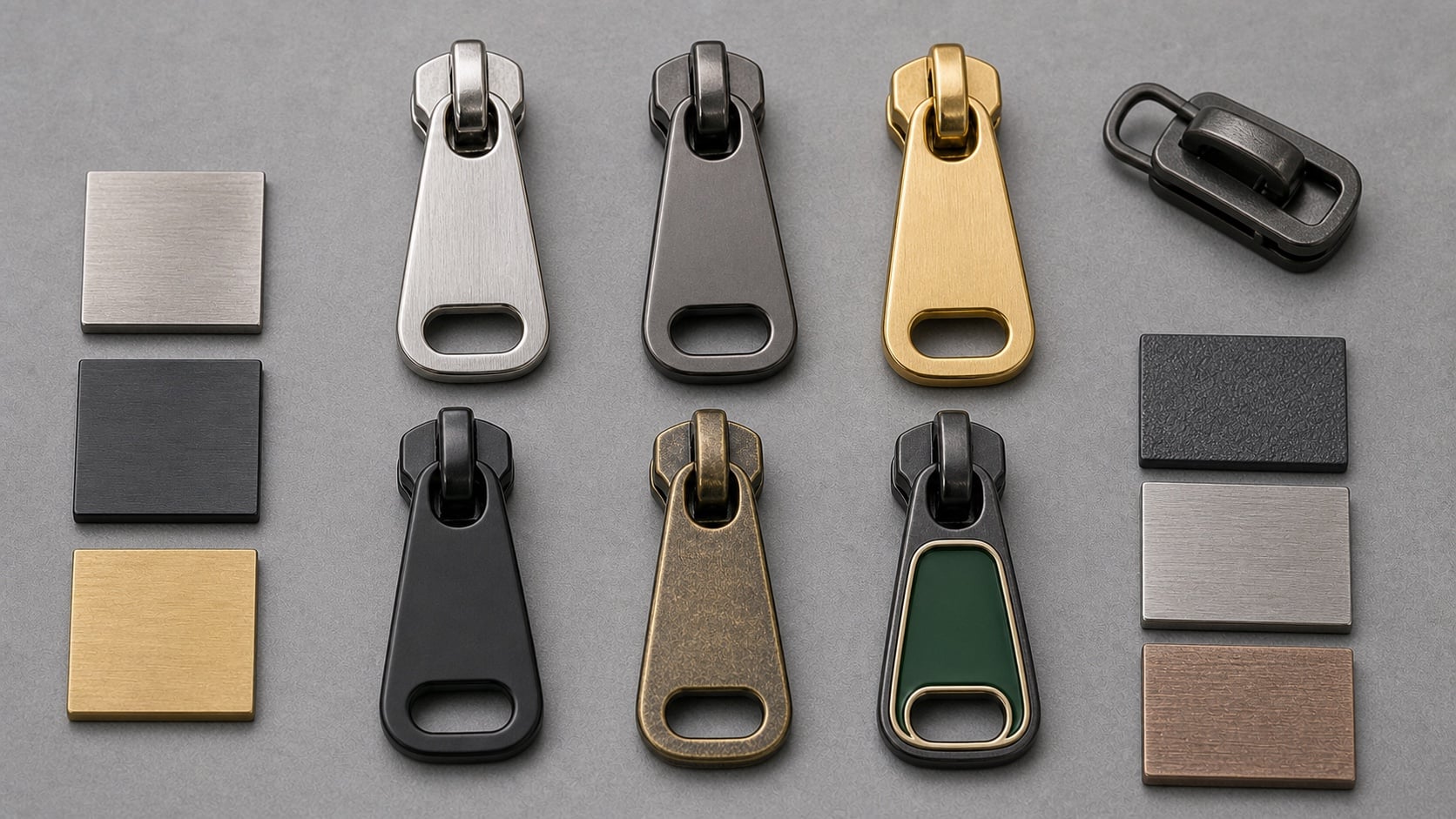
Common logo methods include engraving or laser marking, raised logo or embossing, recessed logo or debossing, hollow or cut-through shapes, enamel or color fill, printing, painted color, and mixed logo and finish methods.
The practical question is not “which method is best?” The better question is: which logo method will stay clear at the final size, on this material, with this finish, after sample production?
For small zipper pulls, simplify thin strokes, tiny letters, and complicated gradients before sampling. If the logo is critical, send vector artwork and a clear note about whether the mark should look subtle, raised, recessed, filled, printed, or engraved.
Decide the Finish Before You Approve the Sample
Finish affects both appearance and perceived quality. A metal zipper pull can be polished, brushed, antique-finished, electroplated, PVD-style, painted, enamel-filled, resin-covered, or given mixed surface effects.
Confirm these finish details early:
- Target color, such as gold tone, silver tone, rose gold, gunmetal, black, antique brass, or custom color.
- Gloss level, such as polished, matte, brushed, or antique.
- Whether the logo should contrast with the background.
- Whether the finish must match other bag hardware, keychains, badges, buckles, or packaging trims.
- Whether the pull may rub against fabric, zipper tape, other metal parts, or packaging.
If the pull has deep grooves, small raised details, or narrow recessed areas, the finish may behave differently across surfaces. Review the sample under normal light and handling conditions, not only from a front photo.
Check Attachment, Slider Size, and Movement
A custom zipper pull can fail as a user experience even when the shape and logo look good. The connection point matters.
Check the zipper or slider/head size, hole or loop dimension, ring or connector thickness, whether the pull should hang flat or rotate, whether the pull direction matches how the product opens, and whether the puller touches fabric, teeth, slider body, or nearby hardware.
For some products, the pull tab attaches directly to the slider. For others, it may use a small ring, loop, chain, leather tab, or custom connector. The more parts involved, the more important it is to check movement before bulk production.
Decorative zipper pulls should not be treated as safety hardware. They are brand and accessory components. If the final product has unusual load, outdoor, industrial, or heavy-use requirements, explain that use case before sampling.
Sample Approval Checklist for Custom Zipper Pulls
Use this checklist before approving bulk production.
| Checkpoint | What to look for | Risk if ignored |
|---|---|---|
| Product use | Bag, jacket, pouch, luggage, wallet, garment, or accessory role | Pull may be too heavy, too weak, or visually mismatched |
| Slider/head fit | Compatible slider size and pull direction | Pull may not attach, move smoothly, or hang correctly |
| Size and thickness | Final length, width, thickness, and edge shape | Sample may feel bulky, sharp, or too light |
| Material | Zinc alloy, brass, stainless steel, PVC, rubber, leather, woven, or other | Wrong production route or unrealistic finish expectation |
| Logo clarity | Engraving, raised, recessed, hollow, enamel, printed, or mixed method | Tiny detail may blur or disappear |
| Finish | Color, gloss, texture, plating, paint, enamel, resin, or antique effect | Color or surface may not match the brand direction |
| Attachment | Hole, loop, ring, chain, connector, or direct slider attachment | Pull may swing poorly or feel loose |
| Edge comfort | Smoothness around corners, hole, and back side | Pull may feel cheap or catch fabric |
| Rubbing | Contact with zipper tape, fabric, other hardware, or packaging | Finish may scuff or transfer more easily |
| Packed sample | Pull reviewed in final or near-final packaging | Approved loose sample may not survive presentation or shipping well |
What to Send Baique Before Quotation or Sampling
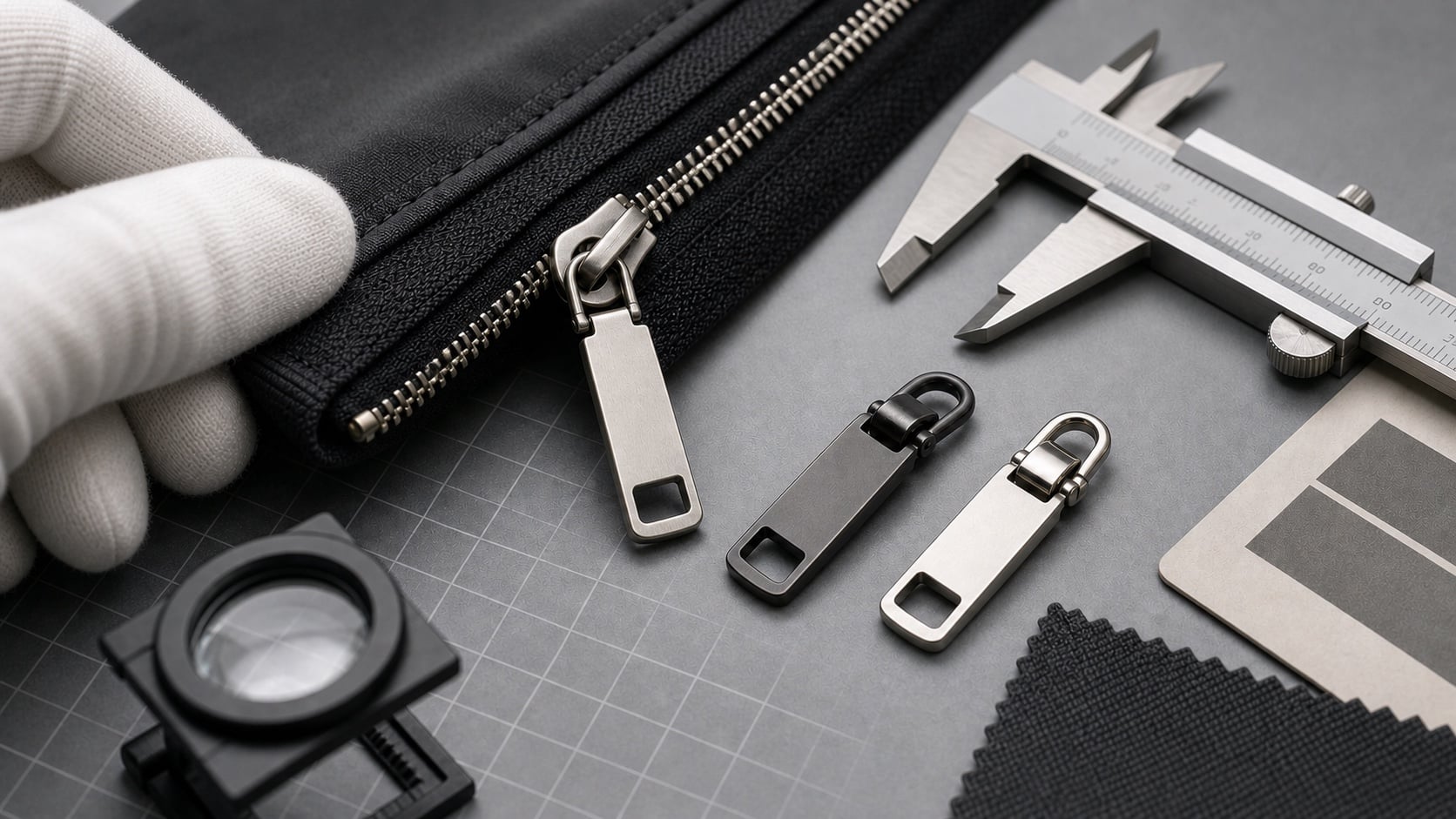
To get a more useful recommendation, send:
- Product type: handbag, pouch, jacket, luggage, wallet, garment, keychain-style accessory, or other use.
- Reference photo or sketch.
- Logo artwork, preferably vector if available.
- Target size and thickness.
- Slider or zipper head size, if known.
- Preferred material or open material question.
- Finish color and surface reference.
- Logo method preference, such as engraved, raised, recessed, hollow, enamel-filled, printed, or subtle.
- Attachment structure, such as direct pull tab, ring, chain, loop, or connector.
- Quantity target, without assuming a universal MOQ.
- Packaging expectation.
- What the sample must prove before approval.
A clear brief helps the manufacturer advise whether the design should use an existing mold direction, a new custom mold, a different material, a simplified logo, or a different attachment structure.
FAQ
What material is best for custom zipper pulls?
There is no single best material for every custom zipper pull. Zinc alloy can work well for detailed custom metal shapes. Brass or copper alloy can support a warmer premium look. Stainless steel can fit cleaner durable designs. PVC, rubber, leather, and woven pulls may be better when softness, color, or garment feel matters more than metal weight.
Can I add a logo to a metal zipper pull?
Yes, but the method should match the size, material, and finish. Logos can often be engraved, raised, recessed, hollowed, enamel-filled, printed, or combined with other finish effects. Very small details may need simplification before sampling.
Should a zipper pull match the zipper slider size?
Yes. The puller should be reviewed with the slider or zipper head it will attach to. A pull that fits a larger bag or luggage slider may not work well on a small garment or pouch slider.
Is a heavier zipper pull always more premium?
No. Weight can support premium feel when it matches the product, but too much weight can make a pull swing, drag on fabric, or feel awkward. The right weight depends on the product use, material, size, and attachment structure.
What should I check in a zipper pull sample?
Check the logo clarity, material, finish color, edge comfort, attachment fit, pull movement, slider compatibility, rubbing points, and packed condition. Review the sample as the customer will touch and use it, not only as a loose part on a desk.
Conclusion
A custom zipper pull is a small part with a large effect on product feel. The best result usually comes from choosing material, logo method, finish, attachment, and sample checks together instead of treating the puller as a simple decoration.
Planning a custom zipper pull for a bag, jacket, pouch, luggage piece, or brand accessory? Send Baique your artwork, intended product use, target size, material or finish idea, slider/head size if known, quantity target, and reference photo. We can help review the practical material, logo method, attachment, and sample-check path before bulk production.
Related service pages: custom bag hardware, custom keychains, and custom pins.


Andy is a renowned expert in fashion jewelry manufacturing with deep industry insights. He provides OEM/ODM services to fashion brands and jewelers, turning ideas into tangible products. In addition to quality, Andy provides strategic advice on market trends and manufacturing innovations to help clients stand out in a competitive marketplace.