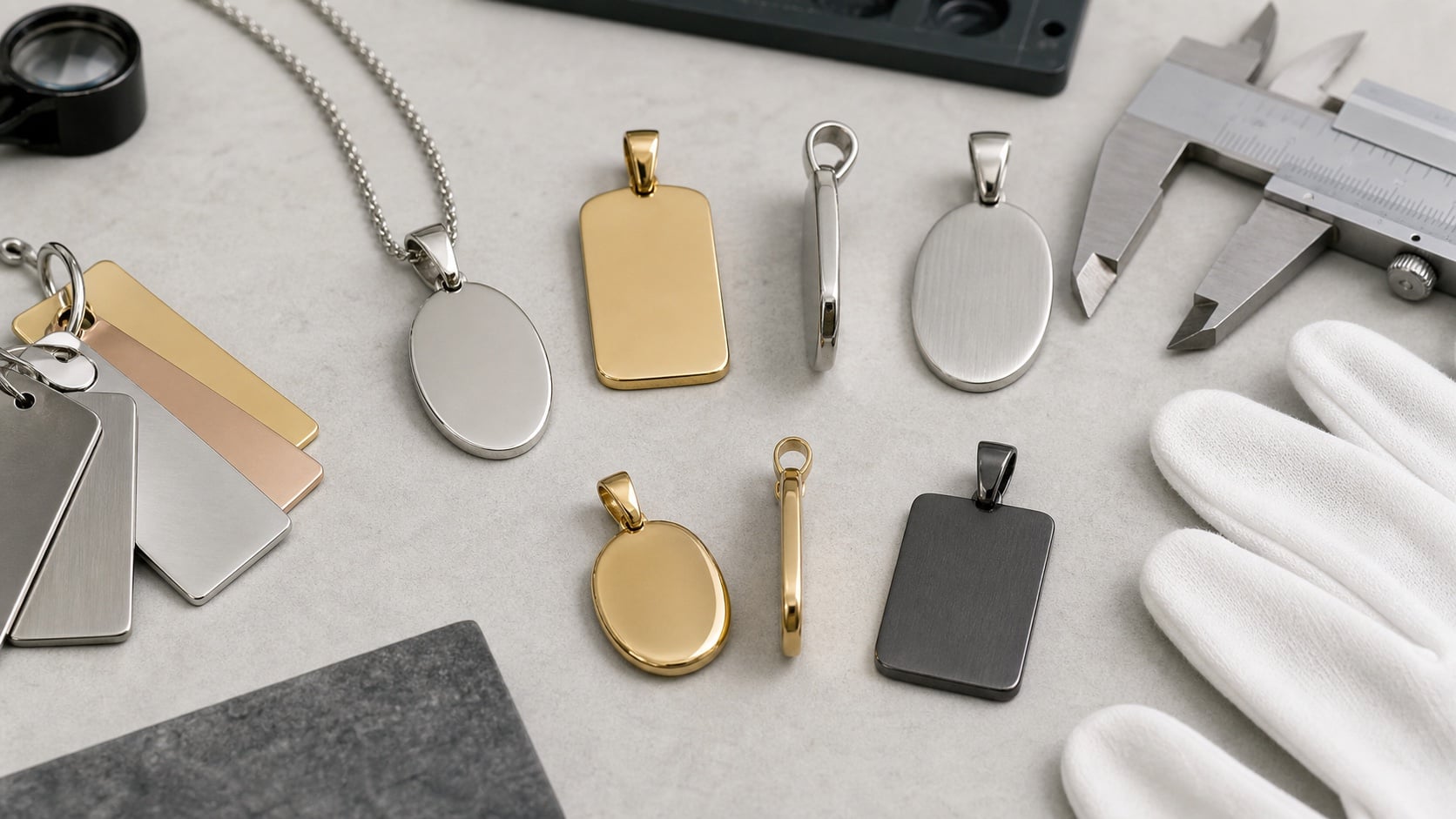
A custom pendant sample should not be approved only from the front design. The bail, chain fit, hanging direction, material, weight, logo method, finish, back side, edge comfort, and packaging all affect whether the final product feels ready for production.
The safest approach is to approve the pendant as an assembled product. Before bulk production, check how it hangs, how it fits the intended chain or connector, how the logo reads at real size, how the finish looks on every surface, and whether packaging protects the finished piece.
Start With Bail And Hanging Direction
The bail is the part that lets the pendant hang from a chain, cord, ring, or connector. It may be hidden, decorative, cast into the pendant, attached separately, or designed as part of the logo shape.
| Bail or attachment direction | Useful when | What to check before approval |
|---|---|---|
| Simple top bail | clean pendant shapes and standard necklace use | opening size, chain fit, front/back orientation |
| Integrated bail | pendant shape should look continuous | thickness, casting or polishing quality, hanging angle |
| Jump ring or connector | charm-style pendants or movable designs | ring gap, wire thickness, finish match, movement |
| Decorative bail | bail is part of the design | whether it distracts from the logo or artwork |
| Hidden or back bail | front face should stay clean | whether the pendant tilts or flips when worn |
The common mistake is approving the pendant face on a table. A pendant can look correct when flat and still tilt, twist, sit too high, or expose the wrong side when worn.
Check Chain Fit And Movement
Pendant approval should include the intended chain or connector direction. If the chain is not final yet, at least confirm the expected chain thickness, clasp direction, and wearing style.
Before approving a sample, check:
- whether the chain or connector passes through the bail easily;
- whether the bail opening is too tight, too large, or visually heavy;
- whether the pendant hangs flat, angled, or intentionally movable;
- whether the pendant flips when handled;
- whether the bail or ring rubs against plating, enamel, print, or polished surfaces;
- whether the front design remains visible when the pendant is worn.
If the pendant is part of a charm bracelet, keychain, bag charm, or accessory, do not review it only as necklace jewelry. The attachment and movement may need a different decision.
Match Material, Thickness, And Weight
Material choice affects more than the surface color. It changes weight, edge feel, relief detail, logo readability, finish behavior, and packaging risk.
| Material direction | Useful when | What to check on the sample |
|---|---|---|
| Stainless steel direction | clean modern pendants, polished or PVD-style finishes | edge comfort, logo readability, finish consistency |
| Brass direction | premium metal feel, warm tone, plated or polished looks | oxidation protection, finish consistency, detail depth |
| Zinc alloy direction | shaped fashion pendants and dimensional forms | weight, plating coverage, edge cleanup |
| Silver direction | jewelry-positioned products where care expectations are accepted | polishing, surface protection, packing method |
| Mixed material or enamel detail | color, logo, or decorative detail matters | color separation, fill quality, rub points |
Do not choose the material only because it sounds premium. A small flat logo pendant, a thick charm pendant, and a large dimensional pendant may need different material and thickness decisions.
Plan Logo Method And Finish At Real Size
Pendant artwork often looks clean on a screen but changes at final product size. Small text, thin lines, tight spacing, shallow relief, curved surfaces, and reflective finishes can reduce readability.
Before sampling, confirm:
- final pendant size and thickness;
- logo or artwork size at real scale;
- whether the method is engraving, raised detail, recessed detail, enamel fill, print, cutout, or separate metal detail;
- whether the bail covers or competes with the artwork;
- whether the finish makes the logo easier or harder to read;
- whether the back side needs a logo, texture, care mark, or clean finish.
Review logo detail after the finish is applied. A mark that looks sharp before polishing or plating may look different after the final surface treatment.
Sample Approval Checklist
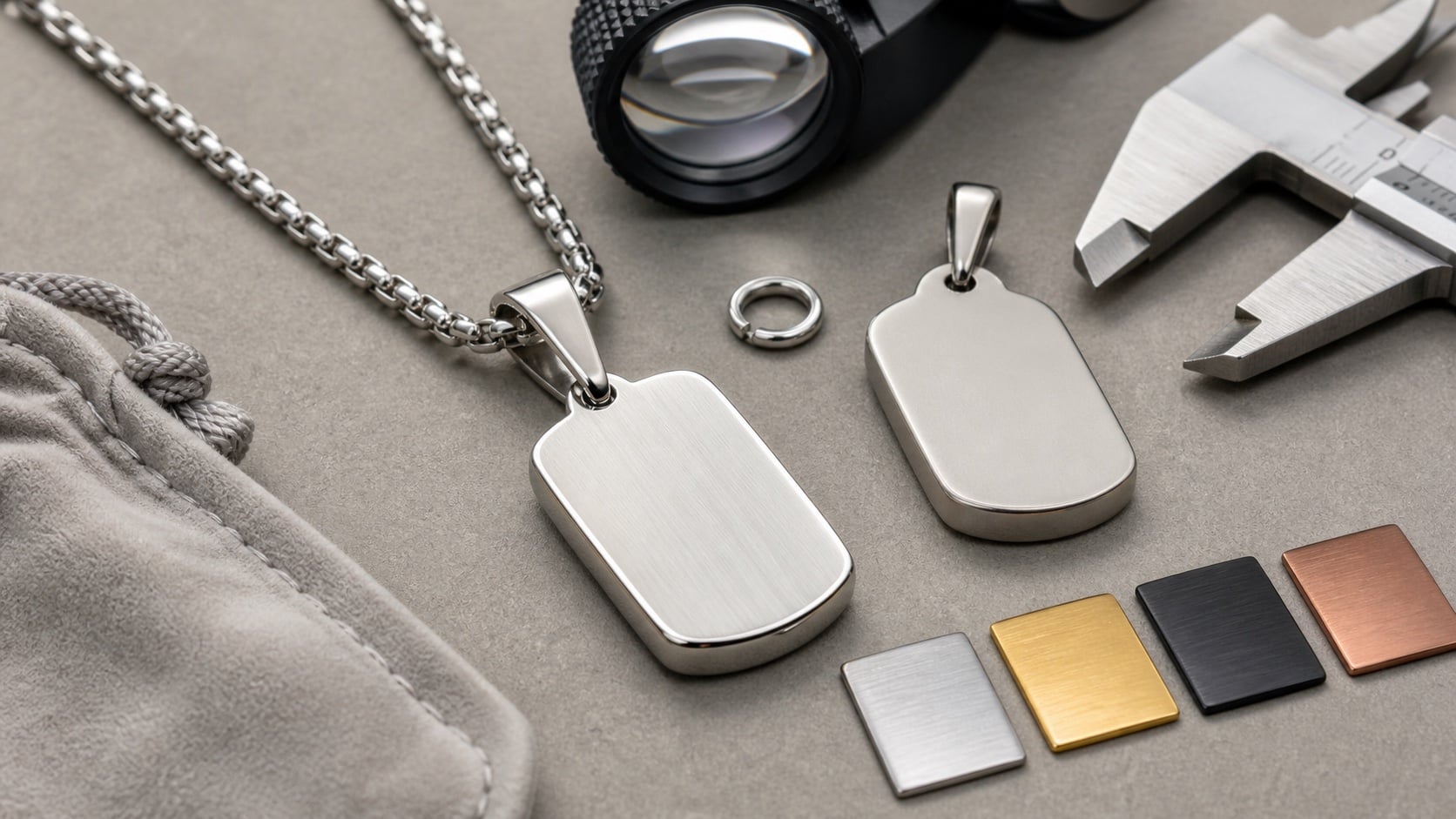
Use the sample to review the pendant as a finished product, not just a front image.
| Checkpoint | What to look for | Why it matters |
|---|---|---|
| Bail fit | bail opening matches the intended chain or connector | fit problems can block final assembly |
| Hanging direction | pendant sits at the intended angle and does not flip unexpectedly | table photos do not show wearing behavior |
| Chain or connector movement | ring, bail, chain, or connector moves as intended | movement affects comfort and perceived quality |
| Material and weight | thickness and weight match the design direction | heavy or thick pendants may need different attachment choices |
| Edge comfort | front, side, back, bail, and hole edges are smooth enough | rough edges affect wear and packaging |
| Logo detail | engraving, enamel, relief, print, or cutout is readable at real size | small artwork can fail after finish |
| Finish consistency | front, side, back, bail, and connector look consistent enough | mismatched finish reduces perceived quality |
| Back side | back surface is clean and matches the approved product standard | buyers often check both sides of jewelry |
| Packaging contact | pouch, card, box, or bulk packing does not create obvious rub marks | pendants can scratch during transit or storage |
If the sample is close but not ready, give specific feedback: bail opening, hanging angle, chain fit, edge cleanup, weight, logo readability, finish tone, back side, or packing contact.
What To Send Baique
For a faster custom pendant review, prepare:
- pendant type: necklace pendant, charm pendant, logo tag, bag charm, keychain charm, or other use;
- artwork, logo, drawing, or reference photo;
- target size and approximate thickness;
- material and finish direction;
- intended chain, cord, ring, or connector;
- bail preference or attachment expectation;
- logo method preference if known;
- front, side, and back requirements;
- packaging expectation;
- sample goal and any known quality concern.
The more clearly these points are specified, the easier it is to judge whether the pendant sample is ready for production.
FAQ
What should I check first on a custom pendant sample?
Check the bail and hanging direction first. Then review chain fit, material, thickness, weight, edge comfort, logo detail, finish consistency, back side, and packaging.
Does every pendant need a separate bail?
No. Some pendants use a separate bail, some use an integrated bail, some use a connector ring, and some use a hidden back attachment. The best direction depends on shape, size, chain, use case, and appearance.
Can a small logo be engraved on a pendant?
Sometimes, but readability depends on final size, surface shape, material, finish, and logo complexity. Review the logo at real size and simplify thin lines or small text when needed.
Should I approve a pendant sample without the chain?
Only if chain fit is not part of the project. If the pendant must work with a specific chain, cord, key ring, or connector, the sample should be checked with that attachment direction.
What photos should I request before bulk production?
Ask for front, side, back, bail close-up, chain or connector fit, logo close-up, finish detail, and packed-sample photos. If movement matters, ask for a short handling view or clear movement notes.
For a custom jewelry project, send the details through Baique’s fashion jewelry manufacturing service. For part-level decisions, also see the guide to bails for pendants and the guide to custom logo methods.
Final Takeaway
A custom pendant sample is ready only when the assembled product works: bail, chain fit, hanging direction, material, weight, logo method, finish, back side, and packaging. Send Baique the artwork, target size, material direction, finish reference, bail or chain expectation, and sample concerns so the project can be reviewed before bulk production.


Andy is a renowned expert in fashion jewelry manufacturing with deep industry insights. He provides OEM/ODM services to fashion brands and jewelers, turning ideas into tangible products. In addition to quality, Andy provides strategic advice on market trends and manufacturing innovations to help clients stand out in a competitive marketplace.