Premium custom metal accessories are not just heavier parts. Weight can help a small product feel solid, but only when it matches the product's use, size, attachment, finish, and packaging. If a buyer simply asks for a thicker or heavier accessory, the sample may feel impressive in the hand but become uncomfortable on clothing, too heavy for a keyring, awkward on a bag, or harder to protect during packing.
For a custom accessory, “premium feel” should be translated into manufacturable choices: material, thickness, weight balance, edge comfort, finish, logo detail, attachment movement, and presentation. Those choices should be reviewed together before sampling.
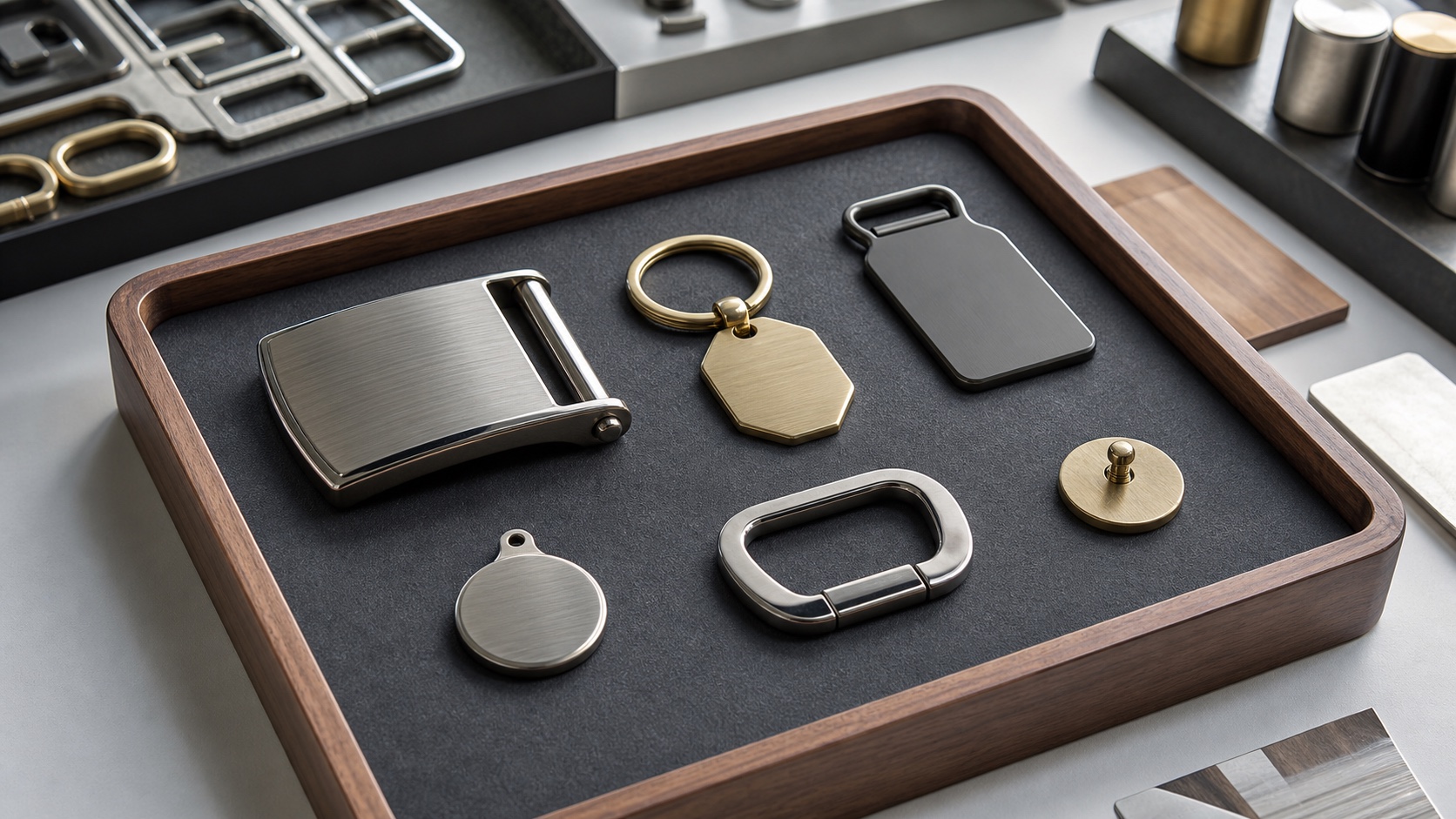
Quick Answer
To make a custom metal accessory feel premium without unnecessary weight, define the product use first. Then choose where the product needs substance, where it needs comfort, and which surface or detail will create the quality impression.
For most custom accessories, premium feel comes from a combination of:
- the right material for the use case
- controlled thickness instead of mass everywhere
- smooth edges and a finished back side
- a finish that fits how the product will be touched or worn
- clean logo detail at the final size
- stable connector, clasp, ring, hinge, or attachment movement
- packaging that protects the finish and presentation
A belt buckle, keychain, zipper pull, charm, pendant, pin, badge, bag tag, and bracelet part can all be metal accessories, but they should not share one weight rule. The best target is not “as heavy as possible.” It is “solid enough where the user notices quality, light enough for the real use.”
Why Heavier Is Not Always Better
Many buyers connect weight with value. That is understandable: a small metal part that feels too light may feel hollow or inexpensive. But too much weight can create the opposite problem.
A heavy belt buckle may feel substantial, but the back structure, prong, strap width, and surface wear still matter. A heavy keychain charm may feel premium in the hand, but it can stress the connector or become unpleasant in daily carry. A heavy pin or badge may pull on fabric. A heavy pendant or charm can change how the item hangs. A heavy bag accessory may rub against leather, webbing, zipper tape, or packaging.
Weight is also not the only signal of quality. Rigidity, edge finish, lack of rattling, logo definition, surface consistency, and how the part moves can all affect the user's judgment. A lighter part can still feel premium if it has the right density, stiffness, finish, and detail. A heavier part can still feel lower quality if the edges are rough, the logo is unclear, the plating looks uneven, or the connector feels loose.
Before sampling, decide which type of premium feeling matters:
- solid hand feel
- comfortable wear
- refined surface
- clean brand detail
- durable daily handling
- retail presentation
- lightweight but strong use
Those are different goals. They should not all be solved by adding thickness.
What Makes A Small Metal Accessory Feel Premium?
1. Weight Balance
The buyer should decide where the accessory needs weight and where it should stay light.
For example, a belt buckle may need a stronger front presence, but unnecessary mass on the back can affect comfort. A pendant may need enough weight to hang correctly, but too much can pull the chain. A keychain may need a sturdy body, but the ring, chain, clasp, or carabiner must match that body. A bag charm may need visual substance, but it should not damage the bag surface.
Instead of asking for “heavy”, describe:
- the product type
- target size
- expected use
- whether it will be worn, carried, clipped, hung, or packaged as a gift
- whether the priority is hand feel, comfort, or visual presence
2. Controlled Thickness
Thickness can add perceived quality, but it should be placed with purpose. A flat part that is thick everywhere may become heavy and overbuilt without improving the buyer's real experience.
Better options may include:
- local thickness around the logo or main face
- stronger rib or back structure where needed
- edge rounding for comfort
- relief detail instead of solid mass
- hollow or recessed areas where weight is not useful
- a material change instead of simply adding volume
The sample should be checked in the intended use position, not only on a desk.
3. Finish And Surface Feel
Finish is one of the fastest ways to create premium feel without adding weight. A polished, brushed, matte, antique, plated, PVD-coated, enamel-filled, or textured surface can change how the product is read.
The finish choice should consider:
- base material
- visible surface area
- touch and rub points
- expected color direction
- gloss or matte preference
- whether small scratches or fingerprints will be obvious
- how the logo will remain visible after finishing
A mirror-like surface may look high-end in photos but show fingerprints and fine scratches more easily. A brushed or satin surface may feel more controlled on high-touch products. A darker or antique finish may make relief detail more readable. A bright plated finish may create strong visual value, but the sample should be checked under realistic light and handling.
Do not approve finish only by a color name. Use a reference photo, finish sample, or clear direction such as polished gold tone, brushed silver tone, matte black, antique brass direction, or color fill with raised metal edges.
4. Edge Comfort And Back-Side Finish
The user's hand often notices quality through edges before they read any specification. Sharp corners, burrs, rough backs, unfinished openings, and uncomfortable edges can make a good-looking part feel unfinished.
For custom accessories, check:
- outside edges
- inside cutouts
- logo edges
- back side
- hole or loop area
- attachment point
- any area that touches fabric, skin, leather, webbing, or packaging
For pins, badges, pendants, charms, bag hardware, and keychains, the back side matters because the user may handle it every day. A polished front cannot fully compensate for a rough back or sharp edge.
5. Logo Detail At Final Size
Premium feel depends on whether the brand detail survives the final size and process. A logo that looks good in a large digital file may become weak when it is reduced to a small raised, recessed, engraved, laser-marked, stamped, enamel-filled, or printed detail.
Before sampling, confirm:
- vector artwork
- final logo size
- whether the logo is raised, recessed, engraved, laser-marked, printed, or color-filled
- minimum line detail
- whether tiny text should be simplified
- whether the finish will reduce contrast
If the logo is too detailed for the product size, a cleaner simplified version may feel more premium than forcing every small line into the mold or surface.
6. Connector And Movement Feel
For keychains, bag charms, tags, zipper pulls, bracelets, and belt-related accessories, the small hardware affects perceived quality. A good-looking charm can feel weak if the ring, clasp, chain, hinge, loop, hook, or connector moves poorly.
Check the accessory as an assembled product:
- Does the connector fit the hole or loop correctly?
- Does the ring or clasp match the body weight?
- Does the movement feel controlled?
- Does the attachment scrape the finish?
- Does the product hang in the right direction?
- Does the hardware feel loose or noisy?
These checks are especially important when the buyer wants a premium feel but also wants to keep weight under control.
Decision Table: Premium Feel Without Unnecessary Weight
| Buyer goal | Better lever than simply adding weight | What to confirm before sampling |
|---|---|---|
| More solid hand feel | Local thickness, material direction, edge comfort, reduced rattle | Product use, target size, thickness direction, hand-feel target |
| More refined surface | Brushed, polished, matte, plated, PVD, enamel, or textured finish | Finish reference, gloss/matte direction, high-touch areas |
| Cleaner logo detail | Raised/recessed logo, engraving, laser marking, enamel fill | Vector artwork, final logo size, minimum line detail |
| Better comfort | Smooth edges, balanced weight, finished back side | Wear/contact points, fabric or skin contact, edge radius direction |
| Stronger assembled feel | Matched ring, clasp, chain, hinge, or connector | Body weight, movement, attachment hole, pulling direction |
| Retail-ready presentation | Protection packaging and presentation packaging | Pouch, card, box, polybag, divider, label, packed sample check |
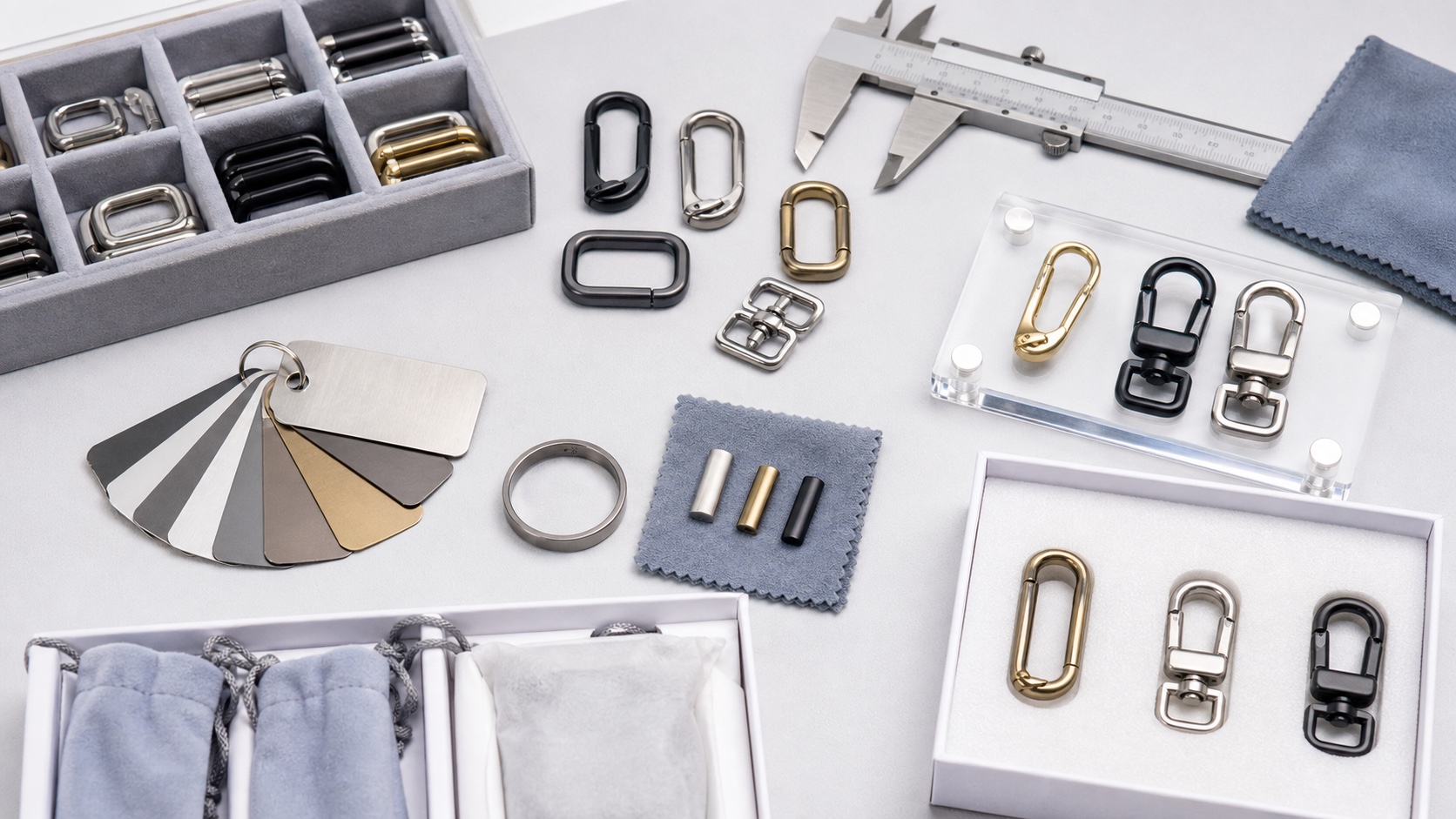
Sample Approval Checklist
When the sample arrives, do not approve only from a front photo. Check the whole product.
Product Feel
- Is the weight right for the use?
- Does the part feel solid without being uncomfortable?
- Does the thickness look intentional?
- Does the product hang, clip, or sit correctly?
- Does it feel hollow, rattly, or loose?
Surface And Finish
- Is the finish direction close to the reference?
- Does the finish look consistent across the visible face, edge, and back?
- Are fingerprints, fine scratches, or rub marks obvious?
- Does the finish support the intended premium positioning?
- Does the finish hide or reveal the logo detail in the right way?
Edges And Touch Points
- Are outside edges comfortable?
- Are inner holes, cutouts, and loops smooth enough?
- Does the back side feel finished?
- Does any area rub against fabric, leather, webbing, skin, or packaging?
Logo And Detail
- Is the logo readable at final size?
- Are raised or recessed areas clean?
- Is engraving or laser marking clear?
- Does color fill stay within the intended areas?
- Should tiny text or fine detail be simplified?
Assembly And Hardware
- Does the ring, clasp, chain, loop, hook, hinge, or connector match the body weight?
- Does the attachment move smoothly?
- Does the movement scrape the finish?
- Does the product hang in the intended direction?
- Does the assembled item feel stable?
Packaging
- Does the product rub against other pieces during packing?
- Is the finish protected from scratches?
- Does the packaging match the retail or presentation goal?
- Are labels, cards, pouches, boxes, or polybags confirmed before bulk packing?
- Has at least one packed sample been reviewed when presentation matters?
What To Send Baique Before Sampling
To help the manufacturer review premium feel without unnecessary weight, send:
- product type: keychain, buckle, charm, tag, pendant, pin, bracelet part, bag charm, zipper pull, or other accessory
- intended use: worn, carried, clipped, hung, displayed, gifted, or packaged for retail
- reference size and target thickness direction
- target feel: solid, lightweight, refined, comfortable, durable, or gift-ready
- material ideas or reference products
- finish reference: color, polish, brushed, matte, antique, plated, PVD, enamel, or coating direction
- logo file and preferred logo method
- attachment or connector requirement
- packaging expectation
- quantity target or planning range, if available
- any sample approval priority
A clear request is easier to evaluate than a short note saying “make it high quality.” Premium feel is a design and production decision, not a single material choice.
Packaging And Presentation
Packaging protects the premium impression. A polished or plated accessory can leave the factory looking correct but lose value if pieces rub together, arrive scratched, or sit in packaging that does not match the product's retail role.
For premium custom accessories, packaging should be discussed before bulk production:
- simple protective polybag
- pouch
- backing card
- paper box
- foam or divider
- carton arrangement
- barcode or retail label
- gift presentation
If finish and presentation matter, approve at least one packed sample. This helps catch rub marks, tight packaging, label placement, and visual presentation issues before bulk packing.
FAQ
Does a heavier custom accessory always feel more premium?
No. Weight can support perceived quality, but only when it matches the product use. A part can be too heavy for clothing, a keyring, a pendant, a zipper, or a bag. Premium feel comes from weight balance, finish, edge comfort, logo detail, assembly feel, and presentation.
How can a metal accessory feel solid without being too heavy?
Use controlled thickness, good edge finishing, a suitable material route, stable connectors, and a finish that fits the product. The goal is not to remove all weight. The goal is to place weight where it improves the user's experience.
Which finish makes a custom accessory feel more premium?
There is no universal best finish. Polished, brushed, matte, antique, plated, PVD-coated, enamel-filled, or textured finishes can all feel premium when they match the product use, brand direction, and handling conditions. Send a finish reference before sampling.
What should I check besides the front appearance?
Check the edge, back side, logo detail, attachment movement, finish consistency, touch points, and packaging. A front photo can miss rough edges, weak logo contrast, loose hardware, or surface rub marks.
Can packaging affect perceived quality?
Yes. Packaging can protect the surface and shape the first impression. If a plated, polished, brushed, or enamel piece rubs against other parts during packing, the final product may feel lower quality even if the loose sample looked good.
Start Your Custom Accessory Review
Planning a custom metal accessory and unsure how to balance premium feel, weight, finish, and comfort? Send Baique your artwork, product type, target size, intended use, finish reference, logo method, attachment plan, and packaging goal. We can help review the material, thickness, surface finish, hardware, and sample approval points before bulk production.
Related Baique Planning Pages
For a specific product route, review Baique's custom keychains service, custom belt buckles service, fashion jewelry manufacturer, and custom bag hardware service pages before sending artwork and sampling details.


Andy is a renowned expert in fashion jewelry manufacturing with deep industry insights. He provides OEM/ODM services to fashion brands and jewelers, turning ideas into tangible products. In addition to quality, Andy provides strategic advice on market trends and manufacturing innovations to help clients stand out in a competitive marketplace.