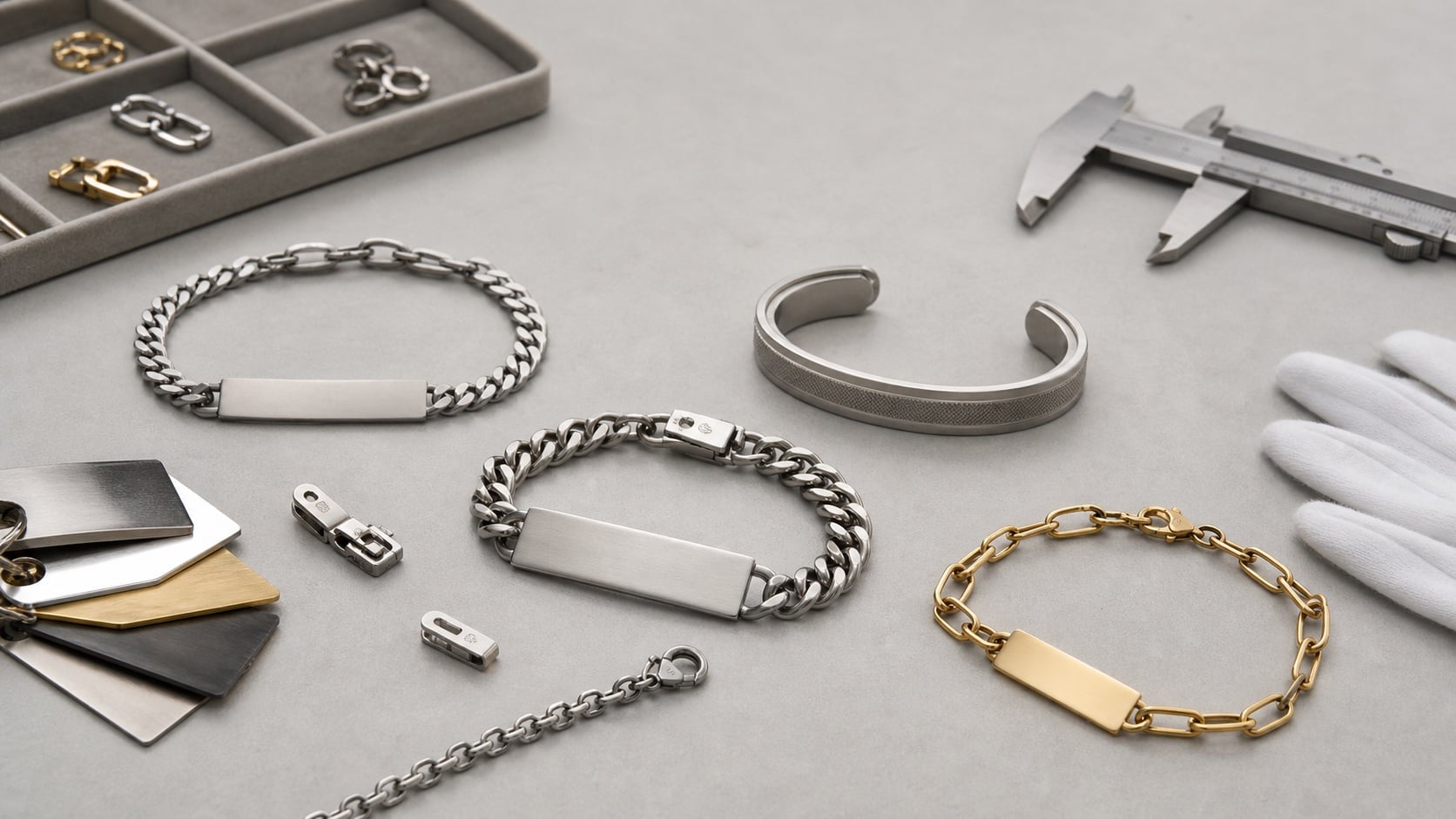
A custom bracelet sample should not be approved only because the front photo looks attractive. Bracelets move around the wrist, touch skin, open and close repeatedly, rub against packaging, and often carry small logo or charm details. Clasp fit, length, comfort, material, finish, logo detail, and packaging can all change how the final product feels.
The safest approach is to approve the bracelet as an assembled product. Before bulk production, check the structure, closure, length, movement, edge comfort, finish consistency, logo readability, and packing method together.
Start With The Bracelet Structure
The first decision is not the plating color. It is the bracelet structure and how the bracelet will be worn.
| Bracelet direction | What to confirm before sampling | Common sample risk |
|---|---|---|
| Chain bracelet | chain style, clasp type, extension length, connector rings | clasp works but the length or movement feels wrong |
| Charm bracelet | charm weight, jump rings, chain strength, spacing | charms rub, twist, or make the bracelet feel unbalanced |
| Bangle | inner diameter, opening, edge comfort, thickness | front shape looks good but the opening is uncomfortable |
| Cuff bracelet | wrist opening, spring feel, edge cleanup, logo position | edges feel sharp or the cuff shape does not sit well |
| ID or logo bracelet | plate thickness, engraving area, chain or strap connection | logo is readable but the plate feels too heavy or stiff |
| Adjustable bracelet | slider, extension chain, cord, or clasp movement | adjustable part feels weak or hard to use |
If the buyer has only a reference photo, confirm whether the project is closer to a chain bracelet, bangle, cuff, charm bracelet, or branded ID bracelet. The sample checks are different for each structure.
Check Clasp, Connector, And Movement
Bracelet hardware should be checked on the finished sample, not only as loose parts. A clasp can look acceptable by itself but feel awkward once attached to the bracelet body. A connector ring can match the finish but still rub against a charm, plate, or polished surface.
Before approving a sample, check:
- whether the clasp opens and closes smoothly;
- whether the clasp size matches the bracelet weight and style;
- whether jump rings, connector links, or hinges show obvious gaps;
- whether the bracelet twists, swings, or sits as intended;
- whether the closure is visible or hidden in a way that matches the design;
- whether connector parts match the main finish closely enough.
Do not approve from one front image. Ask for front, side, back, closure, and worn-position views. If the bracelet has moving parts, ask for a short handling view or clear notes on movement.
Confirm Length, Fit, And Wearing Comfort
Length is not only a number on a spec sheet. A bracelet can meet the requested length and still feel wrong if the clasp is large, the chain is stiff, the bangle opening is narrow, or the edges are not cleaned well.
For a chain bracelet, confirm total length, extension length, clasp position, and how the bracelet sits when closed. For a bangle or cuff, confirm inner diameter, opening, side thickness, and edge comfort. For charm or logo bracelets, check whether weight distribution pulls the bracelet to one side.
Useful sample questions:
- Does the bracelet sit naturally on the wrist?
- Is the inner edge smooth enough for the intended use?
- Does the clasp sit in a comfortable position?
- Does the bracelet twist too much or feel too stiff?
- If there is an extension chain, does it look planned rather than added later?
The goal is not to create one universal bracelet size. The goal is to approve the size and comfort standard for the buyer’s actual product.
Match Material And Finish To The Product
Material choice affects weight, edge feel, finish, logo detail, and perceived value. Do not choose a material only because it sounds premium. A slim chain bracelet, a heavy logo plate bracelet, and a cuff bracelet may need different tradeoffs.
| Material direction | Useful when | What to check on the sample |
|---|---|---|
| Stainless steel direction | clean modern styles, polished or PVD-style finishes, durable positioning | edge comfort, weight, finish consistency, logo readability |
| Brass direction | warmer metal feel, detailed shapes, plated finishes | polishing, plating consistency, oxidation protection |
| Zinc alloy direction | shaped fashion parts, dimensional charms, larger decorative elements | weight, plating coverage, edge cleanup |
| Mixed material direction | cord, chain, stone-like detail, enamel, or charm combinations | connection points, color matching, packing rub |
Finish should be checked on the complete bracelet. The clasp, chain, connector, charm, logo plate, and extension may come from different production steps. If the surface tone is too different, the buyer may read the bracelet as inconsistent even when each component is acceptable by itself.
Plan Logo And Brand Detail At Real Size
Bracelets often carry small logo areas: clasp engraving, ID plate logos, charm marks, inside engraving, hang tags, or packaging cards. Artwork that looks clean on screen may lose clarity after polishing, plating, engraving, enamel fill, or printing.
Before sampling, confirm:
- final logo size and position;
- whether the logo is engraved, raised, recessed, enamel filled, printed, or added as a separate tag;
- whether the logo is on a flat, curved, or moving part;
- whether the clasp or connector distracts from the logo;
- whether the logo is still readable after the planned finish.
If the logo is very small, simplify thin lines and small text before sampling. It is easier to adjust artwork before tooling or bulk production than after the first sample exposes the problem.
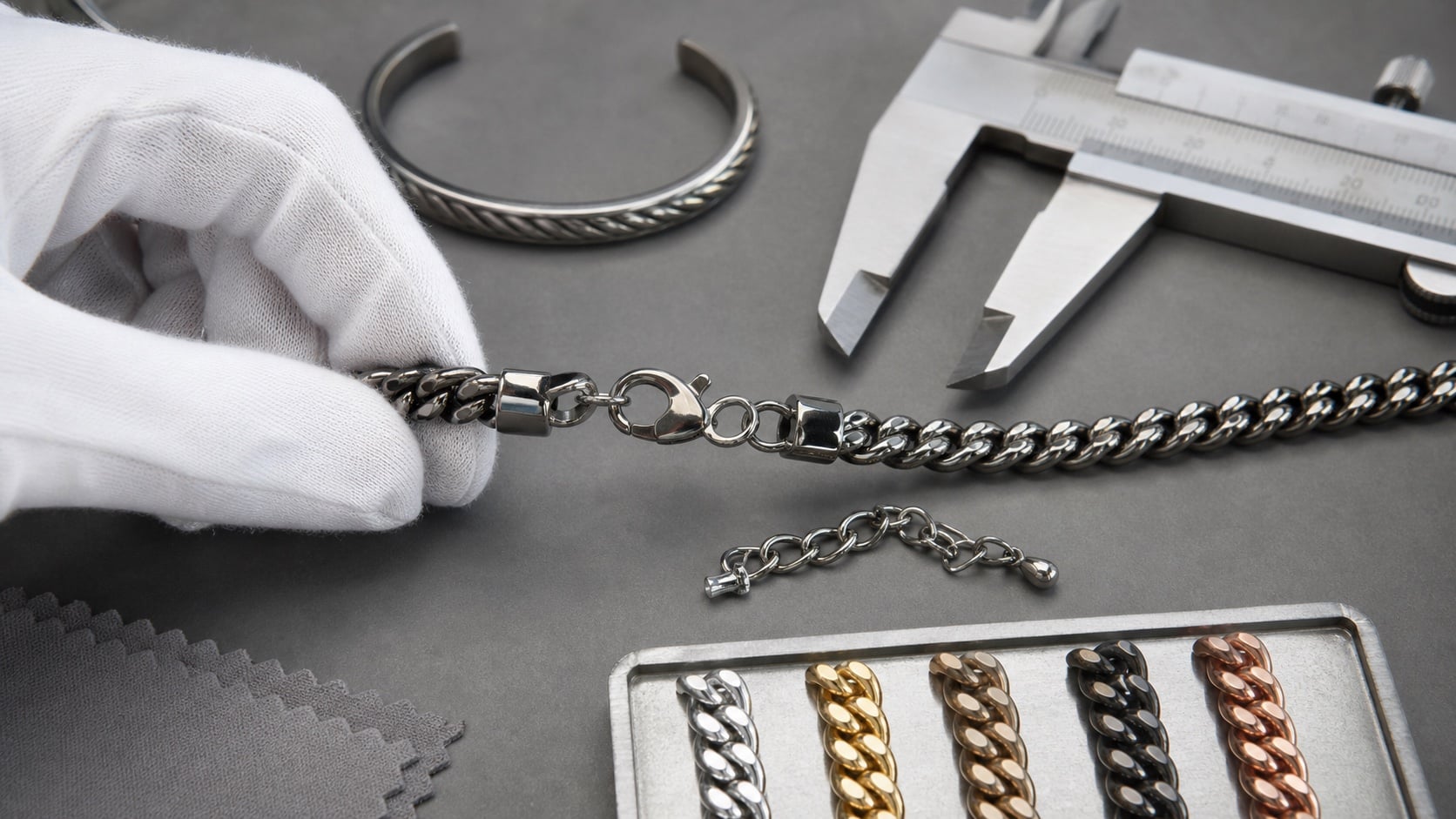
Sample Approval Checklist
Use the sample to review the bracelet as a finished product.
| Checkpoint | What to look for | Why it matters |
|---|---|---|
| Structure | chain, bangle, cuff, charm, ID plate, or adjustable style is clear | each structure has different approval risks |
| Length and fit | length, inner diameter, opening, or extension works for the target use | correct measurement does not always mean comfortable fit |
| Clasp and closure | clasp opens, closes, and sits naturally | closure problems repeat across production |
| Connector movement | jump rings, hinges, links, and charms move as intended | movement affects comfort and perceived quality |
| Edge comfort | no sharp or rough area touches skin, fabric, or packaging | bracelets are handled and worn repeatedly |
| Material and weight | sample weight matches the design direction | heavy parts can change comfort and hanging behavior |
| Finish consistency | clasp, chain, connector, charm, and main body look consistent enough | mismatched finish makes the product feel cheaper |
| Logo detail | engraving, enamel, print, or plate detail is readable at real size | brand details often fail at small scale |
| Packaging contact | pouch, card, box, or bulk protection does not create obvious rub marks | surface damage can happen before the buyer sees the product |
If a sample is close but not ready, avoid vague feedback such as “make it better.” Mark the exact issue: length, clasp action, connector gap, edge cleanup, finish tone, logo readability, weight, or packing contact.
What To Send Baique
For a faster review, prepare:
- bracelet type: chain, bangle, cuff, charm, ID plate, adjustable, or other structure;
- target length, inner diameter, or wrist-size range;
- reference photos showing front, side, back, and closure expectations;
- material and finish direction;
- clasp, connector, hinge, extension, or charm preference;
- logo or artwork file, preferably vector;
- packaging expectation: pouch, card, box, bulk protection, or retail-ready packing;
- sample goal and known quality concerns.
The more clearly these points are specified, the easier it is to review whether the sample is actually ready for production.
FAQ
What should I check first on a custom bracelet sample?
Start with the structure and fit: bracelet type, length or inner diameter, clasp, connector, movement, and wearing comfort. Then review material, finish, logo detail, and packaging.
Is stainless steel always the best bracelet material?
Not always. Stainless steel can be a strong direction for clean, durable, modern designs, but brass, zinc alloy, mixed materials, or other directions may fit better depending on shape, finish, weight, and brand positioning.
How do I choose a clasp for a custom bracelet?
Choose by bracelet weight, wearing style, desired visibility, user handling, and finish target. A clasp should be checked on the assembled bracelet, not only as a separate component.
Can Baique add a logo to the clasp or bracelet plate?
Often yes, but the best method depends on logo size, material, surface shape, finish, and readability. Review the logo at real product size before approving the sample.
What photos should I request before approving bulk production?
Ask for front, side, back, clasp, connector, worn-position, close-up logo, and packed-sample photos. For moving parts, ask for a short handling view or clear movement notes.
For a bracelet project, send the details through Baique’s custom bracelets service. If the question is mainly about small connecting parts, see the related guide to custom jewelry findings, clasps, and connectors.
Final Takeaway
A custom bracelet sample is ready only when the assembled product works: structure, clasp, length, comfort, material, finish, logo detail, and packing. Send Baique the bracelet type, artwork, target size, material direction, finish reference, clasp preference, and sample expectations so the project can be reviewed before bulk production.


Andy is a renowned expert in fashion jewelry manufacturing with deep industry insights. He provides OEM/ODM services to fashion brands and jewelers, turning ideas into tangible products. In addition to quality, Andy provides strategic advice on market trends and manufacturing innovations to help clients stand out in a competitive marketplace.