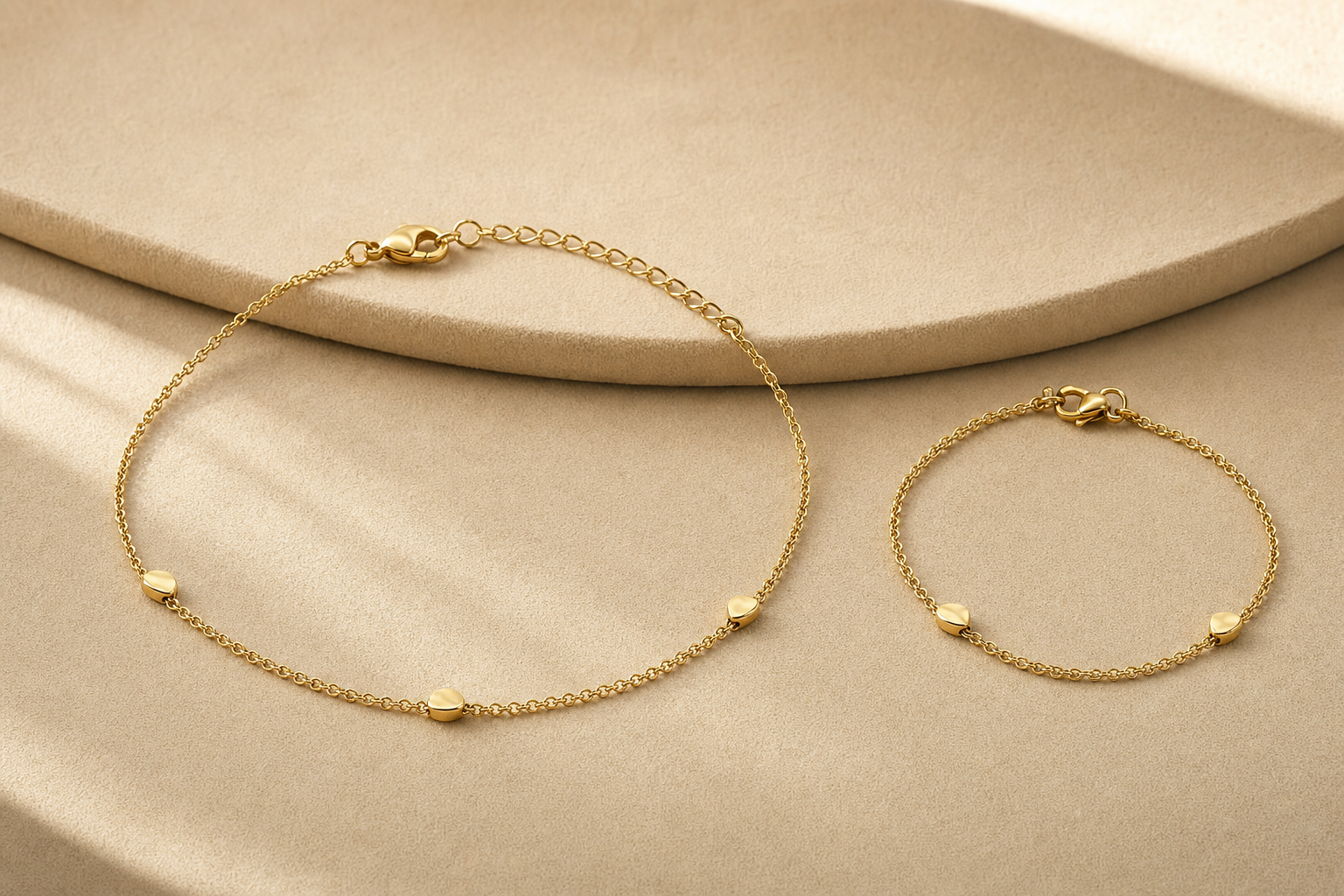
Kişiye özel bir halhal , aynı koleksiyondan bir bileklik ile başlayabilir , ancak ekstra zincir eklenmiş bir bileklik olarak bitmemelidir. Ayak bileği farklı hareket eder, kullanıcı sallanan ağırlığı farklı şekilde hisseder ve ürün suya maruz kalma sırasında daha sık yerinde kalabilir. Uzunluk, uzatma aralığı, zincir profili, dekoratif ağırlık, malzeme, toka konumu ve numunenin rahatlığı gibi unsurların her biri kendi onayını gerektirir.
Birçok Avrupa ve Kuzey Amerika projesi için Baique, pratik bir başlangıç spesifikasyonu olarak 250 mm taban uzunluğu ve 50 mm uzatma parçası kullanmaktadır . Bu, evrensel bir boyut standardı değildir. Nihai aralık, hedef müşteriye, tokaya, zincir yapısına, dekoratif tasarıma ve fiziksel örneğe bağlıdır.
Hızlı Özel Halhal Özellikleri
| Karar | Pratik başlangıç yönergeleri | Henüz örnek onayına ihtiyaç duyanlar nelerdir? |
|---|---|---|
| Koleksiyon tabanı | Uyumlu bir bilekliğin zincirini ve görsel dilini genişletin. | Ayak bileği için aralığı, hareketi, süsleme sayısını ve ağırlığı yeniden dengeleyin. |
| uzunluk | Birçok Avrupa/ABD projesi için 250 mm taban + 50 mm uzatma parçası. | Gerçek kullanım aralığı, toka katkısı, charm konumu ve uzatma kuyruğu davranışı |
| Zincir profili | Kalın bir varsayılan yerine ince bir zincir. | Mukavemet, esneklik, bükülme, takılma noktaları ve yüzey tutarlılığı |
| Dekoratif elemanlar | Küçük, hafif, kontrollü aralıklarla yerleştirilmiş tılsımlar, boncuklar, plakalar veya taşlar. | Salınım, kenar konforu, düşme uzunluğu, sürtünme ve denge |
| Malzeme | Tekrarlanan nem maruziyetinin beklendiği durumlarda paslanmaz çelik güçlü bir tercihtir. | Kalite, yüzey işlemi, kaplama, bağlantı elemanları, taşlar/yapıştırıcılar, bakım talimatları ve maruz kalma kontrolleri |
| Onay yöntemi | Bir araya getirilmiş fiziksel örneği inceleyin. | Uygunluk, hareket, toka, bağlantı elemanları, yüzey, logo detayı ve ambalaj teması |
Önce uyumlu bilekliği tasarlayın, ardından ayak bileği için yeniden tasarlayın.
Aynı seriden bir bileklik kullanmak, özel bir halhal tasarlamanın genellikle etkili bir yoludur. Koleksiyon zaten görsel bir dile sahiptir: zincir deseni, tılsım şekli, logo detayı, bitiş rengi ve dekoratif ritim. Bu dili yeniden kullanmak, bileklik ve halhalın bir set olarak kasıtlı bir şekilde tasarlanmış gibi görünmesini sağlayabilir.
Ancak, bileziğin özelliklerini satır satır kopyalamayın. Zincir uzadıkça, dekoratif unsurlar arasındaki mesafe görsel olarak değişir. Daha fazla takı, çok fazla hareketli ağırlık ekleyebilir. Bilekte kullanılan sarkıt benzeri bir parça ayağa veya ayakkabıya değebilir. Toka ve uzatma ucu da daha belirgin bir konuma dönebilir.
Örnekleme işlemine başlamadan önce, nelerin sabit kalması ve nelerin değişmesi gerektiğine karar verin.
Gerektiği yerlerde tutarlılığı koruyun:
- zincir deseni ve bitiş ailesi;
- çekicilik veya logo dili;
- taş, boncuk, mine veya cilalı detay;
- Ambalaj ve koleksiyon sunumu.
Halhal için yeniden hesaplayın:
- taban uzunluğu ve uzatma aralığı;
- Dekoratif unsurların sayısı ve aralıkları;
- toplam hareketli ağırlık;
- Damla uzunluğu ve kenar profili;
- toka, bağlantı elemanı ve uzatma kuyruğu konumu;
- Cilt, çorap, ayakkabı ve ambalajla temas.
Bu yaklaşım, bilek ürünü gibi davranmaya zorlamadan koleksiyonun tanınabilirliğini koruyor.
250 mm + 50 mm'yi başlangıç spesifikasyonu olarak kullanın, evrensel bir kural olarak değil.
Bir halhalın teknik özelliklerinde, taban uzunluğu ile uzatma uzunluğu ayrı ayrı belirtilmelidir . Sadece "toplam 300 mm" yazmak çok fazla soru işaretine yol açar. Fabrika, tokasının en kısa ayarda nerede kapandığını, ne kadar ayar imkanı olduğunu ve dekoratif unsurların bu aralıkta nerede konumlandığını bilmelidir.
Baique'nin Avrupa ve Kuzey Amerika pazarlarına yönelik birçok projesi için faydalı bir başlangıç noktası şudur:
- Halhalın taban uzunluğu: 250 mm;
- uzatma zinciri: 50 mm;
- Maksimum nominal aralık: Tam kilit ve bağlantı yapısını hesaba katmadan önce yaklaşık 300 mm.
Son ürün farklı bir ürün yelpazesi gerektirebilir. Daha küçük ayak bilekleri, büyük bedenler, erkek tasarımları, çocuklar, katmanlı giyim veya belirli bir perakendeci beden sistemi için hedef bir koleksiyon, tek bir varsayılan kalıba zorlanmak yerine bu gereksinime göre geliştirilmelidir.
Ayrıca ölçülerin nasıl tanımlandığını da teyit edin. Taban uzunluğu tokasını da içeriyor mu? Hafif gerilim altında uçtan uca mı ölçülüyor? Dekoratif bir orta plaka zincir uzunluğunu kesiyor mu? Halhal en kısa ve en uzun ayarda takıldığında ilk tılsım nerede duruyor?
Örnek ölçü kaydını isteyin ve parçayı gerçek kullanım pozisyonunda kontrol edin. Nominal bir sayı doğru olabilir, ancak takılan halhal yine de çok gevşek, çok sıkı veya görsel olarak dengesiz hissedilebilir.
Zinciri ince tutun ve dekoratif ağırlığı kontrol altında tutun.
Çoğu moda halhal, küçük dekoratif unsurlarla birlikte nispeten ince zincirler kullanır. Bu sadece bir stil geleneği değil. Ayak bileği yürürken sürekli hareket eder ve ağır veya hacimli bir parça sallanabilir, dönebilir, cilde çarpabilir veya ayakkabıyla etkileşime girebilir. Ürün fotoğrafında önemsiz görünen ağırlık, hareket halindeyken belirgin hale gelebilir.
İnce zincirli bir yönlendirme şunları içerebilir:
- Ortasında küçük bir eleman bulunan, sade ve cilalı bir zincir;
- Eşit aralıklarla yerleştirilmiş mini takılar veya boncuklar;
- Toplam ağırlığı kontrol altında olan ince, çift katmanlı bir yapı;
- küçük bir logo plakası veya baş harf öğesi;
- Zarif taşlar, inciler, deniz kabukları, mine detayları veya damgalı şekiller.
İnce olmak, tanım gereği kırılgan olmak anlamına gelmez. Zincir, toka, bağlantı halkaları ve takı eklentileri yine de kullanım amacına uygun olmalıdır. Amaç, her parçayı olabildiğince ince yapmak yerine, tüm yapıyı yönetmektir.
Her bir dekoratif unsur için şunları inceleyin:
- bireysel ve toplam ağırlık;
- ayak bileği çevresindeki boşluk;
- zincirin ne kadar altına indiği;
- Kenarların veya sivri uçların çoraplara veya ayakkabılara takılıp takılmayacağı;
- Komşu elemanların birbirine sürtünüp sürtünmediği;
- Öne bakan detayların kullanışlı bir yönelim gösterip göstermediği;
- Uzatma kuyruğunun istenmeyen bir salınım yaratıp yaratmadığı.
Kalın veya gösterişli bir halhal mümkün olabilir, ancak daha güçlü bir kullanım testi gerektiren bir istisna olarak değerlendirilmelidir. Sadece bir görsele bakarak onaylamayın. Parçayı ayakta dururken, yürürken, otururken ve koleksiyon için beklenen ayakkabı türünü giyerken fiziksel olarak kontrol edin.
Suya maruz kalma olasılığına göre malzeme ve yüzey kaplaması seçin.
Baique, tekrarlanan nem maruziyeti olasılığı yüksek olduğunda özel halhallar için genellikle paslanmaz çeliği tercih eder . Pratik kullanımda, bazı kullanıcılar duş almadan önce halhallarını bilekliklere göre daha az sıklıkla çıkarabilirler. Ürün ayrıca ter, yağmur, plaj kullanımı, kozmetik ürünler ve ıslak cilt temasına da maruz kalabilir.
Paslanmaz çelik, korozyon direncini yüzeyinde doğal olarak oluşan ince, krom açısından zengin pasif oksit filminden aldığı için güçlü bir başlangıç malzemesidir. Ancak bu, her paslanmaz halhalı su geçirmez veya korozyona dayanıklı yapmaz. Klorürler, sert kimyasallar, hapsolmuş nem, uygun olmayan kalite seçimi, karışık metaller, kötü işleme ve hasarlı veya tutarsız kaplamalar yine de sorun yaratabilir.
Tam halhal, sadece taban zincirinden daha fazlasını da içerebilir:
- PVD veya başka bir dekoratif kaplama;
- Kaplama takılar veya karışık metal aksesuarlar;
- taşlar, inciler, mine veya yapıştırıcılar;
- Lehimli veya kaynaklı bağlantılar;
- Farklı bir bileşen kaynağından gelen bir toka ve uzatma parçası;
- Baskılı, oyma veya mine dolgulu logo detayı.
Bu nedenle, ana metal iddialarını ve nihai ürün iddialarını ayrı tutun. Korozyona dayanıklı paslanmaz çelik taban, her kaplamanın, yapıştırıcının, taş yerleştirmenin veya bağlantı elemanının dayanıklılığını otomatik olarak kanıtlamaz.
“Suya dayanıklı” gibi pazarlama ifadelerini onaylamadan önce, nihai numunenin gerçekte neye göre test edildiğini tanımlayın. İlgili bir ürün spesifikasyonu ve testi bunları desteklemediği sürece, “su geçirmez”, “paslanmaz”, “kararmaz” veya ömür boyu duşta kullanılabilirlik iddialarından kaçının.
Tasarımda başka bir malzeme kullanılıyorsa, aynı gerçek kullanım sorularına göre değerlendirin: beklenen nem, ağırlık, şekil, detay, yüzey, cilt teması, bakım talimatları ve hedef fiyat konumlandırması. Paslanmaz çelik bu kullanım durumu için güçlü bir varsayılan seçenektir, ancak tek olası cevap değildir.
Zinciri, tokaları, bağlantı parçalarını ve takıları tek bir sistem olarak kontrol edin.
Bir halhalın inandırıcı olması, en küçük bağlantı noktası kadar önemlidir. Zincir temiz görünebilir, ancak çok büyük bir toka parçanın dengesini bozabilir. Küçük bir bağlantı halkası ince görünüme uyabilir, ancak belirgin bir boşluk bırakabilir. Bir tılsım güzelce işlenmiş olabilir, ancak bağlantı yönü yanlış olduğu için dönebilir, sürtünebilir veya takılabilir.
Birleştirilmiş numuneyi her yönden inceleyin.
zincir
Taban ve uzatma parçası boyunca desen, genişlik, esneklik, bükülme davranışı, cilalı veya dokulu yüzey ve tutarlılığı doğrulayın. Halhal bir bileklikle eşleşiyorsa, zincir ve yüzeyin farklı partilerdenmiş gibi görünmemesi için her iki parçayı da aynı ışık altında karşılaştırın.
Toka ve bağlantı elemanları
Tokanın ince zincir tasarımına orantılı ve kullanımı pratik olmalıdır. Açma-kapama mekanizmasını, bağlantı halkasının kapanmasını, yüzey pürüzsüzlüğünü ve tokanın rahatsız edici bir pozisyona dönüp dönmediğini kontrol edin. Dekoratif takı aksesuarları, yük taşıyıcı donanım olarak tanımlanmamalıdır.
Dekoratif elemanlar
Yönlendirmeyi, aralığı, sarkma uzunluğunu, kenar temizliğini, taş veya mine görünümünü, logo okunabilirliğini ve hareketini kontrol edin. Bileklik ve halhalda aynı tılsım kullanılıyorsa, koleksiyon tutarlılığının yeterli olduğunu varsaymak yerine, boyutunun ve ağırlığının halhalda da mantıklı olup olmadığını doğrulayın.
Uzatma kuyruğu
Kuyruk kısmının görsel ve konfor açısından ayrı bir incelemeye ihtiyacı var. Sürüklüyor mu, dolaşıyor mu, ayakkabıya takılıyor mu veya en uzun ayarda dengesiz hissettiriyor mu kontrol edin. Küçük bir uç süslemesi görünümü iyileştirebilir, ancak aynı zamanda ağırlık ve hareketlilik de ekler.
Bitiş tutarlılığı
Zincir, toka, halkalar, takı ucu, logo plakası ve uzatma parçası farklı üretim veya tedarik aşamalarından geçebilir. Her bir parçayı ayrı ayrı değil, birleştirilmiş rengi ve parlaklık seviyesini onaylayın. Parçalar doğrudan yan yana durduğunda küçük ton farklılıkları daha kolay görülür.
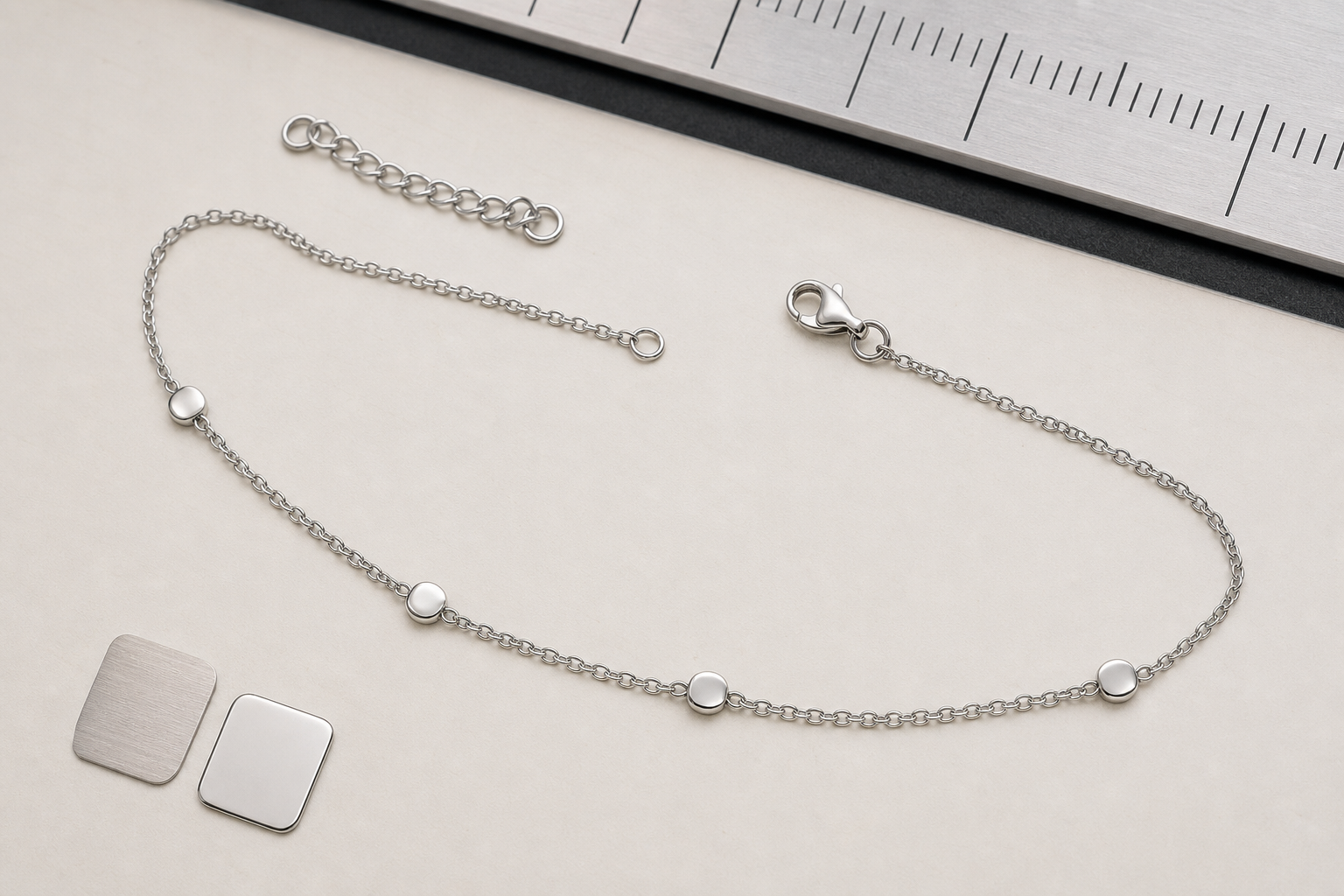
Özel Tasarım Halhal Örneği Onay Kontrol Listesi
Ayak bilekliğinin giyilebilir bir sistem olarak onaylanması için fiziksel örnek kullanılmalıdır.
| Kontrol noktası | Neyi onaylamak gerekir? | Neden önemli |
|---|---|---|
| Koleksiyon eşleşmesi | Zincir, takı tasarımı, logo detayı ve işçilik, uyumlu bileklik ile açıkça ilişkilidir. | Set, birebir aynı yapıya sahip olmaya zorlanmadan, birbiriyle bağlantılı görünmelidir. |
| taban uzunluğu | Ölçüm yöntemi ve en kısa giyim pozisyonu teknik özelliklere uygundur. | Doğru toplam uzunluk, yanlış taban aralığını yine de gizleyebilir. |
| genişletici | Uzatma parçasının uzunluğu, bağlantı boyutu, uç detayı ve maksimum konumu belgelenmiştir. | Ayarlamalar sonradan eklenmiş gibi değil, tasarlanmış gibi hissettirmeli. |
| Uygunluk ve hareket | Numune, ayakta dururken, yürürken ve otururken doğal bir şekilde durur. | Hareket, konforu, salınımı, dönüşü ve görsel dengeyi değiştirir. |
| Zincir profili | Genişlik, esneklik, bükülme ve yüzey, amaçlanan şık görünüme uyum sağlar. | Bir zincir zarif görünebilir ancak çok sert veya düzensiz davranabilir. |
| Dekoratif denge | Süs sayısı, aralık, toplam ağırlık, sarkma uzunluğu ve yönlendirme birlikte çalışır. | Fazla uzunluk, hareketi ve dengesizliği artırabilir. |
| Toka ve bağlantı elemanları | Toka sorunsuz çalışıyor; halkalar ve bağlantı yerleri temiz ve uygun şekilde kapalı. | Küçük bağlantı sorunları üretim boyunca tekrarlanabilir. |
| Kenar konforu | Cilt, çorap, ayakkabı veya ambalajla belirgin temas oluşturacak pürüzlü, keskin veya çıkıntılı bir nokta bulunmamaktadır. | Ayak bileklikleri, ürün fotoğrafında göründüğünden daha fazla çevre yüzeye sürtünerek hareket eder. |
| Malzeme ve bitiş | Ana metal, son işlem yolu, renk, parlaklık ve bileşen tutarlılığı onaylanmış yönergeyle eşleşmelidir. | Ana metal performansı, yüzey kaplamasının veya karışık bileşenlerin kalitesini garanti etmez. |
| Maruz kalma ifadesi | Bakım ve su temasıyla ilgili iddialar, belirtilen veya kontrol edilenlerle örtüşmektedir. | Su geçirmezlik veya ömür boyu performans gibi dayanağı olmayan vaatlerden kaçınır. |
| Logo detayı | Gravür, plaka, tılsım, mine veya diğer marka işaretleri gerçek boyutta okunabilir. | Küçük marka detayları, işlem tamamlandıktan veya hareket ettirildikten sonra kaybolabilir. |
| Paketleme | Seçilen paketteki zincir ve takılar birbirine dolanmaz, çizmez veya birbirine baskı yapmaz. | Ürün müşteri tarafından giyilmeden önce hasar meydana gelebilir. |
Kontrol noktalarına göre belge inceleme yorumları. “Daha iyisini yapın” ifadesini tekrarlamak zordur. “İlk parçayı merkez elemandan 10 mm uzaklaştırın” veya “uzatma ucu ağırlığını azaltın” gibi ifadeler, üretim ekibine net bir revizyon hedefi sunar. Kesin değerleri yalnızca fiziksel örnek tarafından belirlendikten sonra kullanın.
Baique'ye Özel Halhal Siparişi İçin Ne Göndermelisiniz?
Örnekleme işlemine başlamadan önce aşağıdaki bilgileri hazırlayın:
- Halhal mevcut bir seriye aitse, bileklik referans numarası da belirtilmelidir;
- Ön, yan, arka ve giyildiği pozisyona ait referanslar;
- Taban uzunluğu ve uzatma uzunluğu ayrı değerler olarak;
- hedef pazar ve perakendeciye özel beden aralığı;
- Zincir deseni, yaklaşık görsel genişlik ve katman sayısı;
- Dekoratif öğe türü, sayısı, aralığı ve tercih edilen düşme yönü;
- Malzeme ve yüzey işleme yönü;
- Muhtemelen suya, tere, plaja veya günlük kullanıma maruz kalmış olabilir;
- toka, bağlantı elemanı ve uzatma ucu tercihleri;
- Logo tasarımı ve yerleştirileceği yer;
- ambalaj formatı ve dolaşmayı önleme beklentileri;
- Miktar aralığı, piyasaya sürülme zamanlaması ve en çok önem taşıyan örneklem konuları.
Eğer sadece bilekliğiniz varsa ve ona uygun bir halhal da istiyorsanız, hangi detayların aynı kalması gerektiğini ve fabrikanın konfor ve uyum için yapıda hangi değişiklikleri yapabileceğini belirtin. Bu ayrım, ilk numuneyi daha kullanışlı hale getirir.
SSS
Ayak bileziği sadece daha uzun bir bileklik midir?
Aynı bileklik koleksiyonundan, zincirden, tılsım tarzından ve bitişinden başlanabilir, ancak ayrı ayrı onaylanmalıdır. Uzunluk, uzatma aralığı, süsleme aralığı, toplam ağırlık, hareket, toka konumu ve ayakkabı teması, ayak bileğinde değişiklik gösterebilir.
Avrupa ve ABD için uygun bir halhal ölçüsü nedir?
Baique, Avrupa/ABD projelerinin çoğuna genellikle 250 mm taban ve 50 mm uzatma parçasıyla başlar. Bunu evrensel bir standart değil, geliştirme aşaması olarak değerlendirin. Seri üretime geçmeden önce hedef müşteri aralığını, ölçüm yöntemini, toka katkısını ve fiziksel örneği doğrulayın.
Kişiye özel halhal için en iyi malzeme hangisidir?
Paslanmaz çelik, tekrarlanan nem maruziyeti ve dayanıklı günlük kullanım söz konusu olduğunda güçlü bir tercihtir. Ancak her şekil, yüzey, ağırlık veya fiyat hedefi için otomatik olarak en iyi seçenek değildir ve ürünün tamamını su geçirmez hale getirmez. Temel metal, yüzey, bağlantı parçaları, taşlar/yapıştırıcılar ve bakım talimatlarını birlikte değerlendirin.
Özel tasarım bir halhalda kalın zincir kullanılabilir mi?
Evet, ancak hacimli veya ağır bir tasarım daha güçlü aşınma testlerinden geçmelidir. Sadece bir görselleştirmeye bakarak tasarımı onaylamak yerine, salınım, dönüş, kenar teması, uzatma kuyruğu davranışı ve ayakkabıyla etkileşimini kontrol edin.
Bileklik ve halhalda aynı takılar kullanılabilir mi?
Genellikle evet. Daha uzun olan halhalda tılsım sayısını, aralığını, ağırlığını, sarkma uzunluğunu ve takılma yönünü tekrar kontrol edin. Bilekte dengeli duran bir tılsım, ayak bileğinde farklı hareket edebilir.
Ayak bilekliğinden alınan örnekte ilk olarak neyi kontrol etmeliyim?
Öncelikle taban uzunluğunu, uzatma aralığını, uyumu ve hareket kabiliyetini kontrol edin. Ardından zincir esnekliğini, tokaları ve bağlantı elemanlarını, dekoratif dengeyi, kenar konforunu, malzeme/kaplama tutarlılığını, suya maruz kalma uyarılarını, logo detayını ve ambalajı inceleyin.
Son Paket Servis
Başarılı bir özel yapım halhal, sadece daha fazla zincire sahip bir bileklik değildir. Bilekliği koleksiyon referansı olarak kullanın, 250 mm artı 50 mm uzatma parçasıyla birçok Avrupa/ABD projesine başlayın, zincir ve dekoratif ağırlığı kontrol altında tutun ve halhalın nasıl takılacağına göre malzeme ve yüzey işlemi seçin. Paslanmaz çelik genellikle neme karşı güçlü bir varsayılan malzemedir, ancak monte edilmiş örnek yine de boyut, hareket, yüzey işlemi, bağlantı elemanları ve bakım gereksinimlerinin hazır olup olmadığını belirler.
Bileklik veya halhal tasarımınızı, hedef beden aralığınızı, zincir ve dekorasyon tarzınızı, malzeme/bitişini, logo detaylarını, ambalajınızı ve numune ile ilgili endişelerinizi Baique'ye gönderin . Toplu üretime geçmeden önce özellikleri gözden geçirmek için Baique ile iletişime geçin .


Andy, moda takı üretiminde derin sektör içgörülerine sahip ünlü bir uzmandır. Moda markalarına ve kuyumculara OEM/ODM hizmetleri sunarak fikirleri somut ürünlere dönüştürüyor. Andy, kalitenin yanı sıra, müşterilerin rekabetçi bir pazarda öne çıkmalarına yardımcı olmak için pazar eğilimleri ve üretim yenilikleri konusunda stratejik tavsiyeler sağlar.